


Banke Bihari Temple
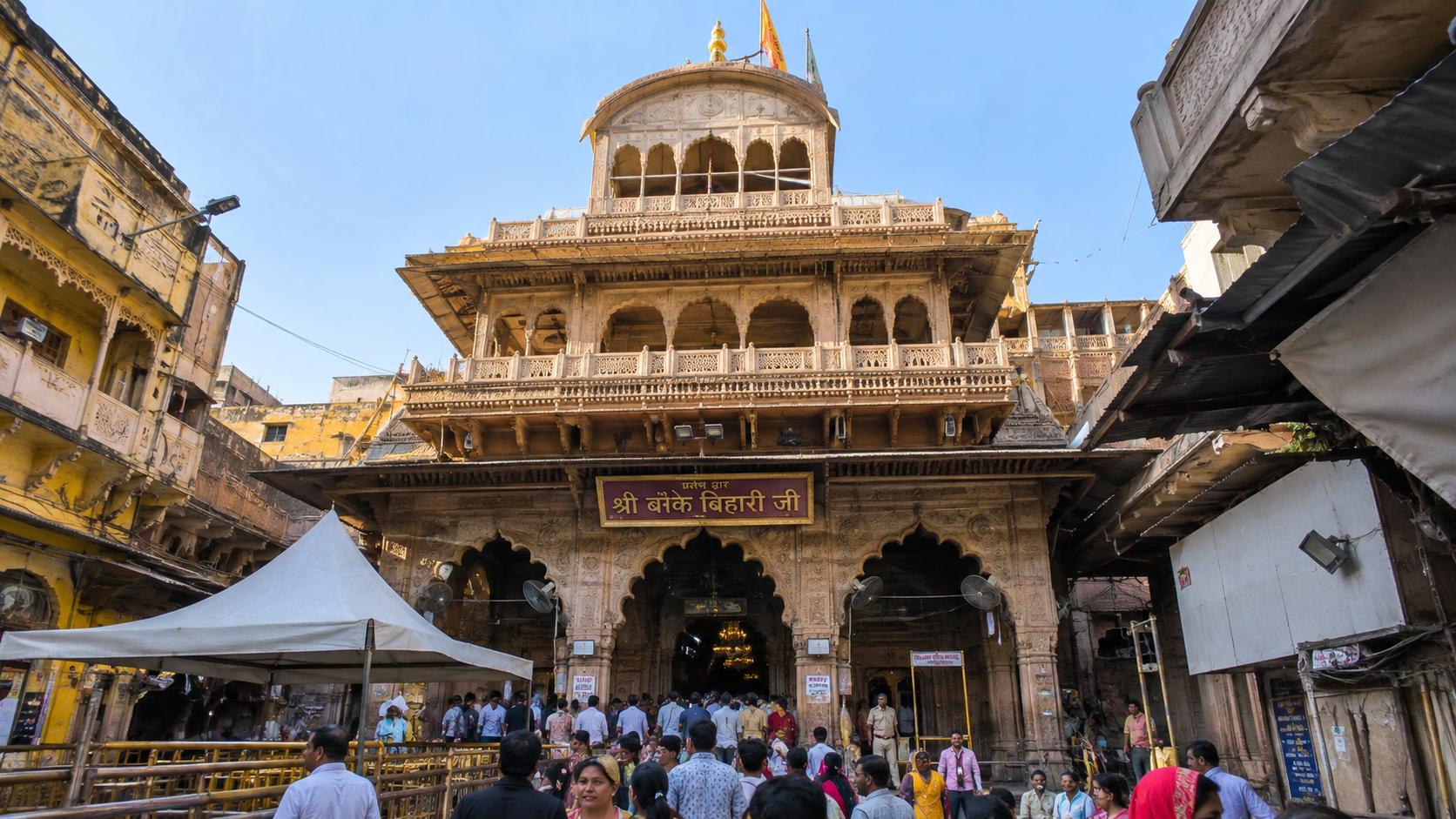
Banke Bihari Temple is one of Vrindavan’s most revered Krishna temples, known for its distinctive darshan tradition and deep connection with Swami Haridas. This practical guide covers timings, darshan, history, the best time to visit, how to reach the temple, local transport, accessibility, nearby places and useful planning tips for a comfortable pilgrimage.
Banke Bihari Temple, Vrindavan
Banke Bihari Temple is a historic Krishna temple in Vrindavan, Mathura district, Uttar Pradesh. The temple is dedicated to Shri Banke Bihari Ji, a form of Lord Krishna worshipped in the Braj tradition. It is located in the old temple quarter of Vrindavan, near other important shrines including Shri Radha Vallabh Temple.
For pilgrims visiting Vrindavan, Banke Bihari Temple is often one of the main stops of the day. The experience is different from a conventional temple visit: darshan is organised in sessions, the sanctum is not open continuously, and the deity is periodically screened by a curtain. The temple itself advises visitors to check the current schedule before travelling because timings can change for seasons, festivals and certain astronomical events.
The temple is also a busy place. Ekadashi, Purnima, Amavasya, weekends, public holidays and major temple festivals can bring particularly large crowds. Planning the timing of your visit is therefore just as important as planning the route.
Why Banke Bihari Temple Is Important
Banke Bihari Ji is worshipped as Krishna in the Braj devotional tradition. The district administration describes the deity as standing in the tribhanga posture, with the name “Banke Bihari” traditionally explained through Krishna's threefold-bent form.
The temple has a close association with Swami Haridas, the saint and musician of the Braj tradition. According to the temple's own account, the present image of Bihariji is the image granted to Swami Haridas by the divine couple Shyama-Shyam. The temple's history also records that the deity was initially installed in a temple close to Nidhivan before the present temple was constructed in 1862.
These accounts belong to the religious tradition surrounding the shrine and are best understood as devotional history rather than as independently verifiable historical events.
The temple's present worship tradition is distinctive. According to the temple management, daily seva is performed in three principal parts: Shringar, Rajbhog and Shayan. The temple does not follow the usual early-morning Mangala Seva tradition, reflecting the long-standing devotional practice associated with treating Bihariji with the affection given to a beloved child.
Banke Bihari Temple Darshan and Timings
The Banke Bihari Temple timings vary between summer and winter. The temple's official website currently publishes the following summer schedule for 5 March to 10 November:
| Darshan / Seva | Summer Timing |
|---|---|
| Mandir opens in the morning | 7:45 AM |
| Shringar Aarti | 7:55 AM |
| Bhog | 11:00 AM–11:30 AM |
| Morning closing | 12:00 Noon |
| Mandir reopens in the evening | 5:30 PM |
| Evening Bhog | 8:30 PM–9:00 PM |
| Evening closing | 9:30 PM |
The temple remains closed between the morning and evening darshan sessions. Do not plan to arrive around the middle of the afternoon expecting continuous entry.
The official temple website states that timings change with the season and that special arrangements may apply during festivals or eclipses. For a trip around a major festival, check the temple's current announcement shortly before departure rather than relying on an old timetable.
What Is Banke Bihari Darshan Like?
Banke Bihari darshan is traditionally associated with the repeated opening and closing of a curtain in front of the deity. This is commonly called jhanki darshan. The brief, intermittent view is an important part of the temple's distinctive worship tradition.
Visitors should therefore not expect an uninterrupted view of the deity. When the curtain opens, the crowd may move forward with considerable enthusiasm, particularly during busy periods.
Darshan does not require advance registration. The temple's official website currently states that registration is no longer required for ordinary darshan.
It also states that there is no dedicated VIP darshan system. A separate first-row viewing ticket may be available to devotees already inside the temple, subject to the temple's current arrangements.
Banke Bihari Temple Entry and Visitor Etiquette
The temple is open daily, including national holidays, but entry is permitted only during the published darshan sessions.
For a smoother visit:
- Dress modestly and comfortably for a place of worship.
- Follow instructions given by temple staff and sevaks.
- Keep your belongings secure in crowded areas.
- Avoid pushing or rushing when the curtain opens.
- Do not obstruct other devotees while taking photographs outside permitted areas.
- Follow any current restrictions concerning mobile phones, photography or personal belongings.
- Keep children close to you in crowded lanes and inside the darshan area.
- If travelling with elderly family members, allow additional time and avoid the busiest festival days where possible.
- Do not assume that a ticket, agent or local intermediary offers official VIP access.
The temple specifically identifies Ekadashi, Purnima, Amavasya, weekends, public holidays and annual festivals as periods when visitor numbers can be unusually high.
Best Time to Visit Banke Bihari Temple
For most travellers, the most comfortable period for a Vrindavan pilgrimage is during the cooler months, broadly from October to March. The weather is generally more suitable for walking between temples than during the peak summer heat.
However, “best time” depends on what you want from the visit.
If your priority is a more manageable pilgrimage, consider a regular weekday outside major festivals and auspicious dates. If you specifically want to experience Vrindavan's major devotional celebrations, festival periods can be rewarding but are considerably busier and require more careful planning.
Holi and Janmashtami are particularly significant periods across Mathura and Vrindavan. The atmosphere can be very crowded, and normal movement and temple access may be affected by festival arrangements.
The temple itself advises elderly devotees, people with disabilities, pregnant visitors and families with very young children to avoid peak days when possible.
How to Reach Banke Bihari Temple
From Vrindavan
If you are already staying in Vrindavan, the temple can be reached using local transport. Auto-rickshaws, e-rickshaws and other local options can take you towards the temple area, after which some walking through the local lanes is normally required.
The final approach is important to remember when planning your day. Private cars cannot be taken right up to the temple entrance. The temple's official visitor information advises private-vehicle users to use one of the parking areas in Vrindavan and continue towards the temple from there.
If you are staying close to the old temple area, walking may be the simplest option. Check the route with your accommodation before leaving, particularly if you are visiting during a busy festival when traffic restrictions and pedestrian congestion can change the practical route.
From Mathura Junction
Mathura Junction is the main railway station to use when travelling to Vrindavan by train. The temple's official website places Mathura Junction at about 14 km from the temple.
From the station, travellers can use a taxi, auto-rickshaw, e-rickshaw or bus towards Vrindavan. Allow extra time during weekends, festivals and peak pilgrimage periods because road congestion can significantly affect the journey.
By Air
The temple's official travel information identifies Kheria Airport in Agra and Indira Gandhi International Airport in Delhi as the nearest airports used by visitors travelling to Vrindavan. From either airport, the onward journey is by road.
For travellers arriving from other parts of India, flying to Delhi or Agra and then arranging road transport can be practical, but the best option depends on flight availability and your wider Mathura-Vrindavan itinerary.
Local Transport and Parking
Vrindavan's older temple areas are not designed for unrestricted private-car access. For Banke Bihari Mandir, it is usually more practical to stop at an appropriate parking area and continue by foot or local transport.
E-rickshaws and auto-rickshaws are useful for moving between different parts of Vrindavan, while walking can be more efficient for short distances in the old temple neighbourhood when roads are congested.
Keep some flexibility in your schedule. A journey that looks short on a map can take much longer during Holi, Janmashtami, weekends or other high-footfall occasions.
Accessibility at Banke Bihari Temple
Accessibility requires some advance planning because the temple is situated within a busy traditional urban area rather than a modern, vehicle-accessible complex.
The temple's official FAQ states that wheelchair assistance is available outside Sneh Bihari Mandir, from where an assistant can help bring the devotee to Banke Bihari Mandir for darshan. Devotees with disabilities or elderly family members can also contact the temple's sewa adhikaris regarding special requirements.
The temple recommends avoiding peak days for visitors who may find heavy crowds difficult to manage.
If accessibility is important for your group, contact the temple before travelling and confirm the current assistance arrangements. Do not assume that the facilities available on a previous visit will remain unchanged.
Nearby Temples and Places to Visit
A Banke Bihari Temple visit can easily be combined with other Vrindavan attractions. The best choice depends on your available time and walking ability.
Nidhivan
Nidhivan has a particularly close association with the devotional history of Banke Bihari Ji and Swami Haridas. The temple's own history identifies the area as the place associated with the appearance of the deity before the image was installed at the present temple.
It is a natural companion to a Banke Bihari pilgrimage for visitors interested in the temple's religious traditions.
Shri Radha Vallabh Temple
Located close to Banke Bihari Temple, Radha Vallabh Temple is one of the important historic temples of Vrindavan. It can be included in a walking-based temple circuit when local conditions permit.
Shri Radha Raman Temple
Radha Raman Temple is another major Vrindavan shrine with a long history in the Gaudiya Vaishnava tradition. The district administration records its establishment in the 16th century.
ISKCON Temple
The Krishna Balaram Mandir of ISKCON is one of Vrindavan's best-known modern temple complexes. It is frequently included in Mathura-Vrindavan pilgrimage itineraries alongside Banke Bihari Temple.
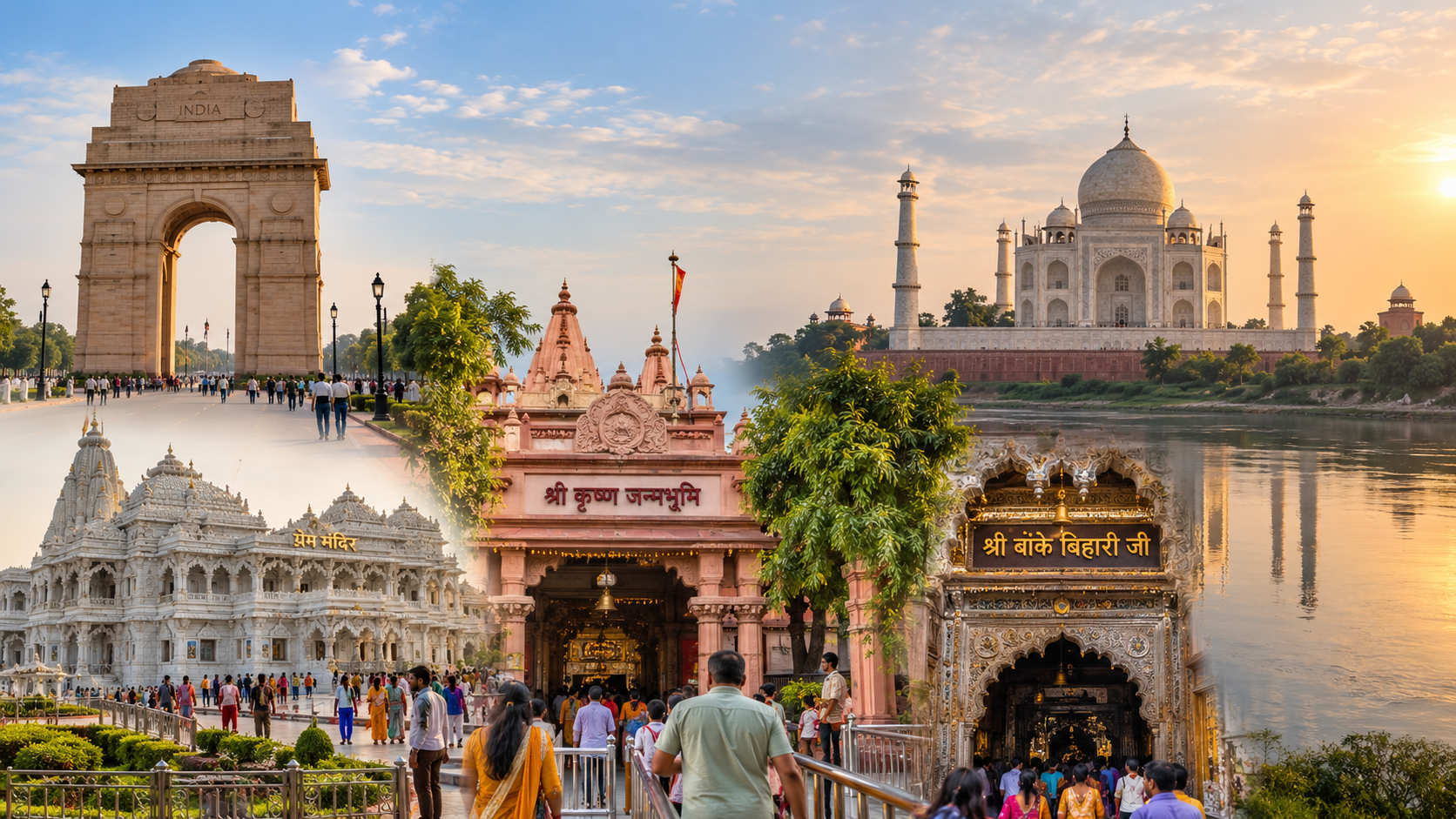
Prem Mandir
Prem Mandir is a major Vrindavan attraction known for its large temple complex and evening illumination. It is better planned as a separate stop rather than trying to combine every attraction into one rushed temple visit.
Keshi Ghat
Keshi Ghat on the Yamuna is another important place to include when exploring Vrindavan's older sacred landscape. It offers a different experience from the crowded temple interiors and can work well as part of a broader local itinerary.
Where to Stay Near Banke Bihari Temple
Staying in Vrindavan can make a pilgrimage much easier because you do not have to make every temple visit from Mathura or another city.
For a temple-focused trip, look for accommodation with practical access to the old Vrindavan temple area. A property within walking distance can be convenient, but remember that “near” on a map does not necessarily mean easy access by car.
When choosing a hotel, guesthouse or ashram, check:
- Walking distance to the temples you plan to visit
- Vehicle access and parking arrangements
- Lift availability if travelling with elderly guests
- Restaurant or meal options
- Check-in and check-out timings
- Whether the property can help arrange local transport
- Current road-access restrictions during major festivals
For families and senior travellers, a slightly more accessible property with dependable transport can be more useful than choosing accommodation solely because it is closest to the temple.
Practical Tips for Planning Your Visit
- Check the current Banke Bihari Temple timings before leaving your hotel, especially around festivals and seasonal changes.
- Aim to reach the temple area with time in hand rather than arriving exactly at opening or closing time.
- Plan around the afternoon closure instead of waiting near the temple for the evening session.
- Expect crowds. Banke Bihari Mandir is a major pilgrimage destination, and the busiest days can be physically demanding.
- Keep valuables to a minimum and remain alert in crowded lanes.
- If travelling with elderly people, children or anyone with mobility concerns, avoid the busiest dates when possible.
- Use official temple information for current darshan rules rather than relying on touts or unverified claims about special entry.
- If you are travelling by private car, plan parking in advance. The final approach to the temple is not suitable for taking a private vehicle directly to the entrance.
- Give yourself enough time to visit nearby temples instead of trying to cover the entire Vrindavan circuit in a few hours.
- On festival days, expect road congestion, pedestrian restrictions and changes to normal temple routines.
A Practical Banke Bihari Temple Plan
For a simple one-day Vrindavan pilgrimage, start by checking the current morning darshan schedule and reach the Banke Bihari Temple area early enough to account for the crowd.
After darshan, use the late morning and afternoon period for nearby temples or lunch and rest. Since the temple closes between its darshan sessions, this is a useful time to visit another shrine or return to your accommodation.
For the evening, return according to the published darshan timing and then consider visiting Prem Mandir or another nearby attraction depending on its operating hours and your group's energy.
If you are staying in Vrindavan for more than one day, spread the major temples across the itinerary. This makes the pilgrimage less rushed and leaves room for unexpected traffic, queues and local events.
Plan Your Vrindavan Pilgrimage
Banke Bihari Temple is best approached as a living place of worship rather than simply another sightseeing stop. Its distinctive darshan tradition, association with Swami Haridas and place within Vrindavan's historic temple landscape make it an important part of a Braj pilgrimage.
Before travelling, recheck the Banke Bihari Temple timings, festival arrangements and visitor guidance on the temple's official website, particularly if your journey falls on a weekend, auspicious day or major festival.
Planning a Mathura-Vrindavan pilgrimage and need help arranging the route, stay and local visits? Contact Trip to Yatra to discuss your travel dates and preferred pace. We can help you plan a practical Vrindavan itinerary around Banke Bihari Ji and the other important places you want to visit.