




Kashi Vishwanath Temple
Kashi Vishwanath Temple is one of the twelve Jyotirlingas of Lord Shiva, located in the heart of Varanasi near the Ganga. This practical guide covers temple timings, darshan and aarti options, booking, the Kashi Vishwanath Dham approach, local transport, suitable seasons, places to stay and nearby attractions.
Kashi Vishwanath Temple, Varanasi
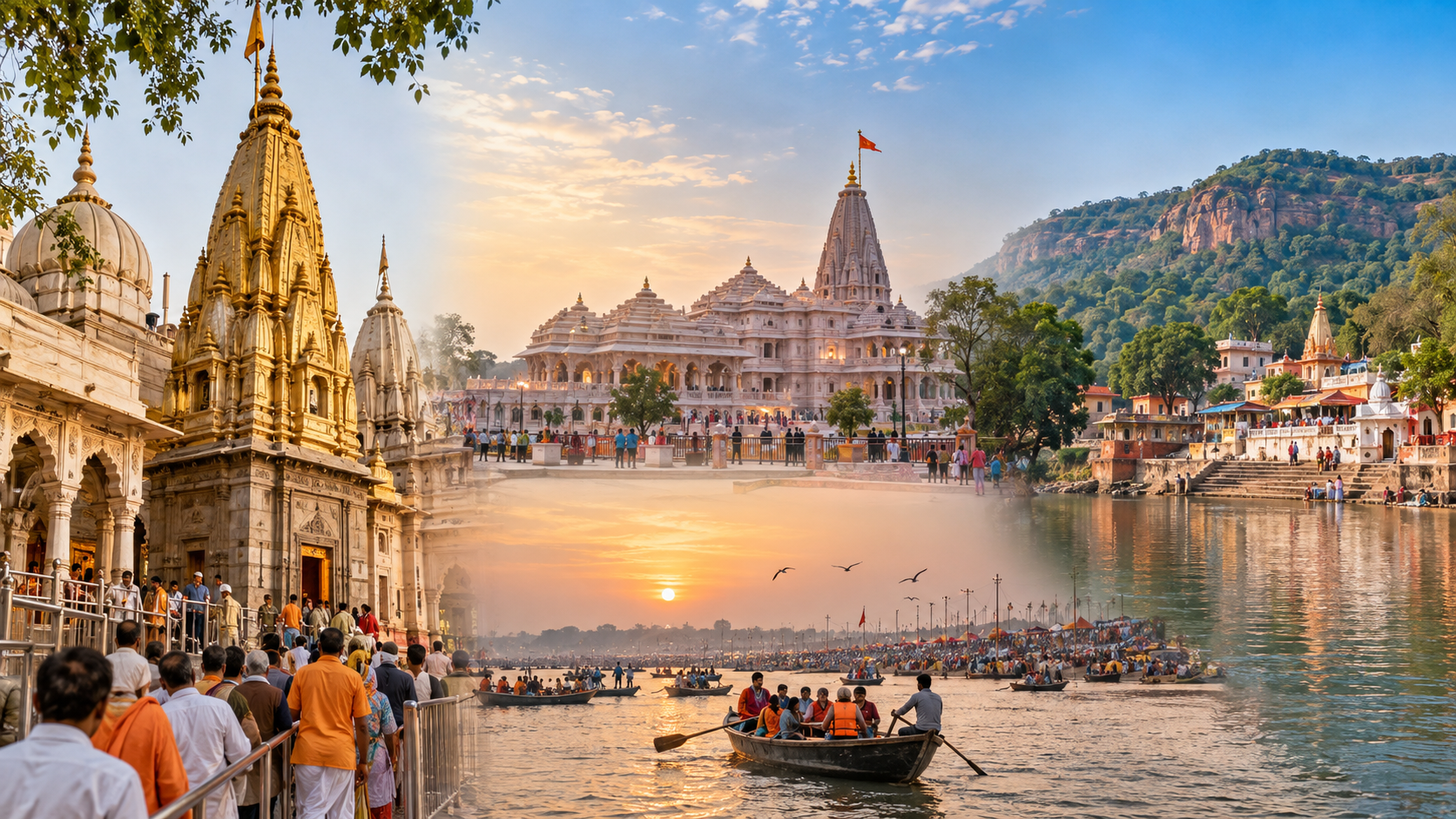
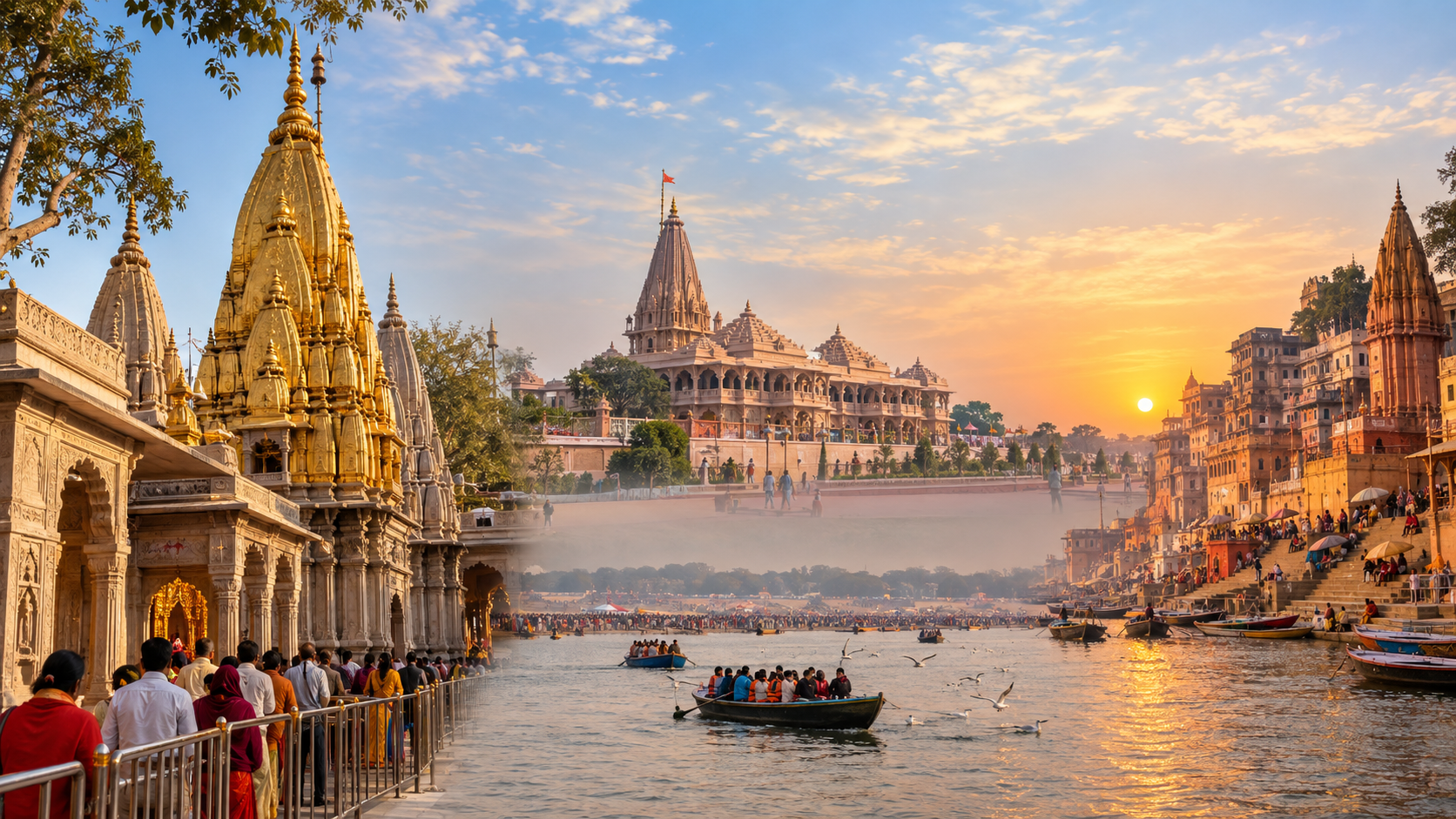
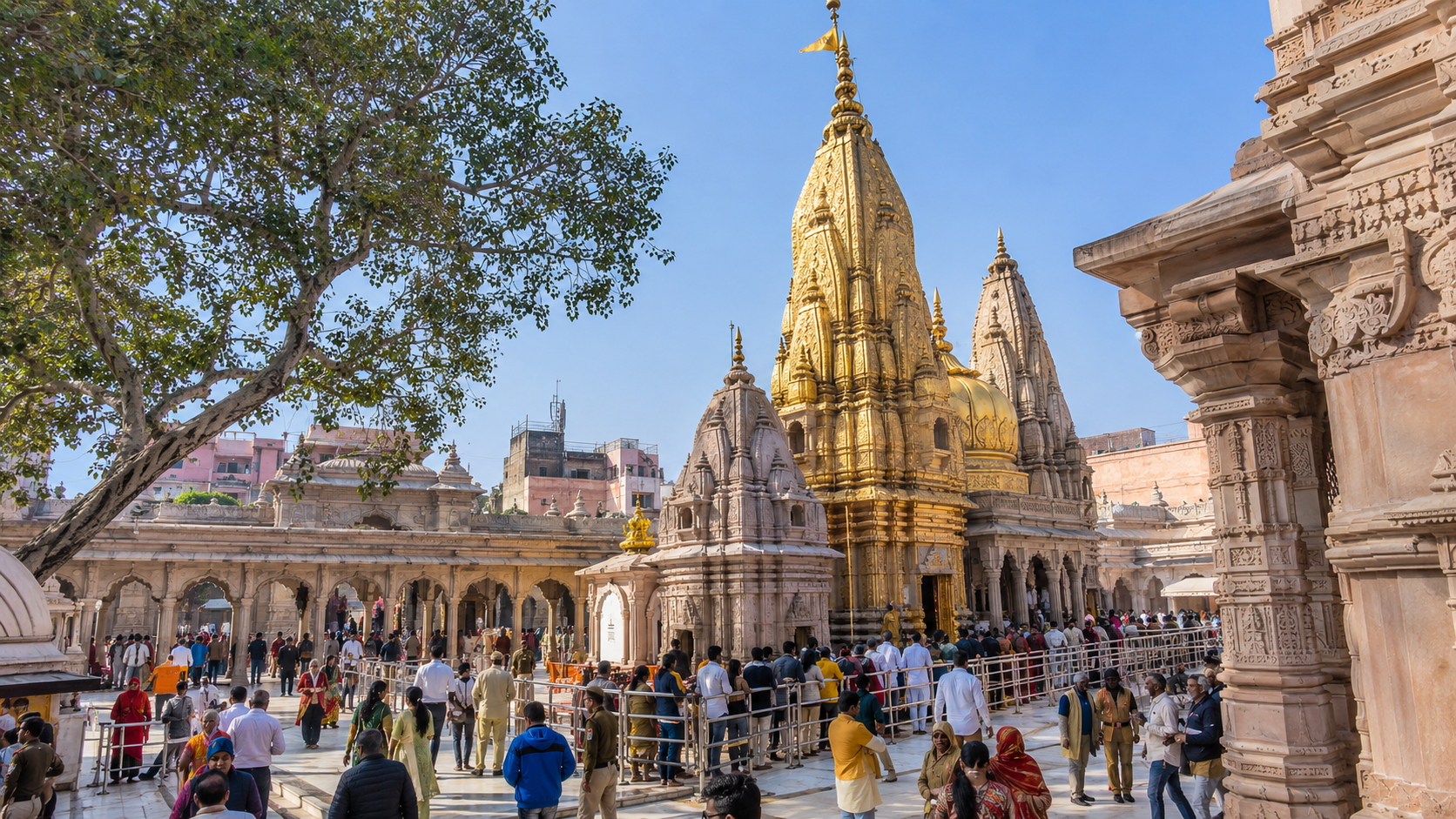
Kashi Vishwanath Temple is one of India’s most revered Shiva temples and one of the twelve Jyotirlingas. It stands in the old heart of Varanasi, close to the Ganga, and is also known as Kashi Vishwanath Mandir or Vishwanath Temple. The presiding deity is Vishwanath, or Vishweshvara, a name meaning the ruler of the universe. For pilgrims, the visit is centred on darshan of the Jyotirlinga and participation in the temple’s daily worship.
The temple is part of the larger Kashi Vishwanath Dham precinct developed to improve access between the temple and the Ganga. The Dham project was inaugurated on 13 December 2021 and substantially expanded the area around the temple, with restored and integrated heritage structures forming part of the wider complex.
A visit here is best planned as a pilgrimage rather than simply a sightseeing stop. Temple schedules, special darshan arrangements, aarti availability and access procedures can change, particularly during major festivals and periods of heavy pilgrim traffic. Check the official Shri Kashi Vishwanath Temple portal shortly before travelling.
Spiritual Importance of Kashi Vishwanath
Kashi Vishwanath is traditionally regarded as one of the twelve Jyotirlingas associated with Lord Shiva. The temple’s importance is closely connected with Kashi itself, one of Hinduism’s major pilgrimage cities. The official temple account describes Vishwanath Jyotirlinga as having a distinctive place in India’s spiritual tradition and records the long-standing association of the temple with saints and spiritual figures.
For many pilgrims, the purpose of visiting is straightforward: to have darshan, offer prayers and spend time in the sacred environment of Kashi. The experience can be quite different from a conventional temple visit because the surrounding old city remains busy throughout the day, with pilgrims, residents, shops and lanes converging around the temple area.
The temple is also popularly called the Golden Temple because of its gold-plated architectural elements. The Government of India’s Incredible India portal notes that the present temple took shape under Maharani Ahilya Bai Holkar of Indore in 1780, while gold was later added to the temple’s domes and spire.
Kashi Vishwanath Temple History
The history of the Kashi Vishwanath site extends across periods of construction, destruction and reconstruction. The present temple structure dates to 1780 and is attributed to Maharani Ahilya Bai Holkar of Indore. The official temple history also records the construction of a Naubatkhana in front of the temple in 1785 and the gold covering of two domes in 1839 through a donation associated with Maharaja Ranjit Singh of Punjab.
The wider history of the site is more complex than the current building alone. The temple’s official historical account records repeated changes to the temple through history, while the present structure was established during the Maratha period. It is therefore useful to distinguish documented architectural history from traditional religious accounts when describing Kashi Vishwanath.
The modern Kashi Vishwanath Dham has added another important chapter to the temple’s story. The corridor project was designed to provide a more direct connection between the temple and the Ganga while improving movement through the pilgrimage area. The first phase of the Dham was inaugurated in December 2021.
Kashi Vishwanath Temple Timings and Daily Worship
The official temple information currently states that the temple remains open from 3:00 AM to 11:00 PM. Daily worship includes several aartis, while specific darshan and puja arrangements operate within the temple’s schedule.
The current official aarti schedule lists:
| Worship | Current listed timing |
|---|---|
| Mangala Aarti | 3:00 AM to 4:00 AM |
| Bhog Aarti | 11:15 AM to 12:20 PM |
| Sandhya/Saptarishi Aarti | 7:00 PM to 8:15 PM |
| Shringar/Night Bhog Aarti | 9:00 PM to 10:15 PM |
| Shayan Aarti | 10:30 PM to 11:00 PM |
These timings are published by the temple administration and should be treated as the current reference rather than a permanent timetable. Festival days, special religious occasions, administrative requirements and crowd conditions can affect arrangements.
For travellers specifically planning Kashi Vishwanath darshan, an early start can make the visit easier to organise, but it is important to distinguish ordinary temple access from ticketed aarti participation.
Kashi Vishwanath Darshan and Booking
General temple darshan and special services are not the same thing. The temple trust currently offers Sugam Darshan, described by the official portal as a queue-less special darshan service with assistance, locker facilities and prasad. The current daily schedule lists Sugam Darshan from 6:00 AM to 6:00 PM and shows a listed charge of ₹250.
Aarti participation requires separate arrangements. The official portal currently lists Mangala Aarti from 3:00 AM to 4:00 AM, with a listed ticket amount of ₹500 on its daily schedule. Other aartis have separate listed charges, while Shayan Aarti is currently shown as free. These amounts can change, so travellers should verify the amount and availability when booking.
For Mangala Aarti, the temple’s current booking information states that general booking opens daily at 11:00 AM for the following 30 days, while a Tatkal option is also shown for the next day. The same official information specifies different entry arrangements for the two booking categories.
If you are planning a ticketed service:
- Use the official Shri Kashi Vishwanath Temple website or its authorised booking facility.
- Check the exact date and service before paying.
- Carry the required ticket and identification documents.
- Follow the reporting time and entry gate printed on the booking.
- Recheck the arrangements shortly before travel, especially during festivals.
The official Mangala Aarti information currently advises devotees to report before the aarti and states that a valid identity card is required with the ticket.
Temple Etiquette and What to Expect
Kashi Vishwanath is an active place of worship, not simply a monument. Dress modestly and behave respectfully around worshippers and temple staff. Avoid blocking entrances, corridors or worship areas for photographs or sightseeing.
Keep your belongings to a minimum. Security restrictions apply, and access to certain items or areas can change. Use authorised locker or storage facilities where applicable rather than relying on informal arrangements.
The temple area can become crowded, particularly during festivals and important Hindu dates. Allow additional time for security checks, walking through the surrounding pilgrimage zone and locating the correct entry point.
If your priority is a peaceful darshan, avoid building a schedule that depends on arriving at the last possible minute. A little buffer is especially useful when travelling with older family members or children.
Best Time to Visit Kashi Vishwanath Temple
Varanasi can be visited throughout the year, but the most comfortable period for a walking-heavy pilgrimage is generally the cooler part of the year, particularly from around October to March. Winter mornings can be cold, while December and January may bring fog that affects road and rail travel.
The hotter months from April to June can make walking around the old city tiring, especially in the afternoon. If travelling during this period, plan temple visits and nearby sightseeing around the cooler parts of the day.
The monsoon months can bring rain and slippery walking surfaces, although the city remains an active pilgrimage destination.
Festival periods can be especially meaningful for devotees but also substantially busier. If your priority is a particular religious occasion, plan well in advance and confirm the temple's arrangements before departure.
How to Reach Kashi Vishwanath Temple
Varanasi is well connected by air, rail and road. The District Varanasi administration identifies Varanasi as a major rail junction with connections to cities across India and also lists Lal Bahadur Shastri International Airport as the city's principal airport connection.
From Varanasi Airport
Lal Bahadur Shastri International Airport is outside the old city. From the airport, travellers can use a taxi or app-based cab where available, or arrange a pre-booked vehicle through their hotel or travel operator.
Allow extra time for traffic, particularly when approaching the central parts of Varanasi. The final portion of the journey to Kashi Vishwanath should be planned as a walk or local transfer according to the access arrangements applicable on the day.
From Varanasi Railway Stations
Varanasi has several railway stations serving different train routes. Varanasi Junction is one of the city's major railheads. From the station, taxis, auto-rickshaws and other local transport can take you towards the old-city area.
Do not assume that a vehicle can drop you directly at the temple entrance. The historic area around Kashi Vishwanath has restricted and pedestrian-heavy sections, so the last part of the journey may involve walking.
By Local Transport
Auto-rickshaws, e-rickshaws, taxis and app-based cabs are useful for reaching the broader temple area. For the final approach, walking is often the most practical option.
The Kashi Vishwanath Dham project was specifically developed to improve access between the temple and the Ganga and to make movement around the pilgrimage complex easier.
Accessibility and Mobility Planning
The expanded Dham precinct provides a more organised pilgrimage environment than the older, tightly packed approach alone, but visitors should still expect walking. The wider Varanasi old-city area contains busy lanes and pedestrian sections, and the temple visit involves security and controlled entry.
Travellers with limited mobility should plan the route in advance and discuss requirements with their hotel or travel organiser. An elderly pilgrim may benefit from staying relatively close to the temple area so that the number of vehicle transfers is reduced.
Do not assume that every route, entrance or facility will be available to every visitor at all times. Accessibility arrangements can be affected by security, crowd management and religious events.
Where to Stay Near Kashi Vishwanath Temple
For a pilgrimage focused mainly on Kashi Vishwanath, staying around the central Varanasi areas can reduce daily travel time. Areas around Godowlia, Dashashwamedh and the broader old-city zone offer convenient access to the temple and ghats, although they can be busy and have narrow streets.
Travellers who prefer easier vehicle access, quieter surroundings or larger modern hotels may find accommodation farther from the old city more comfortable. The trade-off is a longer local journey to the temple.
When selecting a hotel, consider:
- Distance from the practical drop-off point rather than only the map distance.
- Whether elderly travellers can manage the walking involved.
- Early-morning transport availability if attending Mangala Aarti.
- Luggage handling and secure storage.
- Road access during busy festival periods.
- Cancellation policies if your pilgrimage dates depend on darshan availability.
The official temple portal also lists a guest-house facility associated with the trust, so travellers interested in that option should check current availability directly with the temple administration.
Places to Visit Near Kashi Vishwanath Temple
A Kashi Vishwanath pilgrimage fits naturally into a wider Varanasi itinerary.
Ganga Ghats
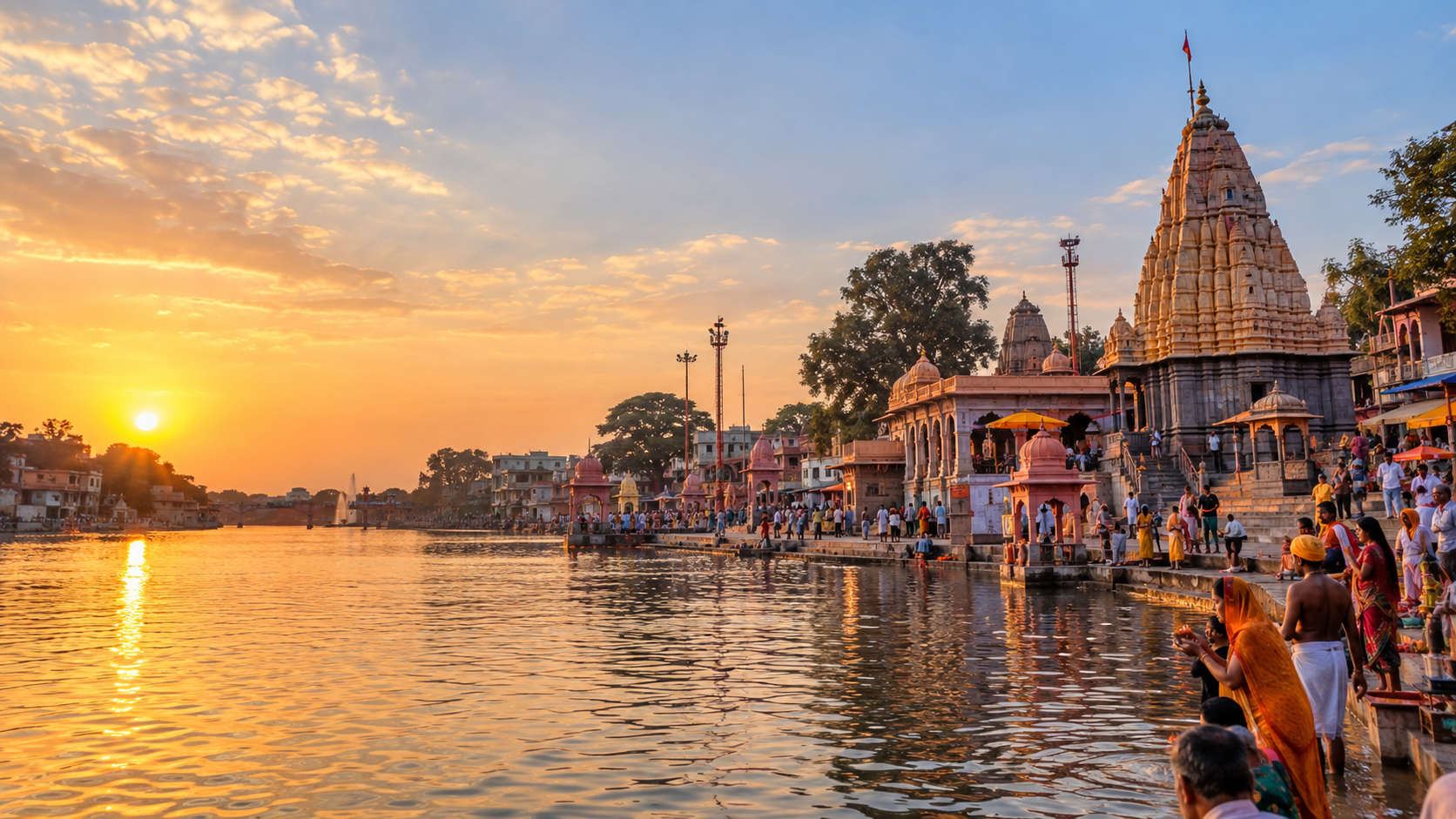
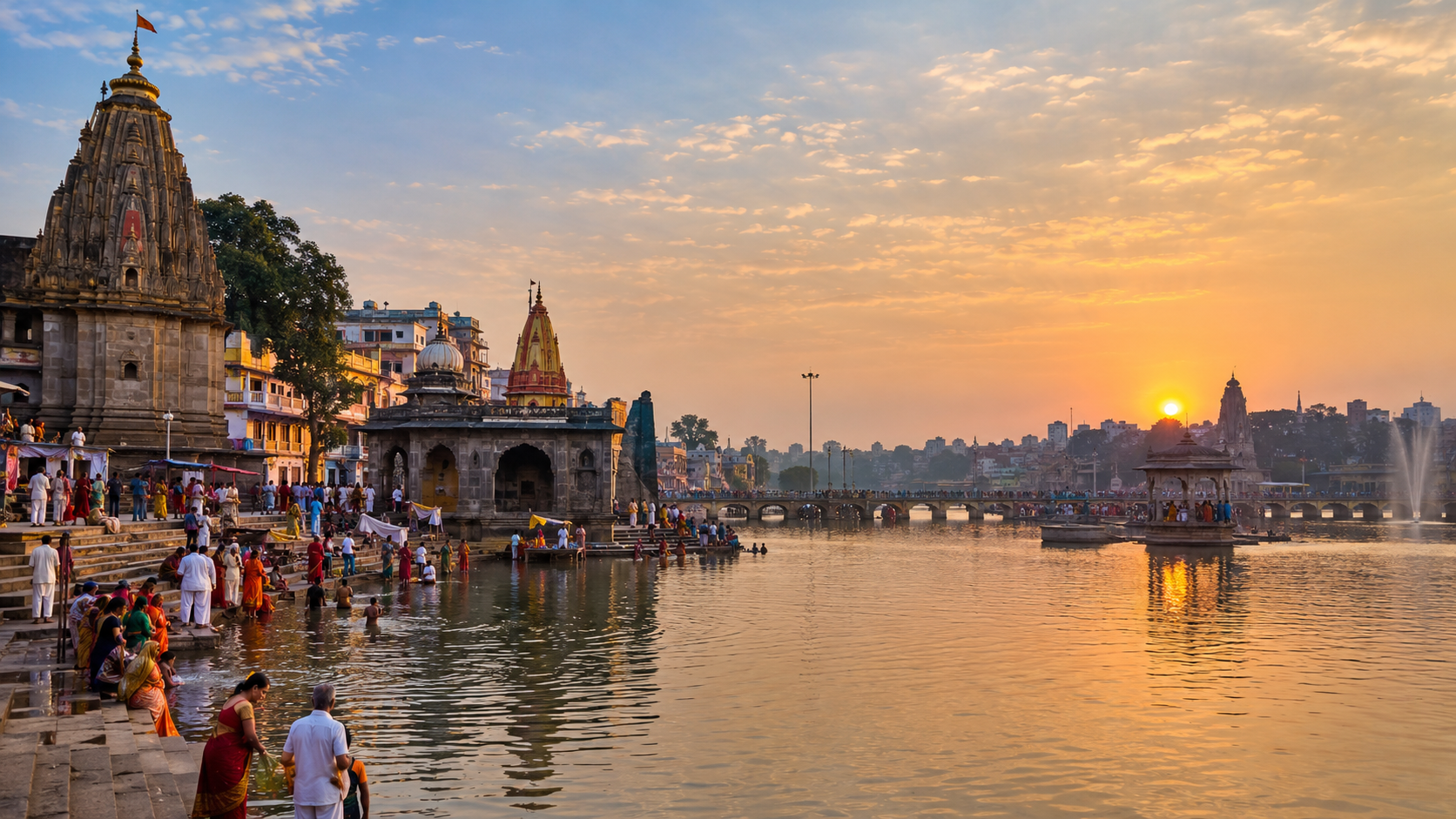
The temple is closely connected with the riverfront through the Kashi Vishwanath Dham complex. Dashashwamedh Ghat is one of the best-known places to experience Varanasi's evening Ganga Aarti, while other ghats provide a different perspective on the city's religious life.
Annapurna Temple
The Annapurna Temple is located adjacent to the Kashi Vishwanath Temple area and is an important part of the surrounding pilgrimage circuit. The Government of India’s tourism portal identifies Annapurna Temple among the significant temples immediately associated with the Vishwanath precinct.
Kaal Bhairav Temple
Kaal Bhairav is another important Shiva-related pilgrimage stop in Varanasi. Many visitors include it in a broader Kashi temple itinerary alongside Vishwanath.
Manikarnika Ghat
Manikarnika Ghat is one of Varanasi's most significant ghats and has a profound place in the city's religious traditions. Visitors should approach the area respectfully because it remains an active cremation site rather than a conventional tourist attraction.
Sarnath
For travellers staying in Varanasi for more than a day, Sarnath makes a useful addition to the itinerary. It is around 10 km from Varanasi according to the District Varanasi administration and is an important Buddhist pilgrimage destination associated with the Buddha's first sermon.
Practical Tips for Planning Your Visit
A little planning makes a Kashi Vishwanath pilgrimage considerably smoother.
- Check the official temple schedule immediately before travelling.
- Book ticketed aarti or special darshan only through the official or authorised channels.
- Carry identification for booked services where required.
- Keep your temple visit separate from your sightseeing schedule so delays do not affect other bookings.
- Wear comfortable footwear because walking is likely around the old-city area.
- Carry only essentials because security restrictions can limit what you can take inside.
- If travelling with seniors, allow extra time and minimise unnecessary transfers.
- Plan the route back to your hotel before attending a very early aarti.
- During festivals, expect heavier crowds and allow substantially more time.
- Treat the temple and cremation ghats as active religious spaces rather than ordinary tourist attractions.
Plan Your Kashi Vishwanath Pilgrimage
A visit to Kashi Vishwanath Temple is easiest when the pilgrimage, accommodation and local sightseeing are planned together. The temple's official schedule and booking rules should remain the final reference for your chosen date, while the rest of the itinerary can be built around the practical realities of Varanasi's old city.
Trip to Yatra can help you organise a Varanasi pilgrimage around your preferred travel dates, darshan plans, accommodation needs and nearby places. If you are planning a Kashi Vishwanath visit and want help putting the different parts of the trip together, get in touch with Trip to Yatra for a practical itinerary suited to your journey.