

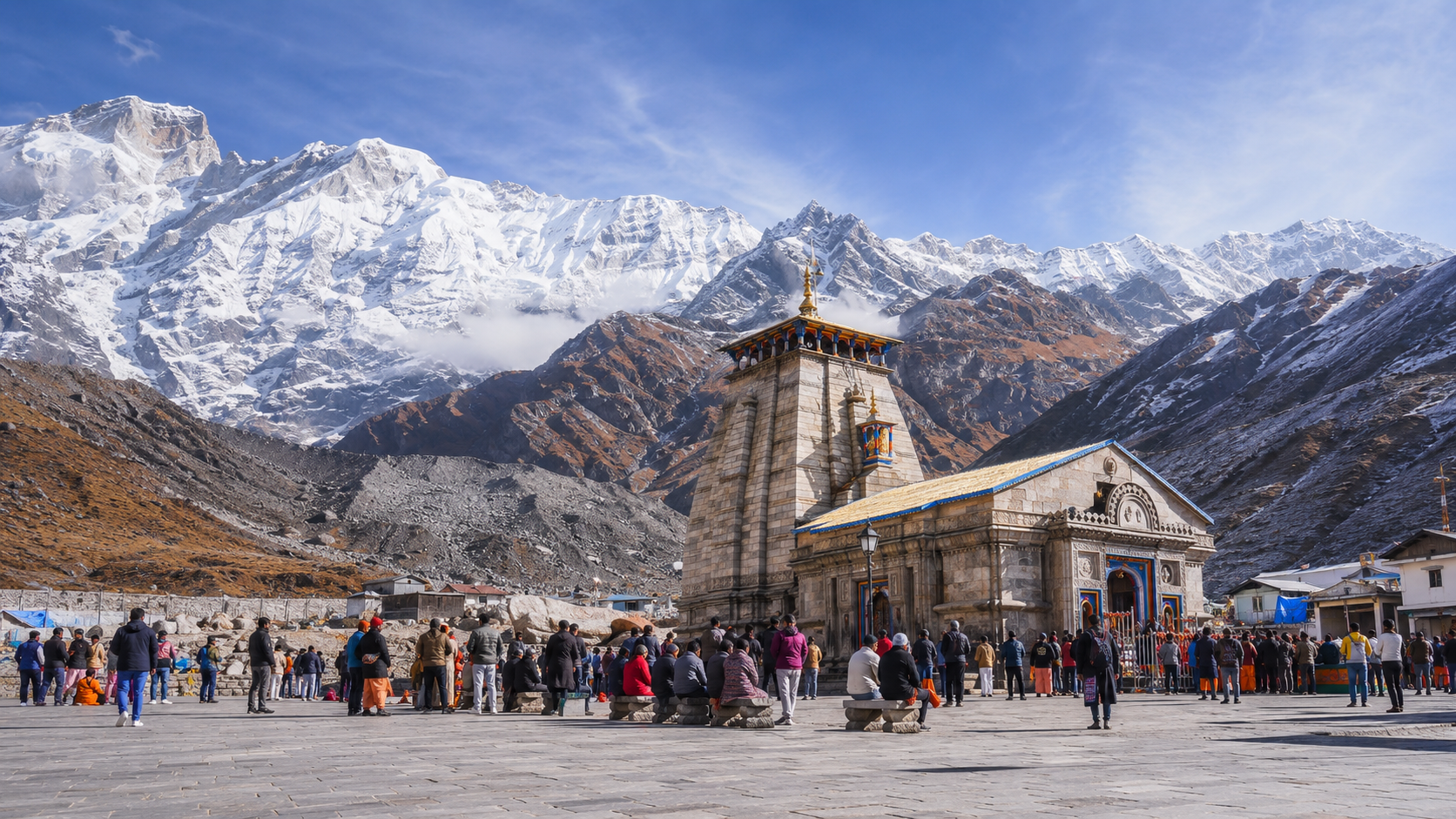
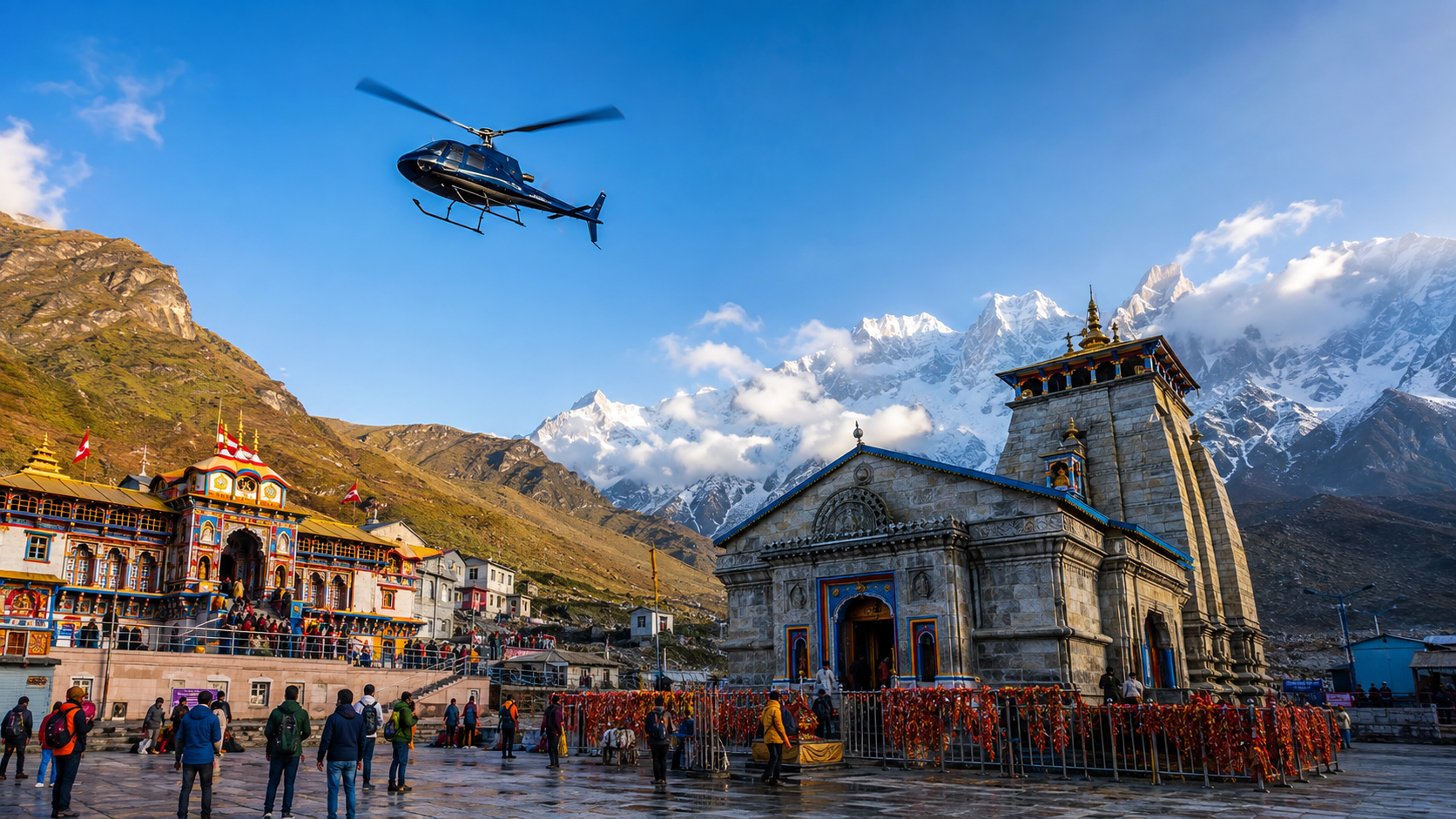
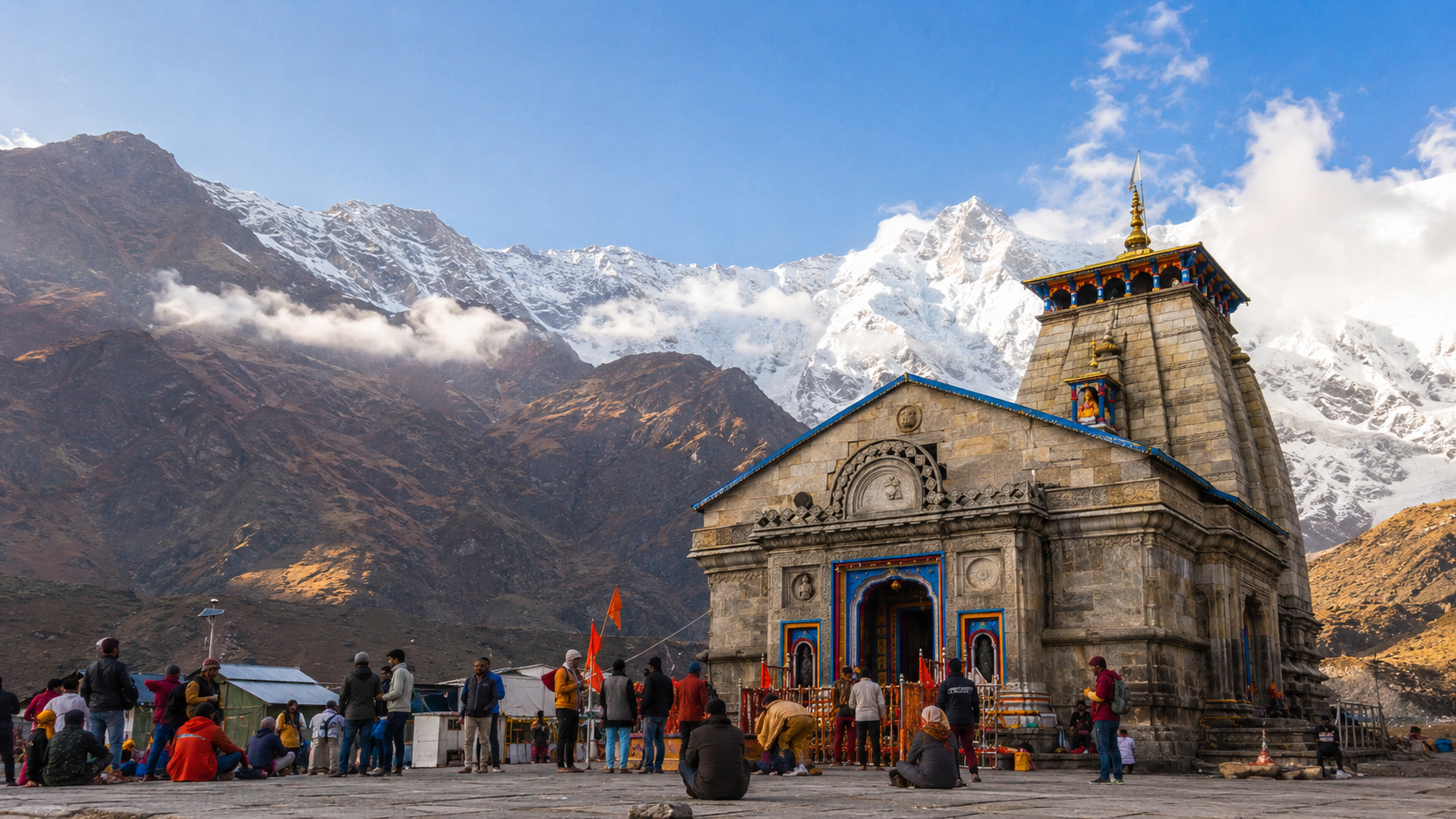
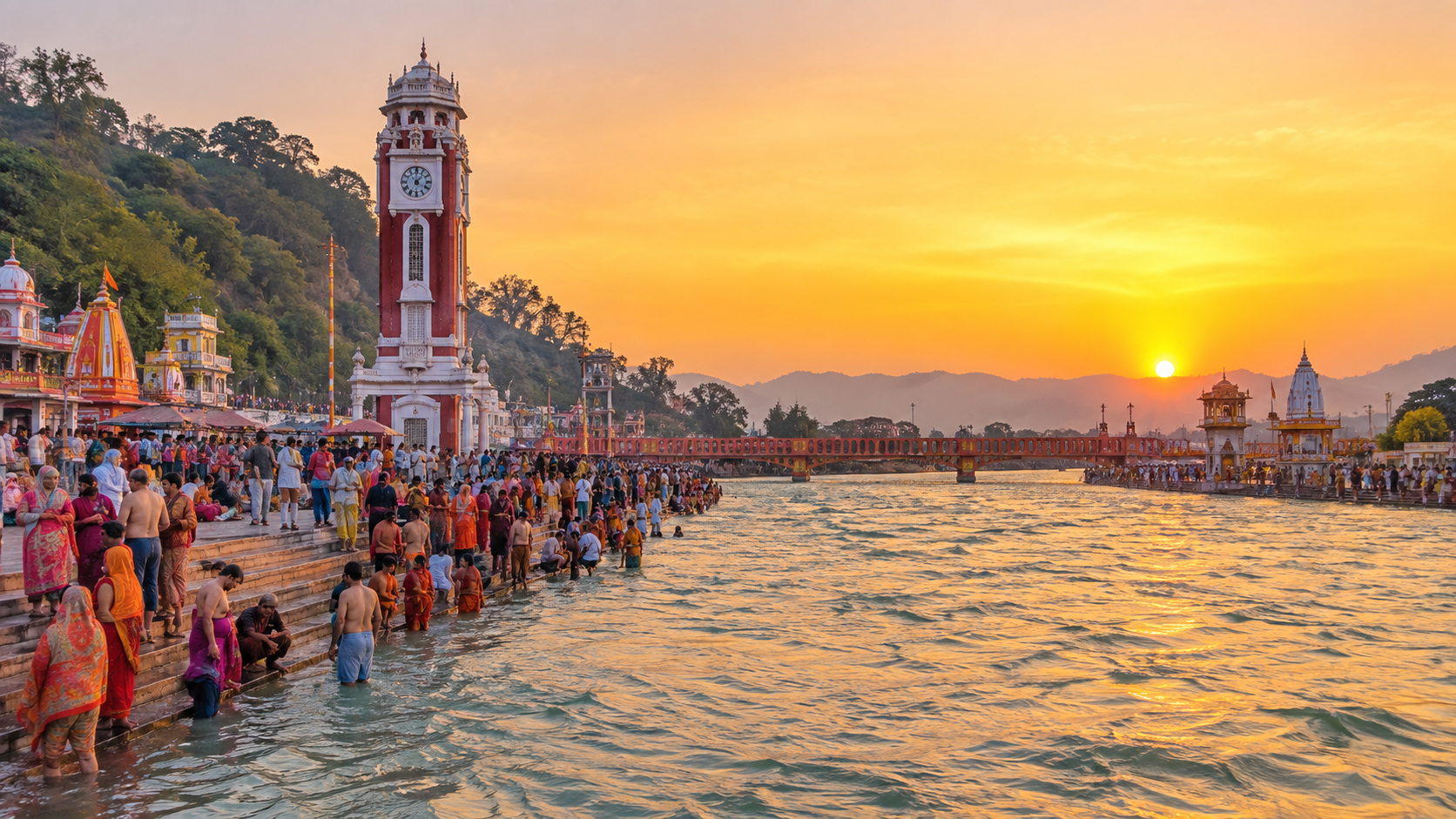
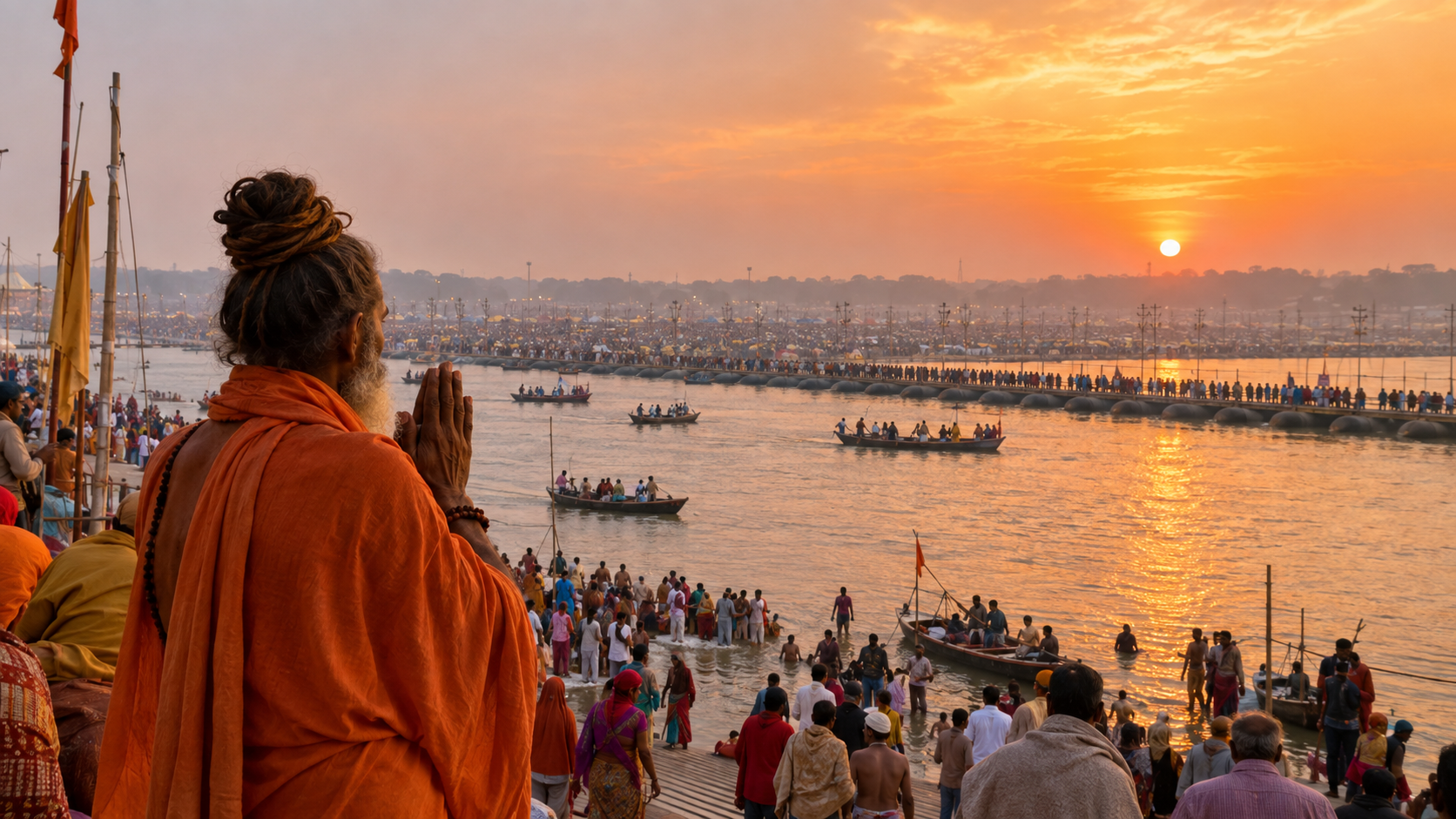
Trimbakeshwar Temple
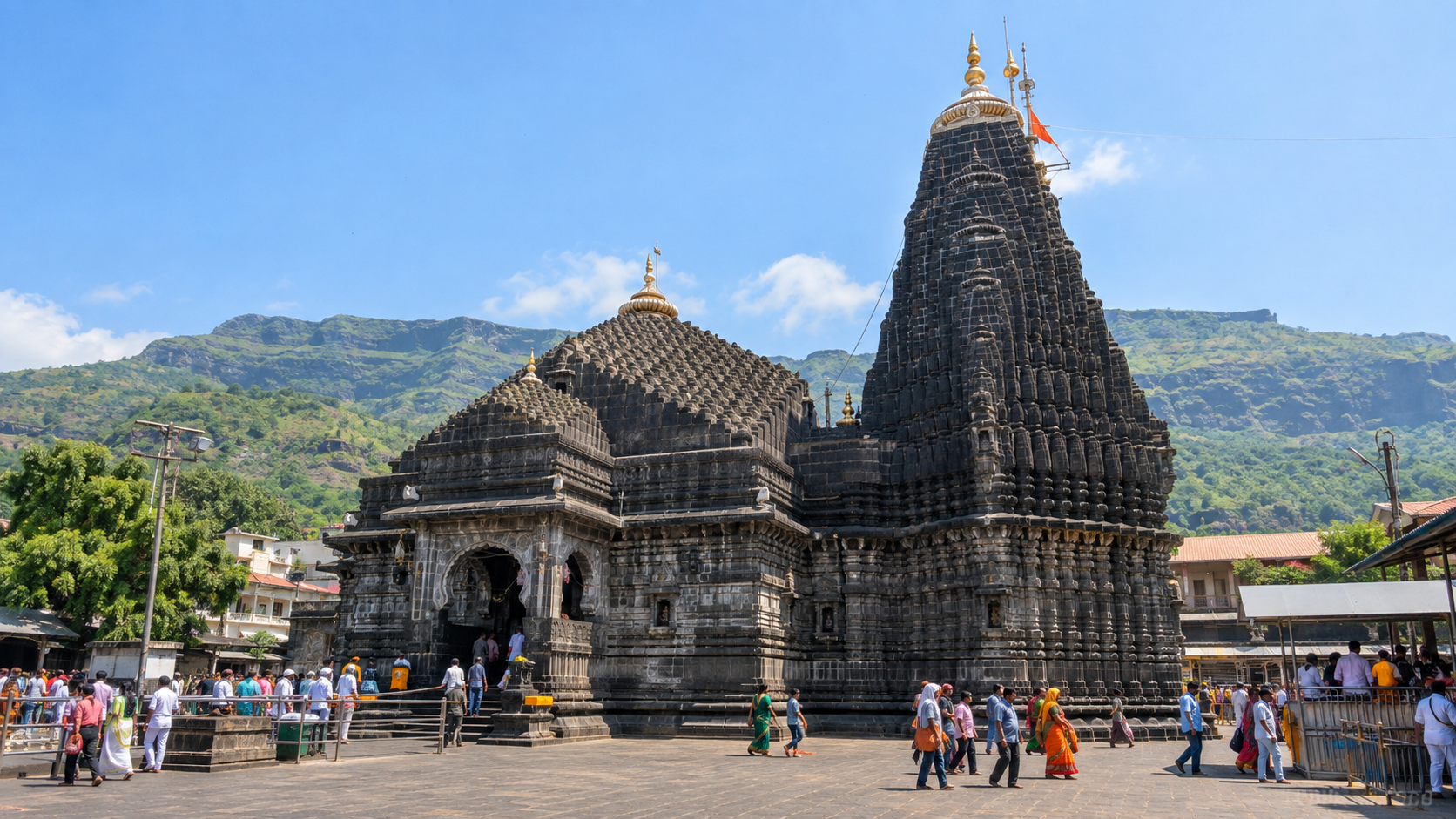
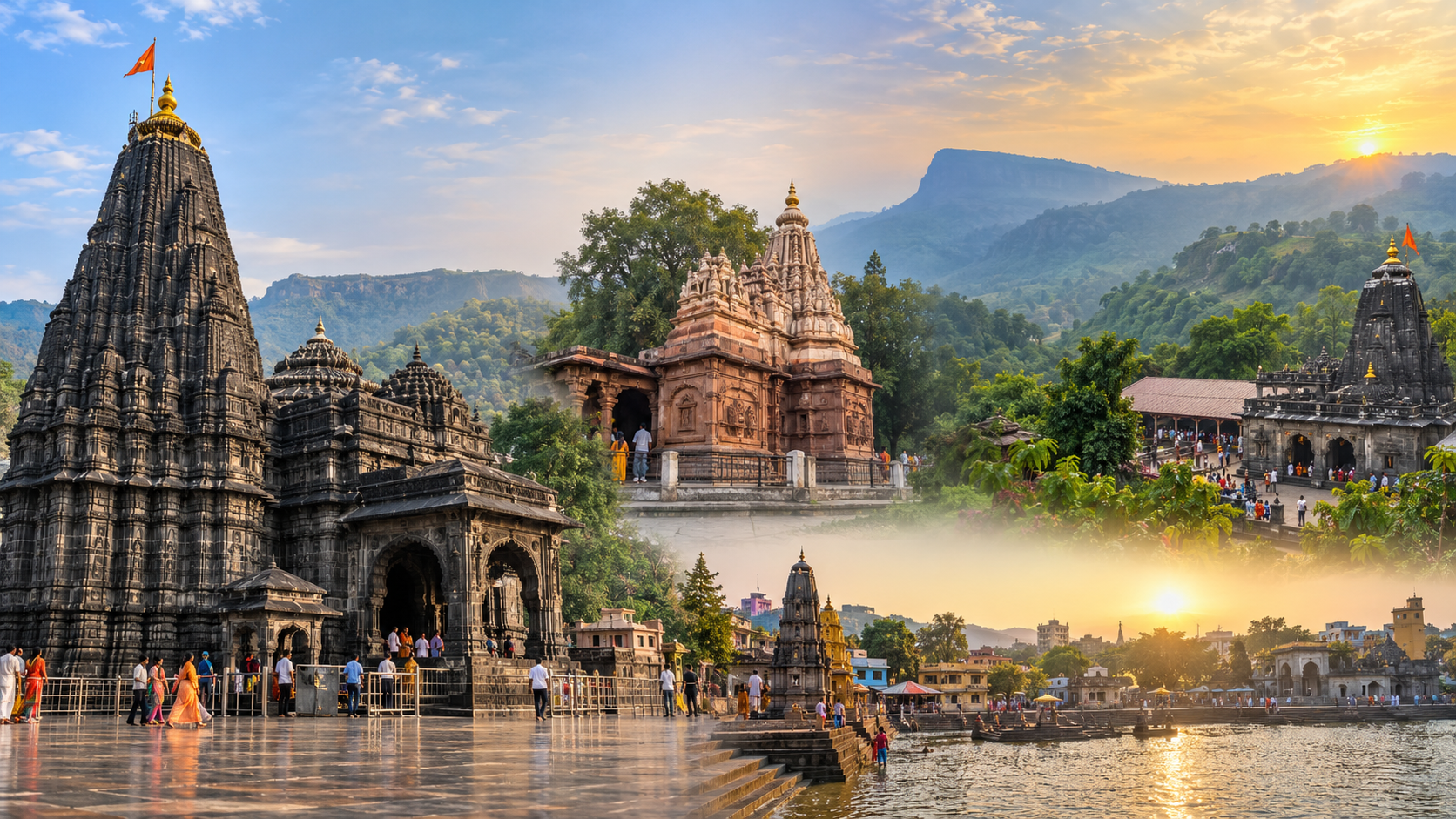
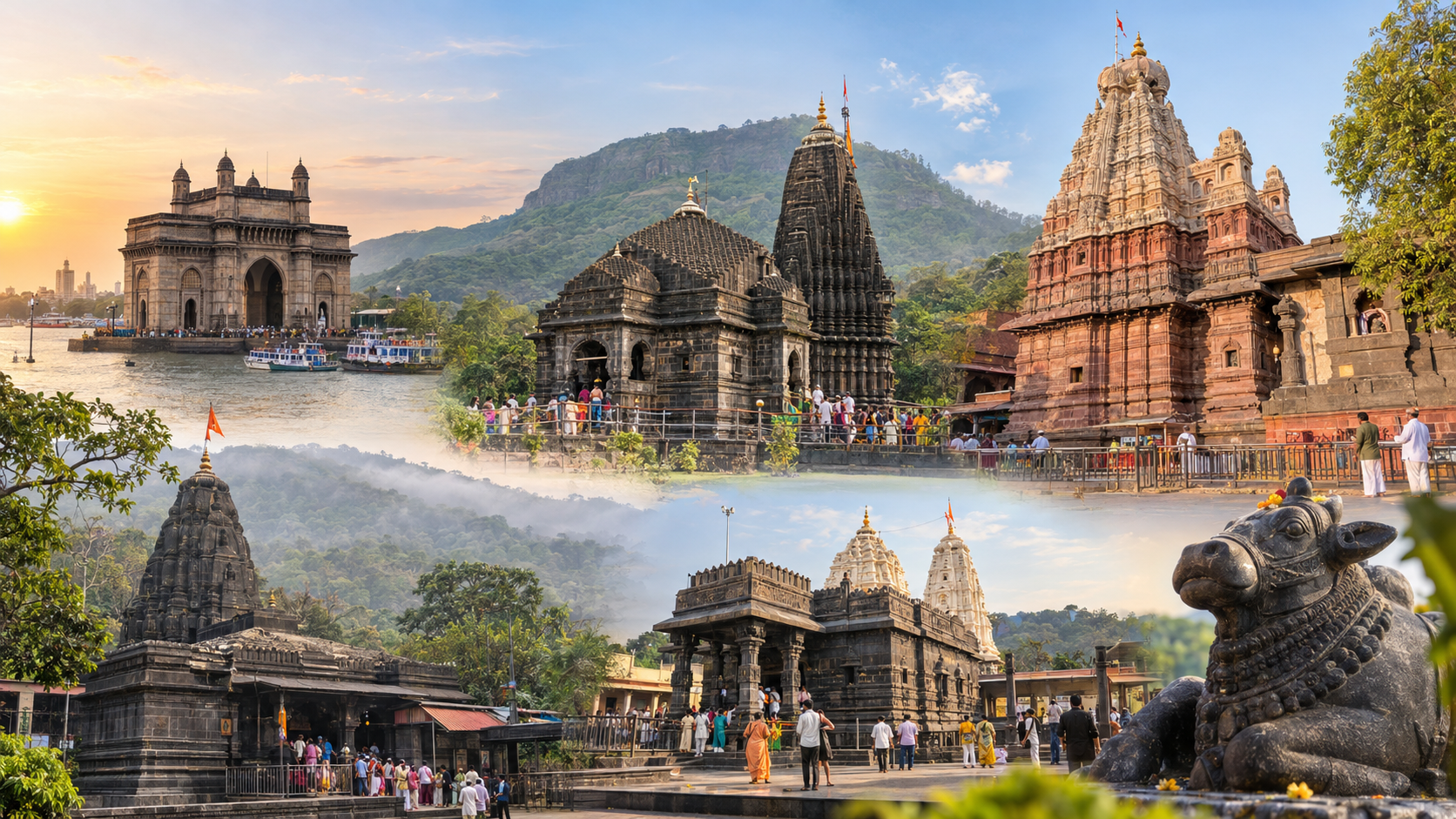
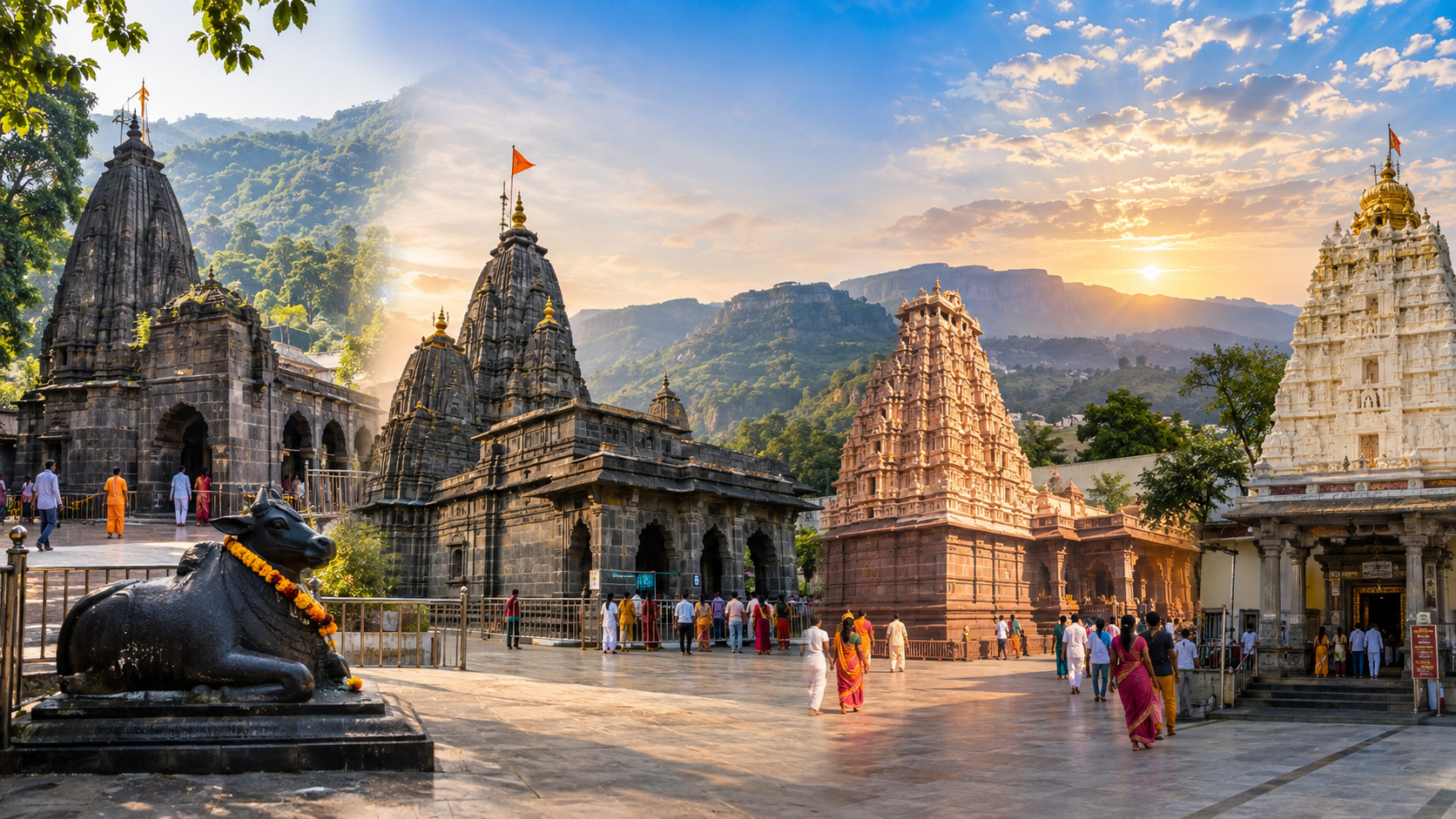
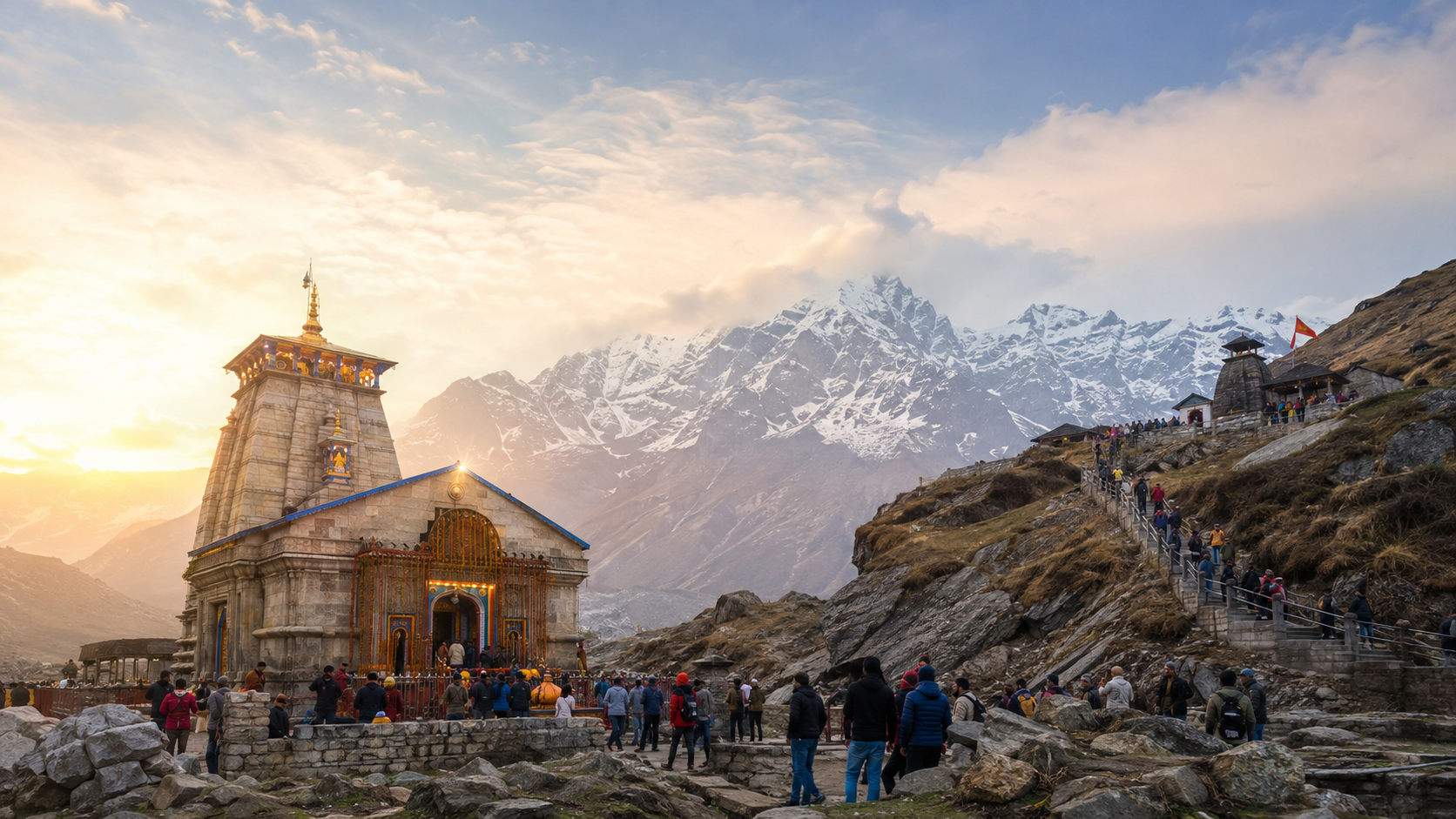
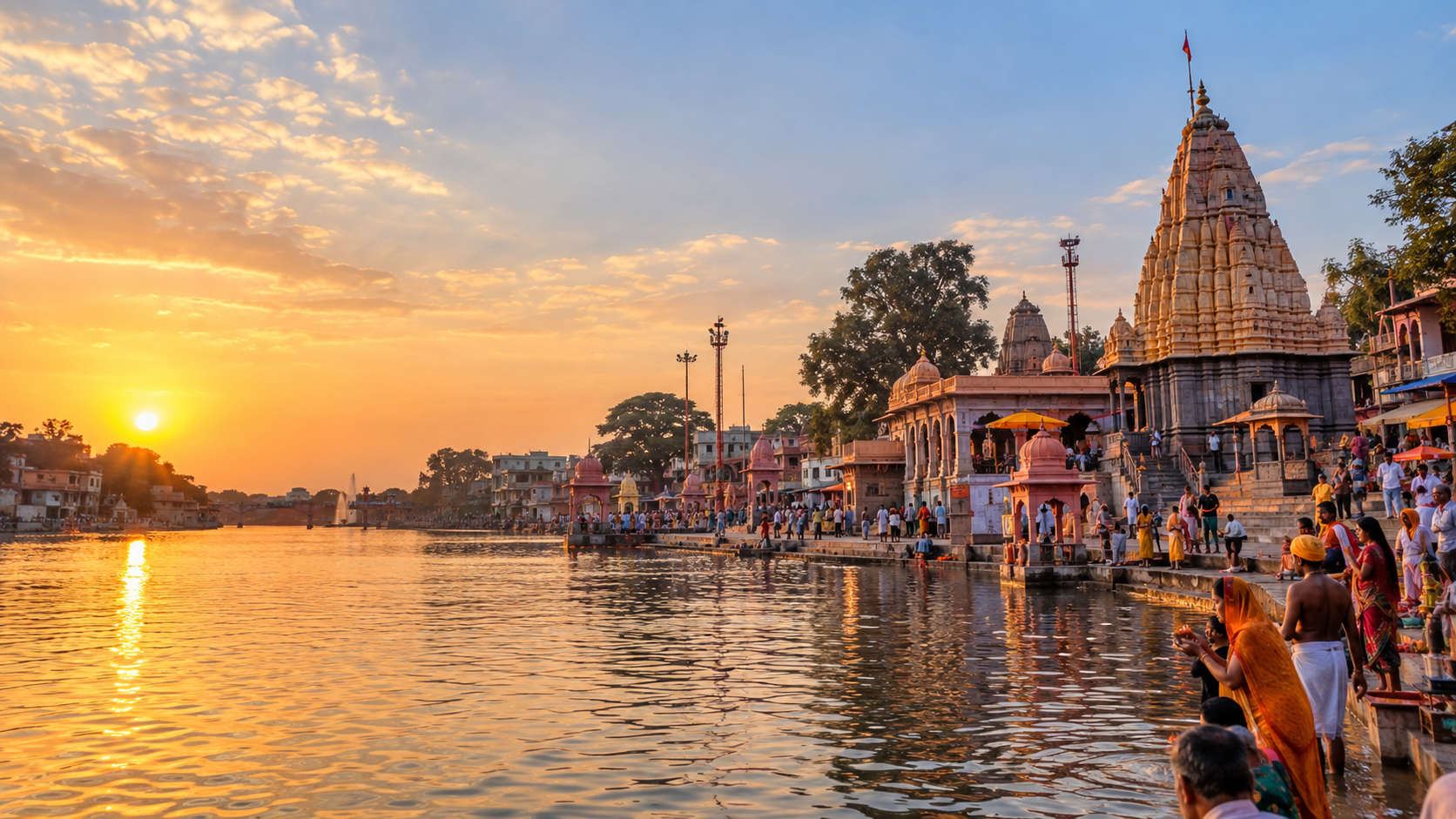
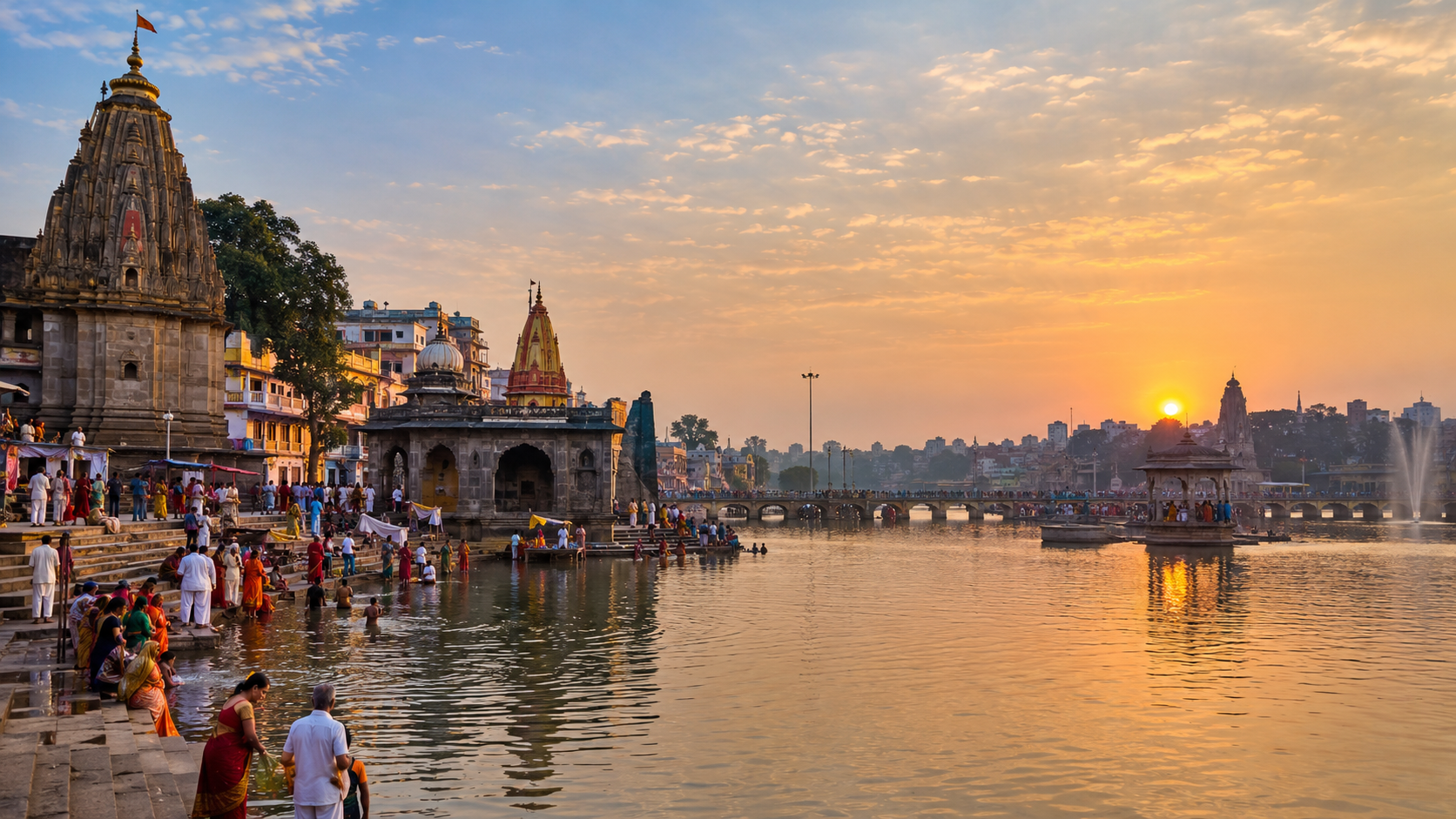
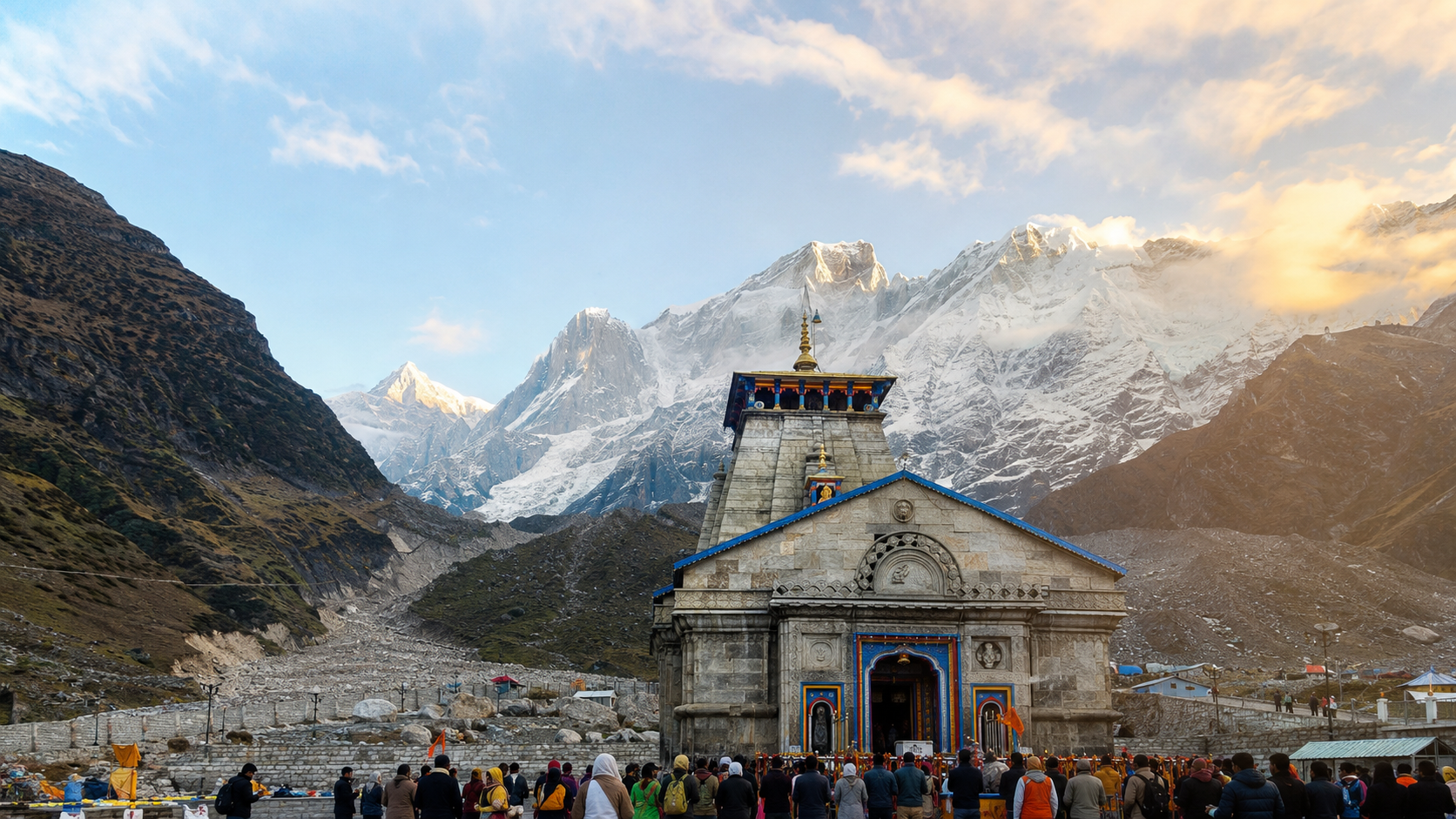
Trimbakeshwar Temple in Maharashtra is one of the twelve Jyotirlingas of Lord Shiva, located in the historic town of Trimbak near Nashik. Set at the foot of Brahmagiri Hill, the temple is an important pilgrimage destination known for its distinctive Jyotirlinga, sacred Kushavarta Kund, traditional rituals and connection with the origin of the Godavari River.
Trimbakeshwar Temple: A Practical Pilgrimage Guide
Trimbakeshwar Temple is one of the twelve Jyotirlingas dedicated to Lord Shiva and is located in Trimbak, about 28–30 km from Nashik city in Maharashtra. The temple stands near Brahmagiri Hill, a landscape closely associated with the origin of the Godavari River and the religious traditions of the region. For pilgrims, the attraction is not limited to the main shrine: the surrounding town, Kushavarta Kund and nearby sacred sites form an important part of a Trimbakeshwar pilgrimage.
The present temple was constructed under the patronage of the third Peshwa, Balaji Bajirao, between 1740 and 1760, on the site of an older temple. Built largely in black stone, it reflects the traditional architectural character of the period. The temple trust describes the Jyotirlinga here as having a distinctive three-faced form associated with Brahma, Vishnu and Shiva.
For travellers planning a Trimbakeshwar temple visit, the most important things to organise in advance are the darshan arrangements, travel time, accommodation and any religious services you intend to book.
Spiritual Importance of Trimbakeshwar Jyotirlinga
Trimbakeshwar Jyotirlinga is regarded as one of the twelve sacred Jyotirlingas of Lord Shiva. Its distinctive three-faced representation is one of the features that sets the shrine apart from other Jyotirlinga temples. The temple is also closely connected with the Godavari, which is regarded in local religious tradition as having its source in the Brahmagiri area.
Kushavarta Kund, associated with the Godavari, is an important sacred point in Trimbak. Maharashtra Tourism notes that devotees traditionally visit the kund before offering prayers at the temple. The religious significance of the water and the surrounding shrines makes Trimbak more than a single-temple destination.
Several legends explain the sanctity of the area. One widely told tradition centres on Gautama Rishi, his penance to Lord Shiva and the descent of the sacred river associated with the Godavari. These are religious traditions and should be understood as part of the temple's sacred narrative rather than treated as independently verified historical events.
Trimbakeshwar Temple History and Architecture
The current Trimbakeshwar Jyotirlinga Temple dates to the 18th century. Maharashtra Tourism identifies the builder as the third Peshwa, Balaji Bajirao, and places its construction between 1740 and 1760 on the site of an older shrine.
The temple is built in black stone and features traditional carvings and a formal temple layout. The Trimbakeshwar Devasthan Trust records four principal entry gates corresponding to the east, west, south and north. The temple's setting at the base of Brahmagiri Hill gives the shrine a strong connection with the wider sacred landscape.
A particularly distinctive feature is the three-faced form of the Jyotirlinga, associated by the temple tradition with Brahma, Vishnu and Shiva. The shrine is therefore significant not only as a Jyotirlinga but also for its unusual representation of the three deities.
Trimbakeshwar Temple Timings and Darshan
The Trimbakeshwar Devasthan Trust currently states that the temple is open for darshan from 5:30 AM to 9:00 PM. Incredible India also lists the same opening and closing times. However, the trust specifically notes that the daily programme can change on festival days, so pilgrims should check the latest official information before travelling.
The temple follows a schedule of daily religious services and pooja. The trust lists morning, midday and evening worship, while festival days can have different arrangements. Avoid planning your entire journey around a particular aarti or pooja without confirming the current schedule with the temple authorities.
Darshan Passes
Darshan arrangements can change, so check the official Trimbakeshwar Devasthan Trust system shortly before your visit. The trust currently provides an online free darshan entry-pass facility and states that devotees should carry their identity card along with the entry pass.
The trust also currently lists a separate donation darshan pass at ₹200 per person. It states that the pass is non-transferable and that the QR pass and identity proof are checked at entry. Importantly, the trust clarifies that the donation darshan booking slot is for the pass and does not itself represent a fixed darshan slot.
Because these arrangements are subject to administrative changes, verify the applicable pass requirement, price and entry procedure on the official trust website before your journey.
Temple Etiquette
A temple visit is best approached as a religious experience rather than a sightseeing stop. Dress modestly, follow instructions from temple staff, maintain queue discipline and avoid carrying unnecessary belongings into crowded areas.
Keep your identity documents and any required darshan pass accessible. During busy festival periods, allow additional time for security checks, queues and local traffic.
If you intend to perform a specific Trimbakeshwar pooja, confirm exactly what is currently available and how it is conducted. The Devasthan Trust currently states that certain online puja bookings, including Rudrabhishek and Laghu Rudra services listed on its website, are conducted online rather than by physically approaching the temple for the booked puja.
Best Time to Visit Trimbakeshwar
October to March is generally comfortable for travellers because the weather is more suitable for walking around Trimbak and visiting nearby attractions. The monsoon months bring greener surroundings around Brahmagiri, but heavy rainfall can affect local movement and access.
Festival periods such as Mahashivaratri and Shravan attract large numbers of devotees and can offer a particularly vibrant religious atmosphere. They also mean heavier crowds, longer queues and more demanding travel conditions. Maharashtra Tourism identifies Mahashivaratri and Shravan among the important periods at the temple.
Weather-related disruption is also possible. In July 2026, for example, the temple trust announced a temporary closure for darshan because of heavy rainfall and a cloudburst warning. This is a useful reminder to check official announcements immediately before travelling during the monsoon.
For a relatively comfortable pilgrimage, weekdays outside major festivals are usually easier to manage than peak religious dates. For the latest crowd, weather and access situation, rely on official local updates rather than an old travel schedule.
How to Reach Trimbakeshwar from Nashik
Trimbakeshwar is well connected to Nashik by road and is commonly visited as part of a Nashik pilgrimage itinerary. Maharashtra Tourism places the temple around 28 km from Nashik, while its travel information gives nearby rail and air connections through Nashik.
By Road
For most pilgrims arriving in Nashik, road travel is the simplest option. State transport buses, taxis and private vehicles connect Nashik with Trimbak. The road journey is straightforward, although travel time can increase substantially during weekends, festivals and major pilgrimage periods.
If you are driving, allow extra time for parking and walking to the temple during crowded periods rather than assuming that you will be able to park immediately beside the shrine.
By Train
Nashik Road is the nearest major railway station commonly used by visitors travelling to Trimbakeshwar. The Ministry of Tourism's Utsav portal lists Nashik Road at approximately 39 km from the temple. From the station, travellers can continue by taxi, bus or other local road transport.
By Air
Nashik is the closest practical airport option for many travellers. The exact distance depends on the airport and route used, so check the current road journey before booking transfers. Travellers arriving through Mumbai can also continue to Nashik and then travel onward to Trimbak.
Getting Around Trimbakeshwar
Once you reach Trimbak, the temple and several religious sites in the town can be explored locally. Auto-rickshaws and local taxis are useful for connecting the temple area with sites that are farther away.
If your itinerary includes Brahmagiri Hill or other walking and trekking areas, plan separately from your temple darshan. Hill routes can involve stairs, uneven surfaces and weather exposure, and should not be treated as an extension of a simple temple visit.
A practical approach is to keep the main darshan schedule flexible and visit nearby attractions afterwards, especially if you are travelling with older family members or children.
Nearby Places to Visit
Kushavarta Kund
Kushavarta Kund is one of the most important sacred places in Trimbak and is closely associated with the religious tradition surrounding the Godavari. It is located within the temple area and can naturally be included in a Trimbakeshwar temple visit.
Brahmagiri Hill
Brahmagiri Hill rises above Trimbak and is central to the area's religious geography. The hill is associated with the origin of the Godavari and includes additional sacred locations. Visitors planning to climb should allow substantially more time than a normal temple visit and check weather conditions first.
Gangadwar
Gangadwar is a sacred site on Brahmagiri associated with the Godavari tradition. It can be considered by pilgrims who want to explore beyond the main Trimbakeshwar Jyotirlinga Temple.
Anjaneri
Anjaneri is another important attraction in the wider Trimbakeshwar-Nashik area. It is associated by local tradition with Lord Hanuman and is also known for its hill landscape. Maharashtra Tourism lists Anjaneri among the attractions that can be explored around Trimbakeshwar.
Nashik's Religious Sites
If you have additional time, combine Trimbak with Nashik's major religious attractions. Panchavati, Kalaram Temple and other sites in Nashik provide a useful extension to a pilgrimage itinerary. Maharashtra Tourism identifies several of these places as important religious and cultural attractions in the district.
Stay Options in Trimbakeshwar
Staying in Trimbak is convenient when you want an early darshan or plan to explore Brahmagiri and the surrounding religious sites without repeatedly travelling from Nashik.
The Trimbakeshwar Devasthan Trust operates Shivprasad Bhaktniwas, with online booking facilities. Availability, room categories, charges and booking conditions can change, so check the trust's current booking information before relying on it for accommodation. The trust also requires guests to carry identity proof and lists specific check-out and booking conditions.
Private hotels and guesthouses are also available in Trimbak and Nashik. Nashik offers a wider choice of accommodation, while staying in Trimbak reduces the need for an early morning road journey on the day of darshan.
Accessibility and Family Travel
A Trimbakeshwar pilgrimage can be planned for families and older travellers, but crowd conditions and walking requirements should be considered carefully.
The temple trust has specific provisions for Divyangjan and states that visitors in this category should carry a valid UDID card or disability certificate.
For elderly travellers, keep the itinerary focused on the temple and nearby accessible sites rather than combining darshan with a demanding hill climb. During busy festival periods, queues and crowd movement can make the experience more tiring, so additional time and assistance are sensible.
Practical Tips for Your Trimbakeshwar Yatra
- Check the latest temple timings and darshan requirements before leaving for Trimbak.
- Carry a valid identity document and any required online entry or darshan pass.
- Keep the main darshan schedule flexible on festival days.
- Start early if you want to combine temple darshan with nearby attractions.
- During the monsoon, check weather warnings and official temple announcements before travelling.
- Wear comfortable footwear for walking around the town and nearby sites.
- If travelling with elderly family members, avoid combining darshan with a strenuous hill visit on the same schedule.
- Use only official temple channels for current information about passes, donations and pooja bookings.
- If staying overnight, reserve accommodation in advance during major pilgrimage periods.
- Treat claims about religious benefits and legends as matters of faith and tradition rather than guaranteed outcomes.
Planning Your Trimbakeshwar Temple Visit
A good Trimbakeshwar itinerary does not need to be complicated. For a focused pilgrimage, one full day can cover the temple, Kushavarta Kund and selected nearby religious sites. An overnight stay becomes more useful if you want an early darshan, a relaxed visit around Trimbak or time for Brahmagiri and other surrounding attractions.
The main point is to plan around the temple's current rules rather than an old schedule found online. Timings, darshan arrangements, festival procedures and weather-related access can change. Checking the official Trimbakeshwar Devasthan Trust information immediately before travel can prevent avoidable delays.
Plan Your Trimbakeshwar Temple Visit with Trip to Yatra
Trimbakeshwar brings together one of India's important Shiva pilgrimage traditions, an 18th-century temple, the sacred landscape of Brahmagiri and the religious heritage of the Nashik region. With the right planning, your visit can include darshan, local sacred sites and nearby attractions without making the journey unnecessarily rushed.
If you are planning a Trimbakeshwar Temple visit and need help organising the route, stay, local sightseeing or pilgrimage itinerary, contact Trip to Yatra for practical travel assistance tailored to your journey.