






































Shirdi Sai Baba Samadhi Mandir
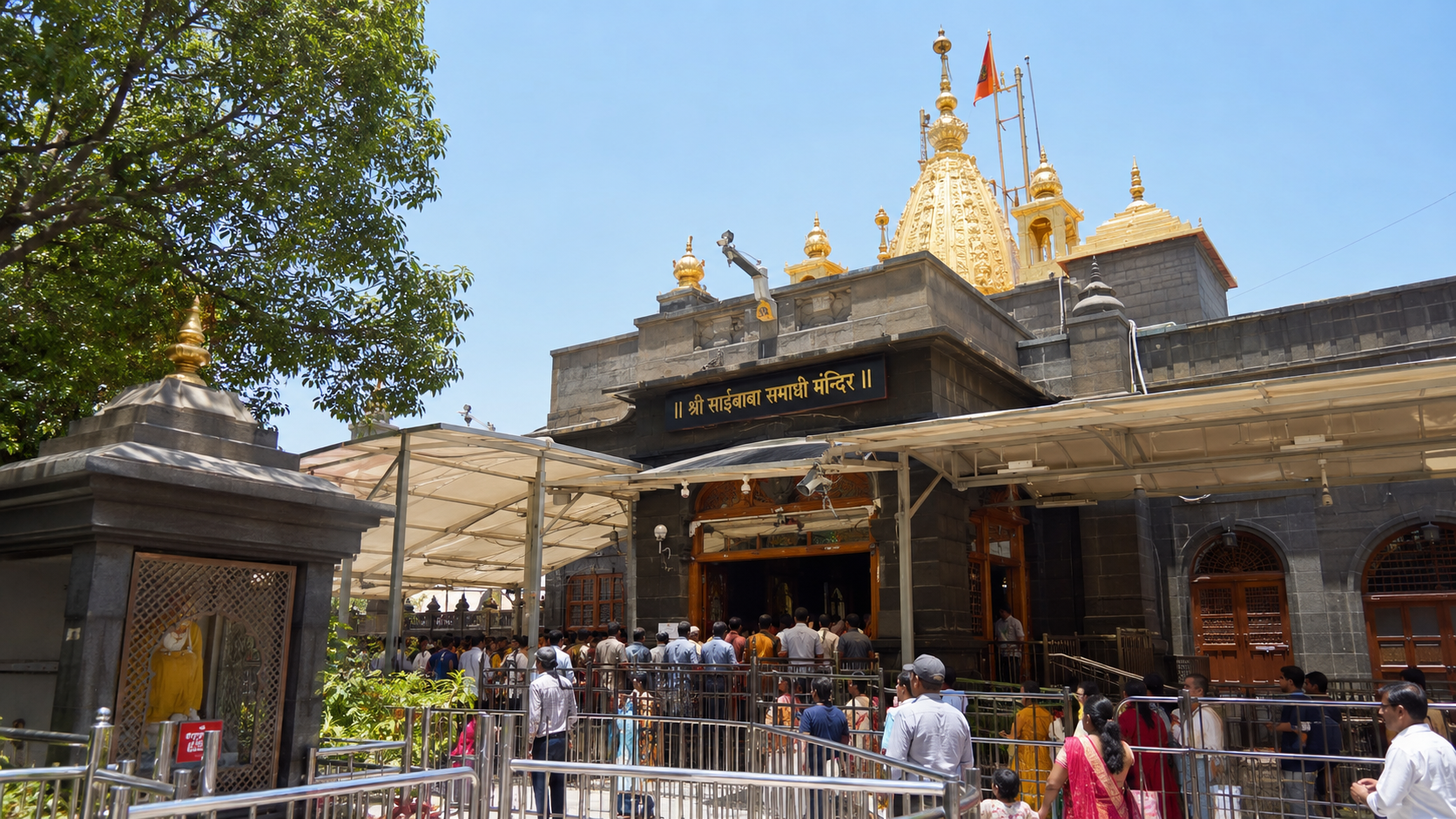
Shirdi Sai Baba Samadhi Mandir: What to Know Before You Visit
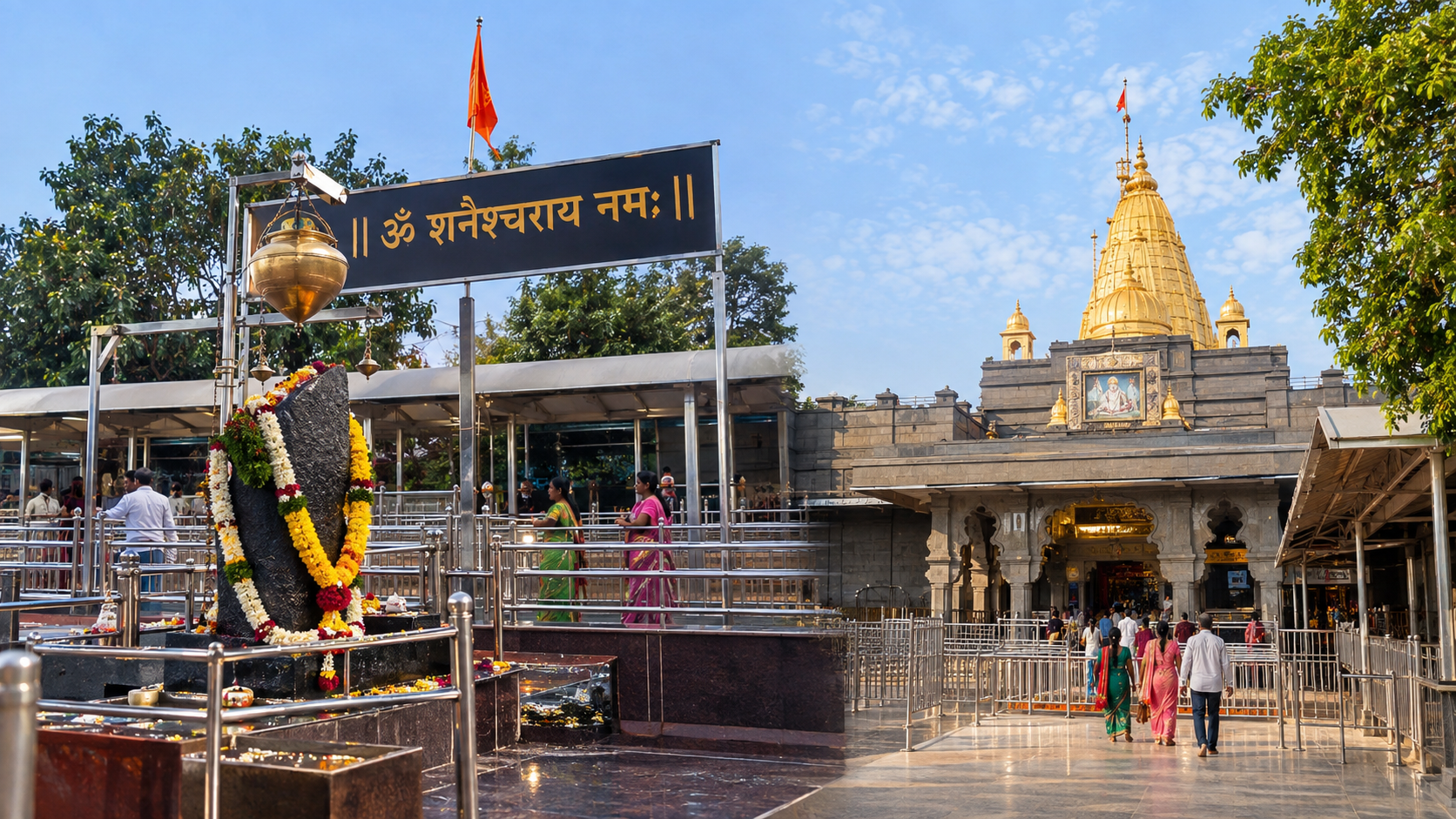
Shirdi Sai Baba Samadhi Mandir is the principal shrine of the Shree Saibaba Sansthan Trust complex in Shirdi, Maharashtra. It houses the samadhi of Sai Baba and is the central place of worship for pilgrims visiting Shirdi. The wider temple area also includes several sites associated with Sai Baba, including Dwarkamai, Chavadi and Gurusthan.
For most visitors, the Samadhi Mandir is the main reason for coming to Shirdi. Some arrive specifically for darshan, while others plan their visit around one of the daily aarti sessions and then spend time at the nearby religious sites. Because the shrine is an active place of worship rather than simply a tourist attraction, understanding the daily programme and current booking arrangements is useful before you travel.
The official Sansthan currently lists the temple opening at 4:45 AM and the start of darshan in the Samadhi Mandir at 6:25 AM. The daily programme also includes Kakad Aarti, Mid-day Aarti, Dhoop Aarti and Shej Aarti. These timings are the current published schedule, but special occasions or administrative arrangements can affect the programme, so check the official website close to your visit.
Shirdi Sai Baba Temple History and Spiritual Importance
Sai Baba spent much of his life in Shirdi and became known for teachings centred on faith, patience, equality and harmony between religious communities. The exact details of his birth and early life are not established; even the official Sansthan history notes that there is no conclusive information about his parents or birthplace.
The history of the present shrine is closely connected with Gopalrao alias Bapusaheb Buti, a devotee from Nagpur. The Sansthan records that work on Buti Wada began in December 1915. Buti had originally planned the building as a wada and intended a shrine to Muralidhar within it.
The story of how the wada became the Samadhi Mandir is an important part of Shirdi's history. Sai Baba attained Mahasamadhi on 15 October 1918. After discussions among his devotees about where his body should be interred, Buti Wada was selected. The Sansthan's historical account records that Sai Baba's body was taken there and interred in the wada on 16 October 1918.
The Sansthan also records that the land on which the wada stood had earlier been cultivated by Sai Baba as a garden. This gives the present shrine a direct connection with the places associated with his life in Shirdi.
For travellers interested in the Shirdi Sai Baba Temple history, it is useful to separate documented history from devotional tradition. The Sansthan's historical pages draw on sources such as Shri Sai Satcharita and accounts of devotees, while many stories surrounding Sai Baba have also been preserved through generations of devotional practice.
Shirdi Temple Timings and Daily Programme
The temple follows a structured daily programme. This is important when planning a pilgrimage because the timing of aarti and other rituals can affect when ordinary darshan is available and how long you should allow for the visit.
The current programme published by the Shree Saibaba Sansthan Trust is:
| Programme | Current listed time |
|---|---|
| Temple opens | 4:45 AM |
| Bhupali | 5:00 AM |
| Kakad Aarti | 5:15 AM |
| Mangal Snaan in Samadhi Mandir | 5:50 AM |
| Aarti – “Shirdi Majhe Pandharpur” | 6:20 AM |
| Darshan begins in Samadhi Mandir | 6:25 AM |
| Dhuni Pooja at Dwarkamai | 11:30 AM |
| Mid-day Aarti | 12:00 PM |
| Pothi in Samadhi Mandir | 4:00 PM |
| Dhoop Aarti | At sunset |
| Devotional songs and cultural programmes | 8:30–10:00 PM |
| Shej Aarti | 10:00 PM |
The official daily programme is the best reference for current Shirdi temple timings. In particular, Dhoop Aarti is listed by sunset rather than a fixed clock time, so its timing changes during the year.
Travellers should not rely solely on older travel websites for Shirdi Sai Baba temple timings. Check the official Sansthan website shortly before travelling, especially if your journey is built around aarti or a particular darshan slot.
Shirdi Sai Baba Darshan: How to Plan
Darshan is the main activity for most pilgrims visiting the Samadhi Mandir. The practical experience can vary according to the day, crowd levels, festivals and the arrangements in force at the temple.
The Sansthan provides online booking for darshan and aarti through its official booking portal. The portal also handles accommodation and other services. The Trust specifically states that it does not authorise agents for online bookings and warns devotees about fake websites and duplicate Google Maps listings.
If you intend to use online booking:
- Use the official Sansthan website or official booking portal.
- Enter your personal and identification details carefully.
- Check the selected date and time before confirming the booking.
- Keep the booking acknowledgement available during your journey.
- Carry the original photo identity document used for the booking.
- Follow the reporting instructions shown on the booking acknowledgement.
- Recheck the official programme before travelling.
The Sansthan's published online-darshan terms state that devotees must present the booking acknowledgement and original photo identity proof at the specified verification gate and report at the allotted time. The Trust also reserves the right to change or cancel a timeslot in unavoidable circumstances.
The current online portal also states that Darshan and Aarti dates and time slots cannot be changed after booking. This makes it worth checking your travel arrangements carefully before confirming a booking.
Shirdi Sai Baba Aarti Timings
Aarti is an important part of the daily temple schedule. The four principal sessions are Kakad Aarti in the morning, Mid-day Aarti around noon, Dhoop Aarti around sunset and Shej Aarti at night.
Kakad Aarti is currently scheduled for 5:15 AM and Shej Aarti for 10:00 PM. The Mid-day Aarti is at 12:00 PM, while Dhoop Aarti is scheduled according to sunset.
If attending aarti is central to your Shirdi pilgrimage, make it the starting point of your itinerary rather than fitting it around sightseeing. Also check the official booking arrangements for the date of travel. Ordinary darshan and aarti participation should not be assumed to be the same facility.
Temple Etiquette and Practical Darshan Tips
The Samadhi Mandir is an active religious site, so visitors should treat it accordingly.
• Wear clean, comfortable and respectful clothing suitable for a place of worship.
• Follow the queue and instructions given by temple staff and security personnel.
• Avoid carrying unnecessary bags, valuables or other items that may complicate security checks.
• Keep important documents and personal belongings secure.
• If travelling with elderly family members or children, allow additional time for queues and movement.
• If travelling in a group, agree on a meeting point outside the main temple area in case members become separated.
• During festivals and busy pilgrimage periods, expect greater crowd movement and allow extra time.
The Sansthan also provides locker facilities within the temple complex according to its current visitor information. Check the latest arrangements when you arrive rather than assuming every facility operates in exactly the same way throughout the year.
Most importantly, avoid trying to rush through the visit. A realistic schedule is more useful than one that leaves only a few minutes between darshan, meals, hotel check-in and departure.
Best Time to Visit Shirdi Sai Baba Samadhi Mandir
Shirdi can be visited throughout the year, but the most comfortable period for general travel is usually from October to March. Maharashtra Tourism currently identifies these cooler months as the ideal period for exploring Shirdi.
The choice also depends on the type of pilgrimage you want.
For relatively comfortable weather, the cooler months are preferable. If you want to experience major devotional celebrations, Guru Purnima and Dussehra are important occasions in Shirdi, but these periods can also bring more visitors and special programmes. Maharashtra Tourism specifically highlights these festivals as significant times to experience the town's religious atmosphere.
If your priority is a more predictable itinerary, avoid building a short trip around a major festival unless you have checked the current programme and accommodation availability.
For summer travel, plan outdoor movement carefully and avoid unnecessarily long daytime walks. Regardless of season, the early morning programme can require an early start, so accommodation location and transport arrangements matter.
How to Reach Shirdi Sai Baba Samadhi Mandir
The Samadhi Mandir is in Shirdi town and is easily reached from the town's railway station, airport and road network.
By Train
Sainagar Shirdi Railway Station is approximately 3 km from the temple. Maharashtra Tourism describes it as a convenient rail option with connections to major cities including Mumbai, Chennai, Hyderabad and Pune. From the station, visitors can continue by taxi or auto-rickshaw.
If you are planning an early morning darshan, check your train's arrival time carefully. Arriving shortly before an important temple programme can leave little margin for delays, local transfers or hotel check-in.
By Road
Shirdi is well connected by road, including bus services operated by MSRTC and private operators. Maharashtra Tourism currently lists approximate road distances of 240 km from Mumbai, 185 km from Pune and 90 km from Nashik. Actual travel time depends on traffic, road conditions and your starting point.
For families or small groups carrying luggage, a pre-arranged taxi can be convenient. Bus travel may suit travellers who prefer a lower-cost option and are comfortable working around fixed departure schedules.
By Air
Shirdi Airport is approximately 14 km from the temple according to Maharashtra Tourism. Taxi and autorickshaw services are available for the onward journey.
Nashik is another useful airport option for travellers comparing flight availability and onward road travel. The best airport depends on your origin, flight schedule and the onward transfer available on your travel date.
Local Transport in Shirdi
Most of the main pilgrimage sites are concentrated around the temple area, so local travel within Shirdi is manageable. Auto-rickshaws and taxis can be used for transfers between the railway station, bus stand, accommodation and temple.
If you choose Sansthan-operated accommodation, check the current transport arrangements for your property. The Trust states that its New Bhakta Niwas accommodation has a free bus service operating around the clock between the accommodation complex and the mandir complex.
For older travellers or anyone with limited mobility, ask about the walking distance involved before finalising accommodation. Even a short road distance can feel different when the temple area is crowded.
Shirdi Temple Accommodation
Choosing where to stay can make a noticeable difference to a short pilgrimage, particularly if you want to attend Kakad Aarti or stay in Shirdi until the evening programme.
The Shree Saibaba Sansthan Trust operates accommodation facilities including Dwarawati and New Bhakta Niwas. Its current accommodation information lists 334 rooms and dormitory or larger-room facilities at Dwarawati, while New Bhakta Niwas has 542 rooms across different categories. The Trust also lists parking, canteen and other facilities at these accommodation complexes.
Availability, room categories and charges can change, so confirm the current details when booking. The Trust's online accommodation rules also specify documentation requirements and conditions around room allocation and stay duration.
Private hotels and lodges provide additional choices around Shirdi. When comparing them, consider location, access to transport, check-in timing and how easily you can reach the temple for an early programme.
For Trust accommodation, use the official booking channels. The Sansthan explicitly warns against fraudulent accommodation listings and says its official websites are the authorised sources for room and darshan bookings.
Places to Visit Near Shirdi Samadhi Mandir
A visit to the Samadhi Mandir can be combined with several nearby sites associated with Sai Baba. These are best treated as part of the wider Shirdi pilgrimage rather than as unrelated sightseeing stops.
Dwarkamai
Dwarkamai is one of the most important sites associated with Sai Baba. It was the mosque where he spent a substantial part of his time in Shirdi and remains part of the Sansthan's temple premises. The daily programme also includes Dhuni Pooja at Dwarkamai at 11:30 AM.
Chavadi
Chavadi is another important site connected with Sai Baba's life in Shirdi. It can be included naturally in a walking itinerary around the main pilgrimage area.
Gurusthan
Gurusthan is associated with Sai Baba's early presence in Shirdi. The Sansthan's historical account states that he stayed under the neem tree at the site for several years before moving to the mosque that later became known as Dwarkamai.
Other Sites in the Temple Area
The Sansthan also identifies other religious sites within the wider pilgrimage area, including the Hanuman (Maruti) Temple and temples dedicated to Ganesh, Shani and Mahadev.
For a short visit, it is usually more practical to group these sites around your main darshan rather than scheduling each one immediately before a fixed aarti or departure time.
Accessibility and Planning for Families
A large pilgrimage complex requires a little more planning for elderly visitors, young children and travellers with mobility limitations.
Before travelling, contact the Sansthan if you require a specific accessibility arrangement or have questions about the current route through the temple. Crowd-management measures and access arrangements can change, especially during major events.
Families should keep the day's schedule realistic. If the main purpose of the trip is Sai Baba darshan, make that the fixed part of the itinerary and keep nearby sightseeing flexible.
It is also sensible to allow time for rest, meals and hotel check-in rather than planning continuous temple visits from morning until night.
A Practical One-Day Shirdi Pilgrimage Plan
A simple schedule can make a short visit much easier to manage:
- Arrive in Shirdi and settle into your accommodation.
- Check the latest temple programme and confirm any online booking details.
- Keep your main Samadhi Mandir darshan as the day's priority.
- Visit Dwarkamai, Chavadi and Gurusthan after allowing sufficient time for darshan.
- Take a proper break for food and rest.
- Attend an evening programme or aarti only if it fits comfortably with your travel plans.
- Keep departure time flexible, particularly during festivals or busy weekends.
If you are travelling by train or air on the same day, build a generous buffer between your planned temple visit and departure.
Practical Tips Before Travelling to Shirdi
• Check the official Sansthan website shortly before the journey for the latest timings and notices.
• If booking online, use only the official Sansthan booking portal.
• Carry the original identity document required for your booking.
• Do not assume that an old Shirdi darshan timings chart is still current.
• Book accommodation early around major festivals and popular holiday periods.
• Keep your itinerary flexible enough to accommodate queues and local traffic.
• If travelling with elderly family members, choose accommodation and transport with walking requirements in mind.
• Keep your phone, cash and identity documents secure.
• Avoid unofficial agents offering guaranteed darshan, accommodation or other temple services.
• For aarti, check the current booking and participation rules rather than assuming a general darshan booking includes aarti access.
The Sansthan's official portal currently provides online services for Darshan, Aarti, Pooja, accommodation and donations. It also clearly warns that the Trust does not authorise agents for these online services.
Plan Your Visit to Shirdi Sai Baba Samadhi Mandir
A well-planned Shirdi pilgrimage does not need a complicated itinerary. The key is to work around the official temple programme, allow realistic time for darshan and choose transport and accommodation that fit your schedule.
For travellers visiting the Shirdi Sai Baba Samadhi Mandir, Trip to Yatra can help organise the wider journey around your preferred dates, transport requirements, accommodation and nearby places to visit. If you would like help putting the practical details together, contact Trip to Yatra with your travel dates and group requirements