


































Shani Shingnapur Temple
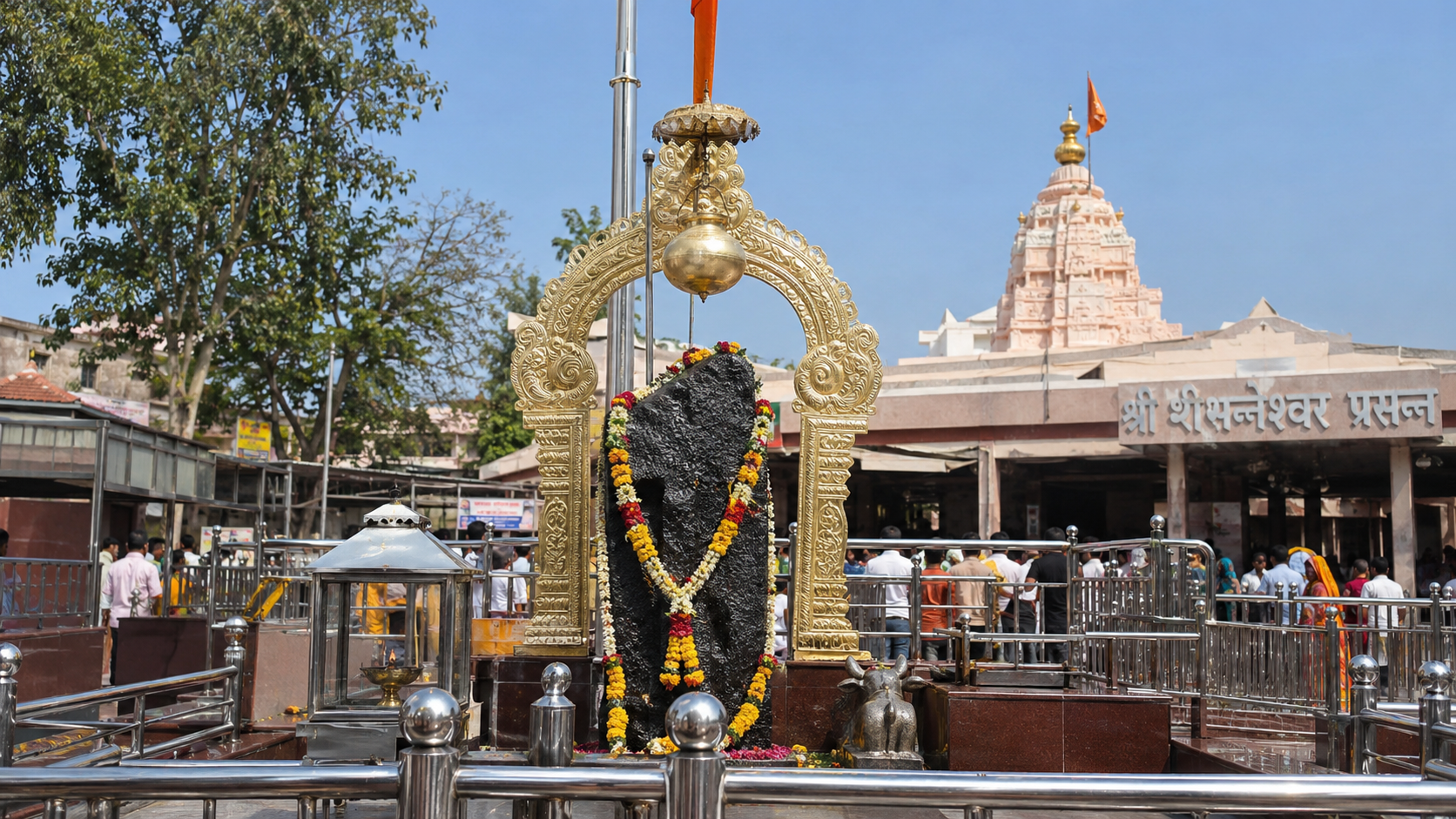
Shani Shingnapur Temple in Maharashtra is a distinctive pilgrimage site dedicated to Lord Shani, known for its open-sky shrine and long-standing traditions. This practical guide covers darshan, temple timings, rituals, travel routes, the best time to visit, nearby attractions, local transport and stay options for pilgrims planning a visit.
Shani Shingnapur Temple: At a Glance
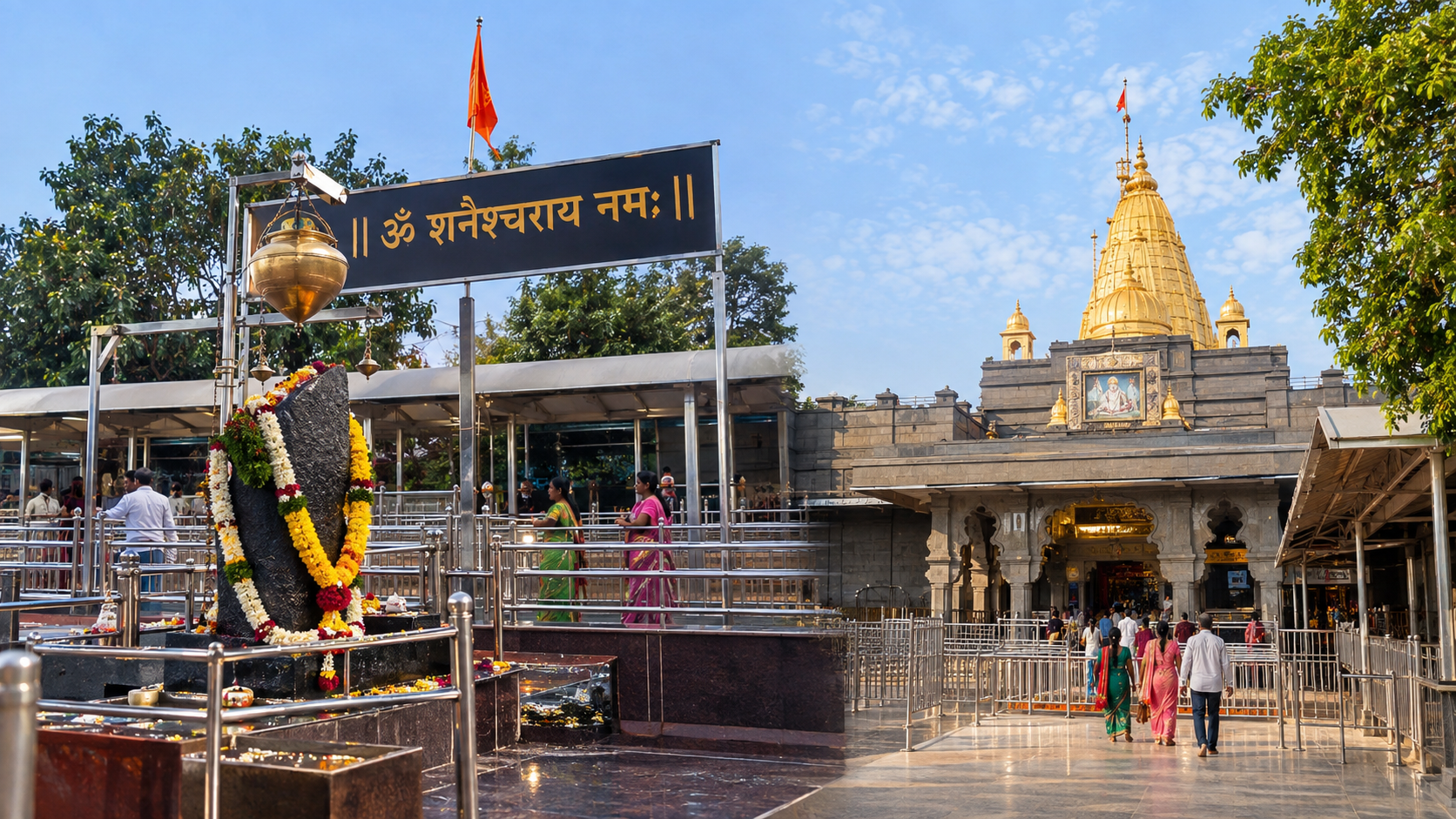
Shani Shingnapur Temple is a well-known Lord Shani shrine in Shingnapur village, in Nevasa taluka of Maharashtra's Ahilyanagar district. The main shrine is distinctive because the black stone form worshipped as Shani Dev is kept in an open setting rather than inside a conventional covered sanctum. The temple attracts pilgrims throughout the year, with particularly heavy attendance on Saturdays and important occasions associated with Lord Shani.
For travellers, Shani Shingnapur is easy to combine with a wider Maharashtra pilgrimage itinerary. Shirdi is one of the most practical additions, while Rahuri and Ahilyanagar provide useful rail and road connections. The Maharashtra Tourism Department also lists the shrine among the important religious attractions of the district.
Why Shani Shingnapur Is Important
Shani Dev is traditionally associated with Shani, the planet Saturn, and occupies an important place in Hindu religious practice and astrology. Devotees visit the Shani Dev temple at Shingnapur to offer prayers, perform worship and seek the deity's blessings according to their faith.
The character of the shrine is different from many large temple complexes. The principal deity is worshipped under the open sky, and the simplicity of the setting is an important part of the identity of Shani Shingnapur. The village is also known for its long-standing association with homes traditionally built without conventional doors, a custom connected by local belief with faith in Lord Shani's protection. This should be understood as a religious and cultural tradition rather than a guarantee of security for visitors.
Shani Shingnapur Temple History and Legend
The history of the shrine is closely connected with local oral tradition. According to the traditional legend recorded by Maharashtra Tourism, villagers discovered a large black stone after heavy rain. A shepherd is said to have touched the stone, after which it appeared to bleed. The story continues that Lord Shani appeared in a dream and instructed that the stone be worshipped at the site under the open sky.
The temple's official website also describes the principal form of Lord Shani as a self-manifested, or swayambhu, black stone. These accounts are part of the religious tradition surrounding the shrine and should not be presented as independently established historical fact.
For visitors, the open-sky form of worship is perhaps the most immediately distinctive feature of the Shani Shingnapur pilgrimage. The surrounding village traditions have developed alongside this religious identity and remain an important part of the visitor experience.
Shani Shingnapur Darshan and Temple Timings
The official Shri Shaneshwar Devasthan website currently states that the temple opens at 4:00 AM and closes at 10:30 PM. It also lists three daily aarti periods: the first at 4:30 AM, the second at 12:00 PM and the third around sunset.
Because ritual schedules can change on festivals and special occasions, pilgrims should verify the day's arrangements with the temple trust before travelling, especially if a particular aarti or pooja is the main purpose of the visit.
| Visitor information | Current guidance |
|---|---|
| Temple opening | 4:00 AM |
| Temple closing | 10:30 PM |
| First aarti | 4:30 AM |
| Second aarti | 12:00 PM |
| Third aarti | Around sunset |
| Prasadam | 10:00 AM–3:00 PM and 6:00 PM–9:00 PM |
The temple's official site separately lists prasadam availability from 10:00 AM to 3:00 PM and from 6:00 PM to 9:00 PM.
Planning Your Darshan
If you want a quieter visit, avoid assuming that Saturday will be a low-crowd day. Saturday is traditionally associated with Lord Shani and the official temple site notes that very large numbers of devotees visit on Saturdays and on Shani Amavasya.
A practical approach is to:
- Check the official temple schedule before leaving.
- Reach with enough time for security and the walk into the temple area.
- Wear modest, comfortable clothing suitable for a place of worship.
- Follow instructions from temple staff and priests.
- If you plan a specific pooja or oil offering, confirm the current procedure locally rather than relying on an old travel article.
The official temple website specifically warns devotees about fraudulent online pooja services and states that the trust does not authorise such services.
Shani Shingnapur Temple Rituals and Oil Abhishek
Offerings and worship form an important part of a Shani Shingnapur temple visit. The official pooja procedure includes offerings such as water, black cloth, flowers, incense, lamps, black sesame and dakshina.
Oil abhishek, commonly associated with worship of Lord Shani, is another important ritual at the shrine. Visitors should follow the temple's current arrangements for making offerings rather than assuming that every ritual can be performed independently or at any time.
If you are travelling specifically for oil abhishek, ask the temple authorities about the current process, timings, permitted offerings and any applicable charges before beginning the ritual.
Best Time to Visit Shani Shingnapur
Shani Shingnapur can be visited throughout the year. For a more comfortable pilgrimage, the cooler months are generally preferable to the hotter part of the year. Maharashtra Tourism identifies November to February as a particularly suitable period because of the more pleasant weather.
Your ideal date also depends on what you want from the visit:
- For a calmer pilgrimage: Consider a weekday outside major festival periods.
- For traditional religious activity: Saturday offers a stronger devotional atmosphere but can also mean larger crowds.
- For major occasions: Shani Amavasya and Shani Jayanti attract significant numbers of devotees.
- For comfortable road travel: Avoid planning around extreme summer heat where possible, particularly if your itinerary includes substantial outdoor waiting or walking.
Festival dates follow the Hindu calendar, so check the temple trust's latest announcements before fixing travel and accommodation.
How to Reach Shani Shingnapur
Shani Shingnapur is primarily a road-accessible pilgrimage destination. The temple's official route information identifies Ghodegaon on the Aurangabad–Ahmednagar route and Rahuri on the Manmad–Ahmednagar route as useful approaches. From Rahuri, the temple is about 32 km away.
By Road
Road travel is usually the simplest option for pilgrims travelling from Shirdi, Ahilyanagar or nearby Maharashtra cities. Maharashtra Tourism gives approximate road distances of 70 km from Shirdi, 35 km from Ahilyanagar and 160 km from Pune, although actual driving distance and journey time depend on the route and road conditions.
From Rahuri, local buses, taxis and other road transport can be used to continue to Shingnapur. The temple's own travel information also mentions state transport buses, taxis and bus services from the surrounding transport points.
By Train
Rahuri is the closest major rail access point listed by Maharashtra Tourism, at roughly 32 km from the temple. Ahilyanagar, Shrirampur and Belapur are additional railway options. From the station, travellers need to continue by road.
When choosing a station, compare the actual train availability for your origin with the onward road connection. The closest station is not always the most convenient station for every traveller.
By Air
Maharashtra Tourism lists Chhatrapati Sambhajinagar/Aurangabad Airport and Pune Airport among the practical air-access options. It gives an approximate distance of 83–90 km from Aurangabad and around 161 km from Pune.
For most pilgrims arriving by air, a pre-arranged taxi or road transfer is likely to be more straightforward than trying to combine multiple local connections.
Local Transport
Once you are in the Shani Shingnapur area, taxis, local buses and other road-based services are the main practical transport options. The temple's official route guidance specifically mentions buses, jeeps and taxis from nearby railway stations and road points.
For a pilgrimage involving elderly travellers or people who cannot walk for long periods, discuss the drop-off and waiting arrangements with your driver before arrival. Crowds can affect how close vehicles can get to busy temple areas.
Accessibility and Visitor Comfort
The shrine is a working pilgrimage site rather than a conventional sightseeing attraction, so visitors should plan for walking, standing and outdoor conditions.
A few practical considerations can make the Shani Shingnapur temple visit easier:
- Carry drinking water, particularly in warmer months.
- Use comfortable footwear for the approach and keep in mind that footwear restrictions apply within worship areas.
- Carry essential medicines and personal items.
- Elderly travellers should avoid unnecessarily tight schedules around peak crowd periods.
- Families travelling with children should establish a meeting point in case the group becomes separated.
- Check current access arrangements before travelling if a member of your group has significant mobility limitations.
Temple rules and arrangements can change during festivals or periods of unusually high attendance, so on-site instructions should take priority.
Stay Near Shani Shingnapur
For a short pilgrimage, many travellers can visit Shani Shingnapur as part of a wider itinerary based in Shirdi or the surrounding region. If you prefer to stay closer to the temple, accommodation is available in the wider pilgrimage area, but availability and standards vary.
The temple trust's official information indicates that accommodation is among the facilities supported through its administration and development activities.
For an overnight stay, confirm the exact property, room availability, check-in arrangements and facilities before travelling. During Saturdays, Shani Amavasya and other major religious occasions, booking ahead is particularly sensible.
Shani Shingnapur Nearby Places
Shani Shingnapur works well as one stop in a broader Maharashtra pilgrimage route.
Shirdi
Shirdi is the most obvious addition for many pilgrims. Maharashtra Tourism places Shani Shingnapur at roughly 70–75 km from Shirdi, making the two destinations practical to combine in the same trip.
A Shirdi itinerary can include the Sai Baba Temple and associated sites such as Dwarkamai and Chavadi.
Renuka Devi Temple
Maharashtra Tourism identifies Renuka Devi Temple as a nearby religious attraction, approximately 7 km from Shani Shingnapur. It can be considered if you have additional time after darshan.
Ahilyanagar
Ahilyanagar is useful both as a transport point and as a destination in its own right. Travellers interested in history can consider Ahmednagar Fort as part of a wider itinerary. Maharashtra Tourism lists the fort among the district's attractions.
Trimbakeshwar
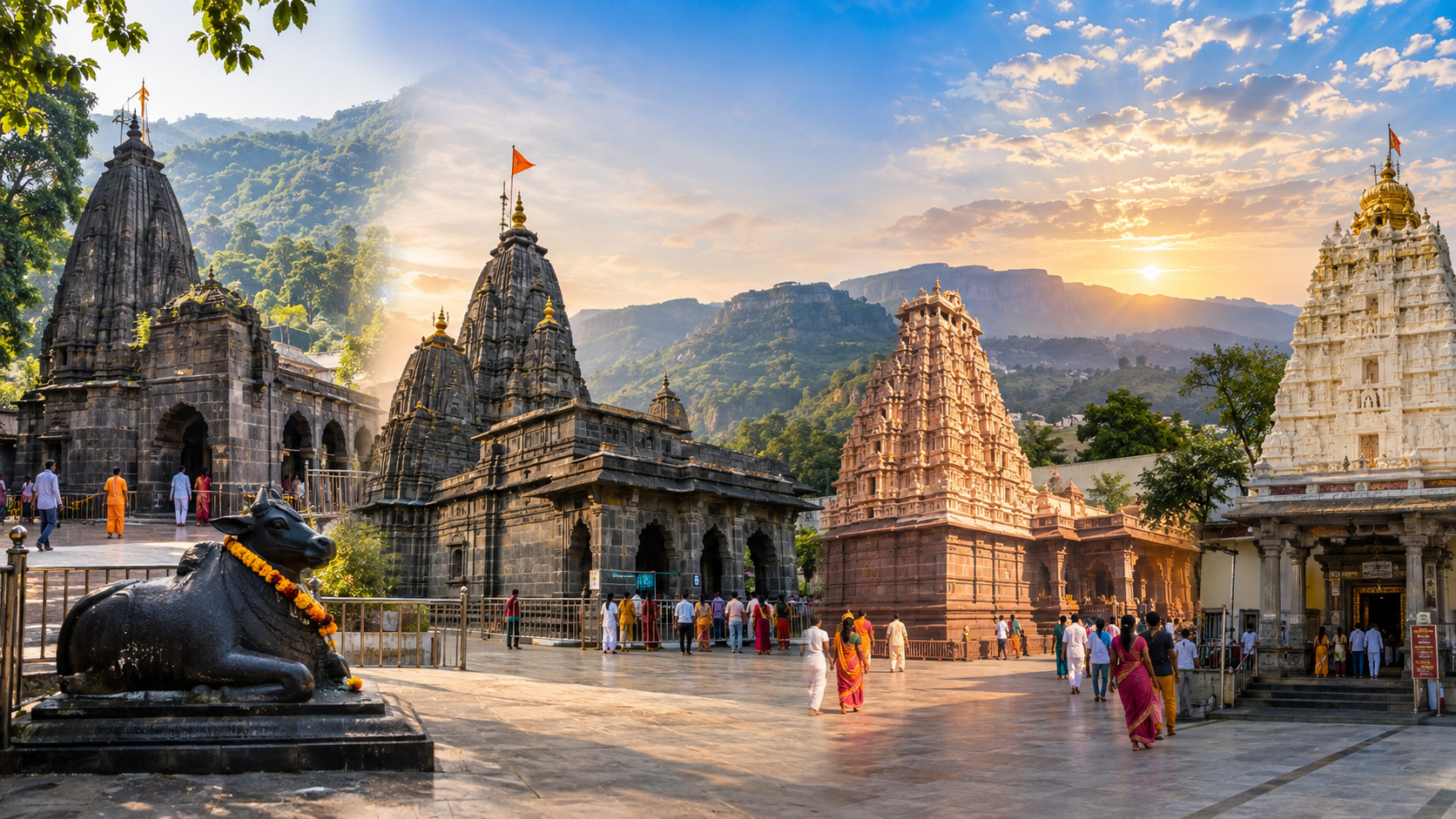
Trimbakeshwar near Nashik is considerably farther away, so it is better treated as part of a longer Maharashtra pilgrimage circuit rather than a quick local excursion. Maharashtra Tourism identifies it as one of the twelve Jyotirlingas of Lord Shiva.
Practical Tips for a Shani Shingnapur Yatra
A little preparation is useful, particularly if this is your first visit.
- Check timings on the official website before departure. Published schedules can change for special occasions.
- Plan around the purpose of your visit. A simple darshan trip and a ritual-focused pilgrimage may require different timings.
- Allow extra time on Saturdays and festival days. Crowd levels can be substantially higher.
- Keep cash and digital payment options available. Small local purchases and offerings may have different payment arrangements.
- Do not rely on unofficial online pooja websites. The temple trust has specifically issued a warning about fraudulent online worship services.
- Book accommodation early during busy religious dates.
- Keep the itinerary flexible. Road travel, queues and local crowd management can affect the day's schedule.
- Respect the religious character of the site. Follow instructions concerning photography, offerings, dress, footwear and movement within worship areas.
A Practical One-Day Visit Plan
If you are travelling from the Shirdi side, a simple day plan can work well:
- Start early enough to reach Shani Shingnapur before the busiest period.
- Complete darshan and any pre-planned worship.
- Allow time to visit the surrounding village and have a meal or prasadam where appropriate.
- Continue to Shirdi or return to your overnight base.
- If you are travelling on a major festival day, avoid packing too many additional attractions into the same schedule.
The best itinerary depends on your starting point, transport and whether you want to combine Shani Shingnapur with Shirdi or other pilgrimage sites.
Plan Your Shani Shingnapur Temple Visit
A visit to Shani Shingnapur Temple is best planned around the actual purpose of your pilgrimage: darshan, worship, a particular ritual, or a wider Maharashtra temple circuit. Check the latest temple timings and festival arrangements before departure, and allow enough time for road travel and crowds.
If you are planning a Shani Shingnapur Temple pilgrimage and want help arranging transport, accommodation or a practical itinerary, Trip to Yatra can help you plan the journey around your dates, starting point and preferred travel style.