
Mount Kailash
Mount Kailash in Tibet is one of Asia’s most revered pilgrimage destinations, sacred in Hinduism, Buddhism, Jainism and the Bon tradition. For Indian pilgrims, the journey involves high-altitude travel, permits, medical requirements and careful planning. This guide explains the Kailash Mansarovar Yatra route, parikrama, best season, darshan, accommodation and practical preparations.
Mount Kailash: A Sacred Mountain in Tibet
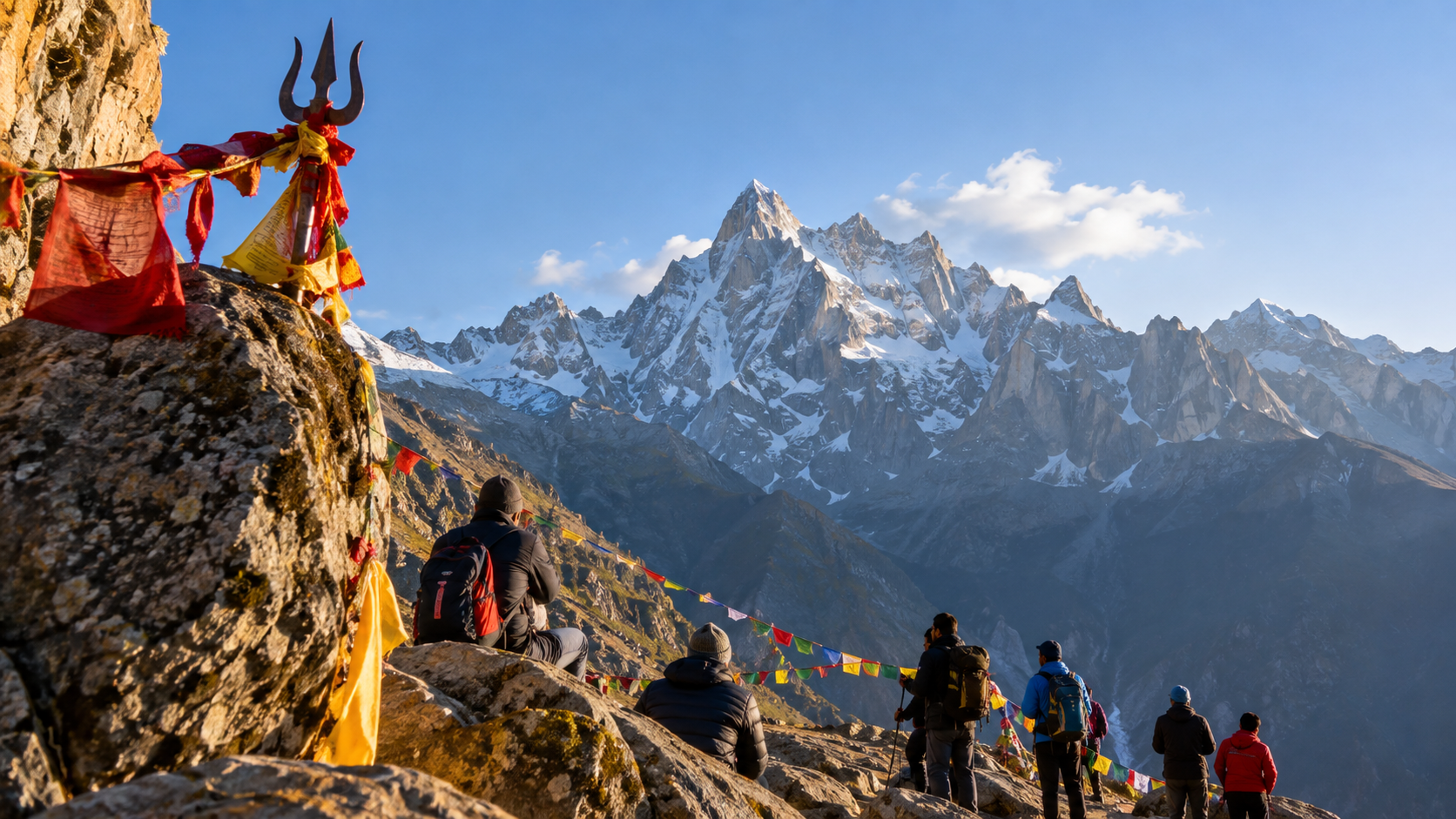
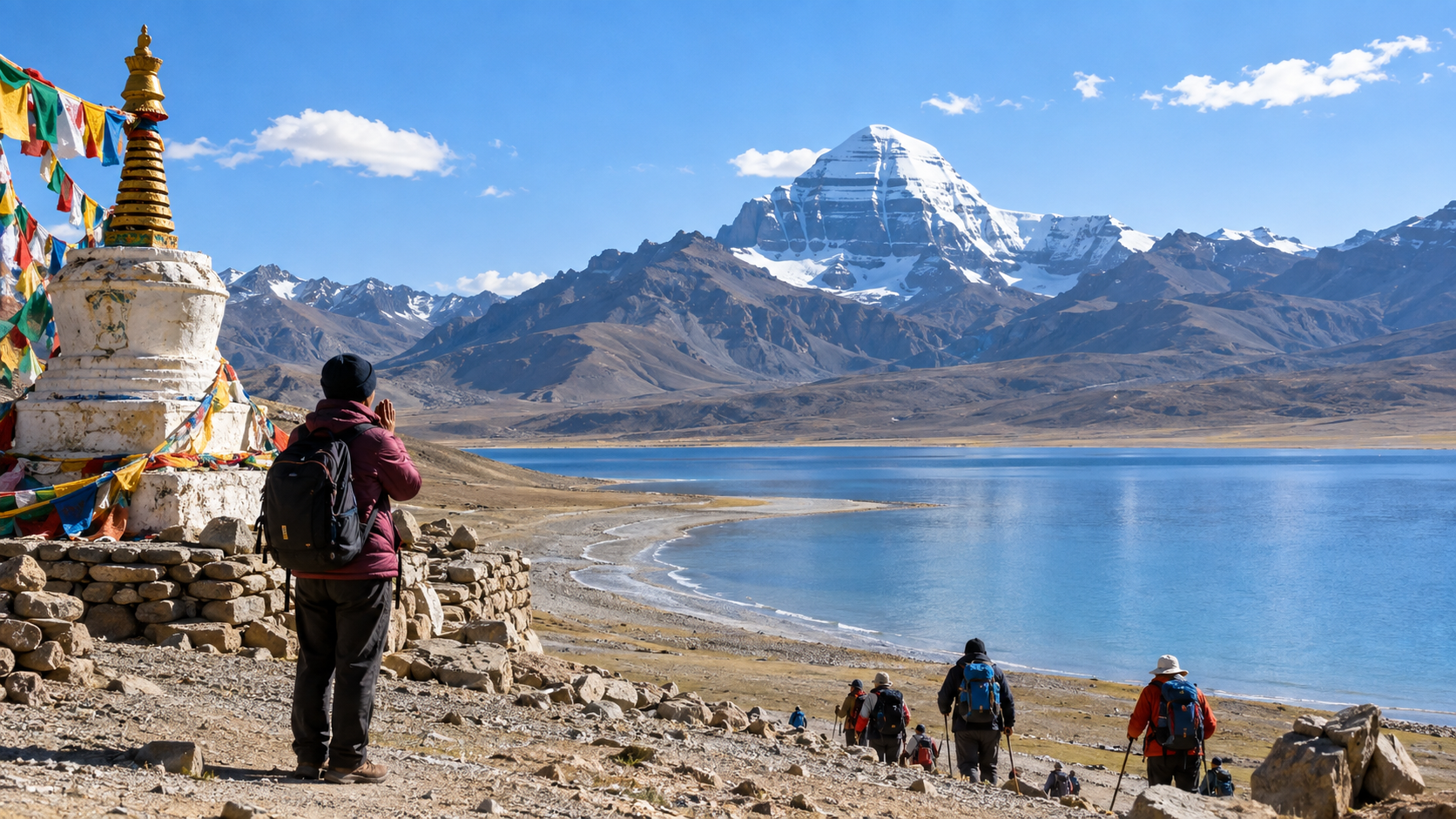
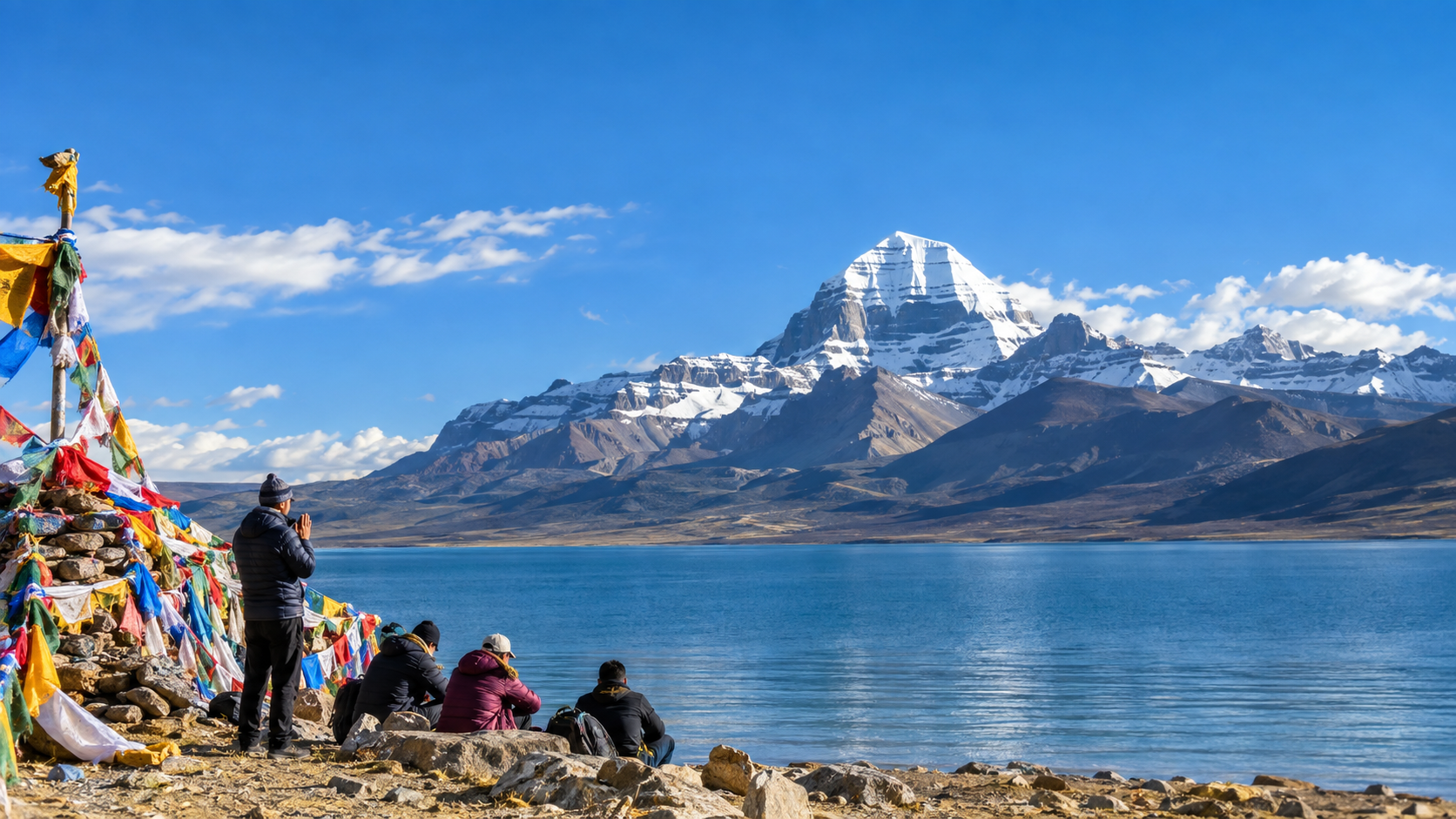
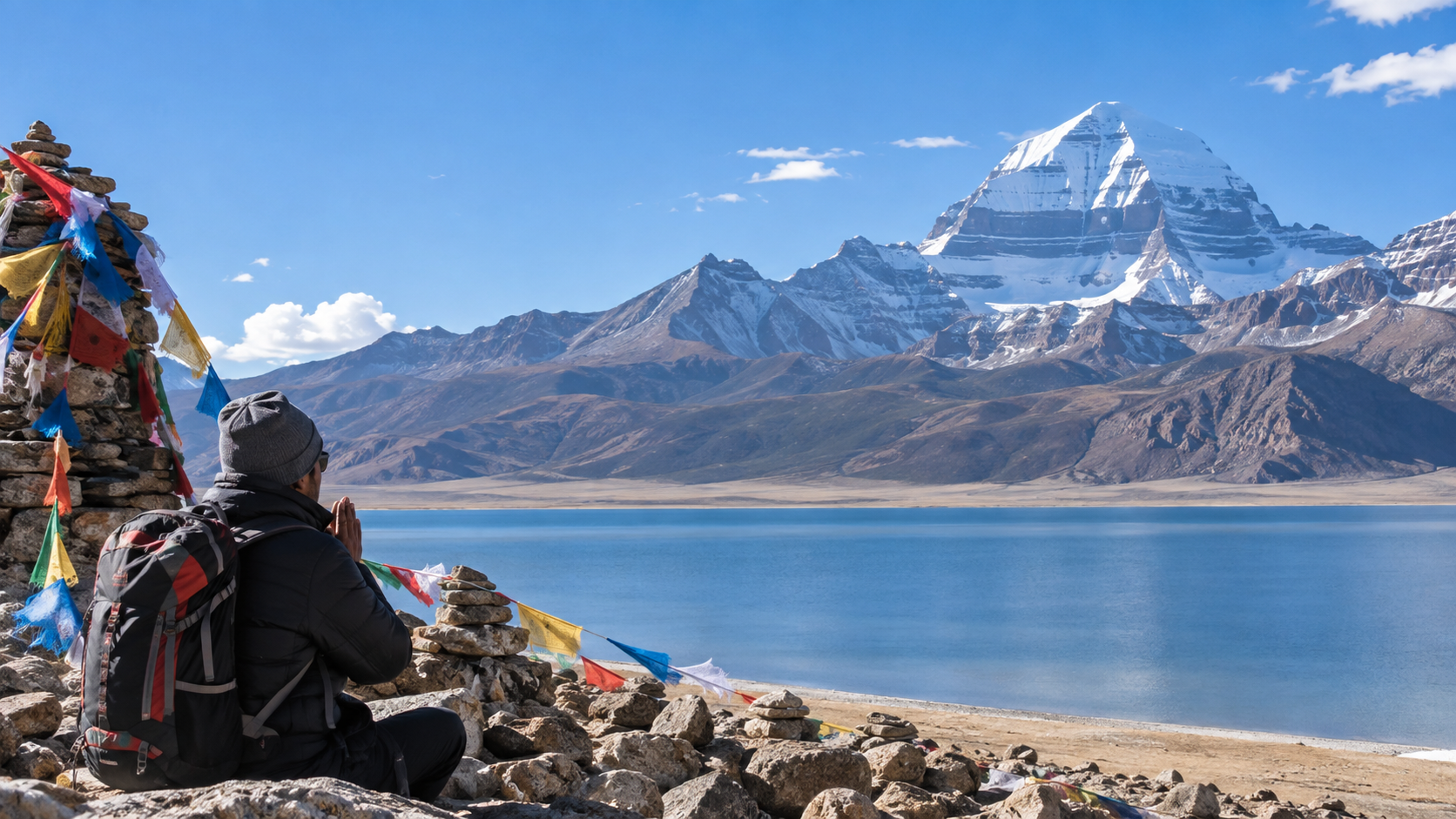
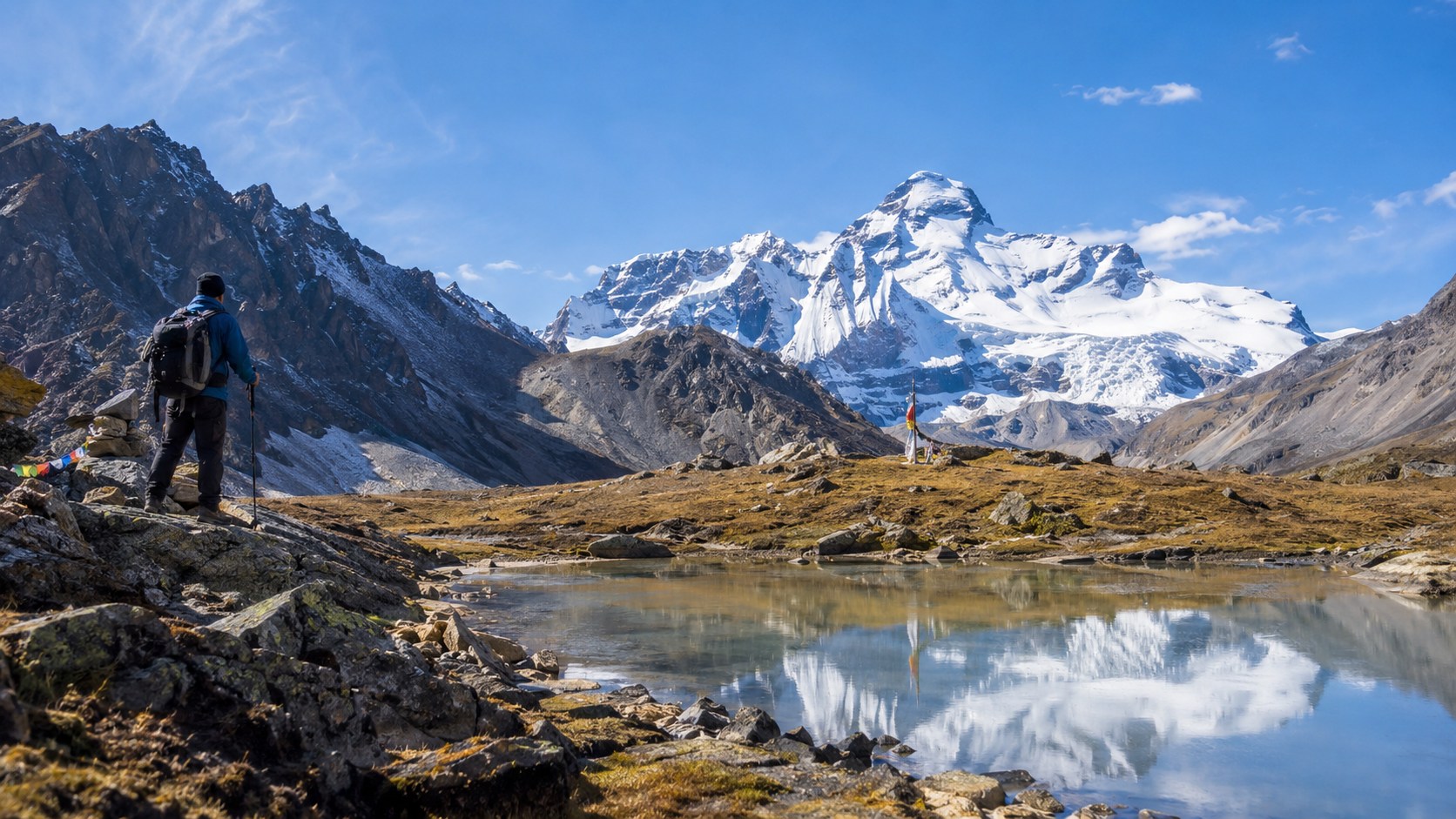
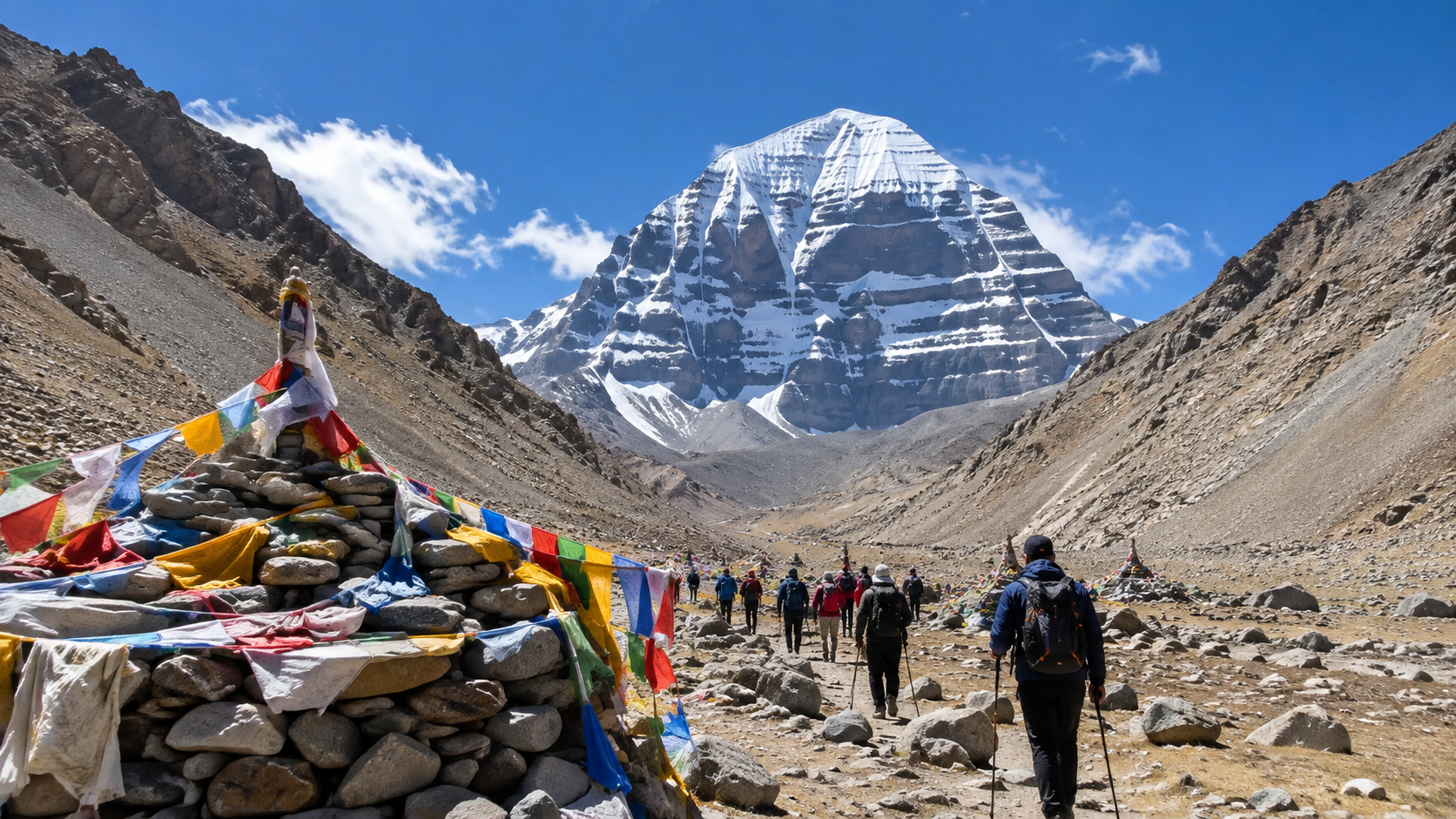
Mount Kailash is a sacred mountain in the Tibet Autonomous Region of China, in the remote Ngari region near Lake Mansarovar and Rakshas Tal. Rising to about 6,638 metres, the mountain is revered across several religious traditions and has remained a pilgrimage destination for centuries. The surrounding landscape is remote, high-altitude and demanding, which makes a visit very different from an ordinary Himalayan sightseeing trip.
For travellers from India, the Mount Kailash pilgrimage is generally undertaken as part of the Kailash Mansarovar Yatra. The Government of India currently organises the official Indian pilgrimage through Lipulekh Pass in Uttarakhand and Nathu La Pass in Sikkim, in coordination with the Chinese authorities. The 2026 government programme is scheduled in batches during the summer pilgrimage season.
The journey combines religious observance with long road journeys, high-altitude acclimatisation and, for the Mount Kailash parikrama, demanding walking at elevations where weather and oxygen levels can change quickly.
Why Mount Kailash Is Sacred
Mount Kailash has significance for Hinduism, Buddhism, Jainism and the indigenous Bon tradition of Tibet. UNESCO's tentative-list documentation describes the mountain and Lake Manasarovar as a sacred landscape associated with these traditions.
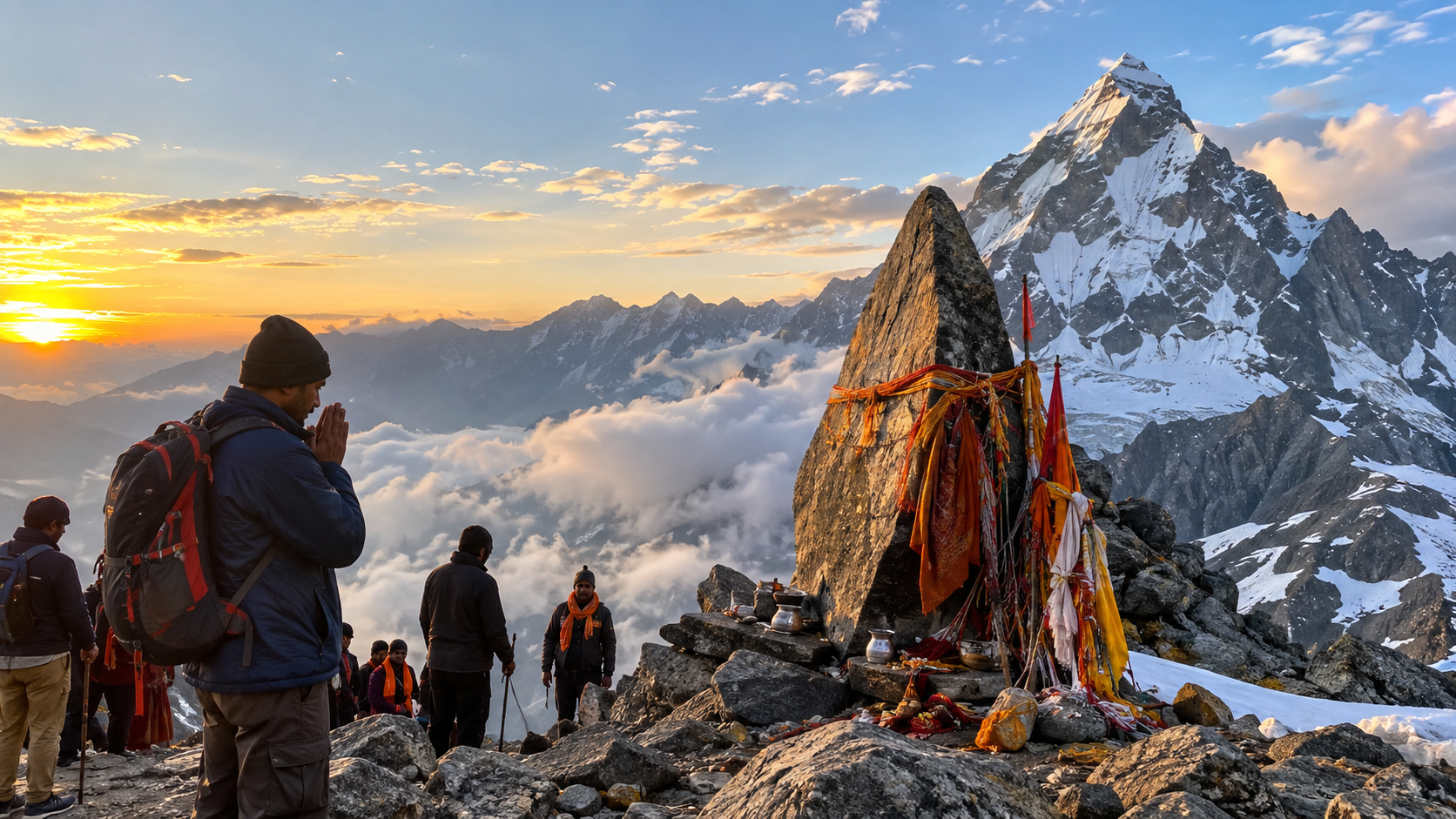
In Hindu tradition, Mount Kailash is revered as the abode of Lord Shiva and is closely associated with Shiva and Parvati. In Tibetan Buddhist tradition, the mountain is identified with sacred cosmological ideas including Mount Meru. The Bon tradition also regards the mountain as a profoundly sacred place. Jain tradition associates the region with Rishabhadeva, the first Tirthankara, according to the UNESCO documentation.
These are religious beliefs and traditions rather than claims that can be established as historical fact. The importance of the mountain, however, is reflected in the continuing practice of circumambulation by pilgrims.
Mount Kailash History and Religious Tradition
The history of Mount Kailash is best understood through the religious and cultural traditions that developed around the mountain rather than through a single historical account. Tibetan records, Hindu scriptures and Buddhist and Jain traditions contain references and associations connected with the sacred mountain and the wider Manasarovar region. UNESCO notes the area's importance to the Bon tradition and its long-standing religious significance across several cultures.
The mountain is also notable because it is treated as a sacred pilgrimage peak rather than a conventional mountaineering objective. India's official tourism portal describes Mount Kailash as a sacred, unclimbed peak.
For pilgrims, the objective is therefore not reaching the summit. The central experience is darshan of the mountain, visiting the sacred landscape around it and completing the prescribed parikrama where conditions and the applicable itinerary permit.
Kailash Mansarovar Yatra Route from India
Indian pilgrims should distinguish between the official Government of India Kailash Mansarovar Yatra and other routes offered by private operators.
The official government programme currently operates through two routes:
- Lipulekh Pass route from Uttarakhand
- Nathu La Pass route from Sikkim
The Ministry of External Affairs states that the Lipulekh route has operated since 1981 and the Nathu La route since 2015. The Yatra was suspended between 2020 and 2024 and resumed in 2025.
The 2026 official programme lists approximately 22 days for the Lipulekh route and approximately 21 days for the Nathu La route, although actual travel schedules remain subject to operational and local conditions.
Lipulekh Route
The Lipulekh route begins on the Indian side in Uttarakhand and involves travel through the Kumaon region before reaching the international border and entering Tibet.
Dharchula is an important staging point for the Uttarakhand side of the pilgrimage. The route then progresses through high-altitude areas towards Lipulekh Pass. Government information also notes that road connectivity has improved movement towards Lipulekh, reducing some of the earlier trekking burden on the Indian side.
Nathu La Route
The Nathu La route begins through Sikkim and crosses Nathu La into Tibet. The 2026 Sikkim government programme confirms that batches travelled through Nathu La and continued towards the Kailash-Manasarovar region.
The Nathu La route generally involves more vehicle-based travel than the traditional trekking sections associated with older Kailash itineraries, although pilgrims still encounter walking and high-altitude conditions.
Private and Nepal-Based Routes
Private operators may offer routes through Nepal and Tibet, but these should not be confused with the official MEA-organised Indian Yatra. The Government of India's own FAQ specifically distinguishes its two official routes from private offerings.
Availability of routes through Nepal can change quickly because they depend on border conditions, permits, local transport and the operating status of crossings. In September 2026, the Gyirong border area has also been affected by a major glacial-flood disaster, so travellers considering a Nepal-Tibet itinerary should obtain current confirmation from the relevant authorities and their licensed operator before making non-refundable arrangements.
Mount Kailash Parikrama
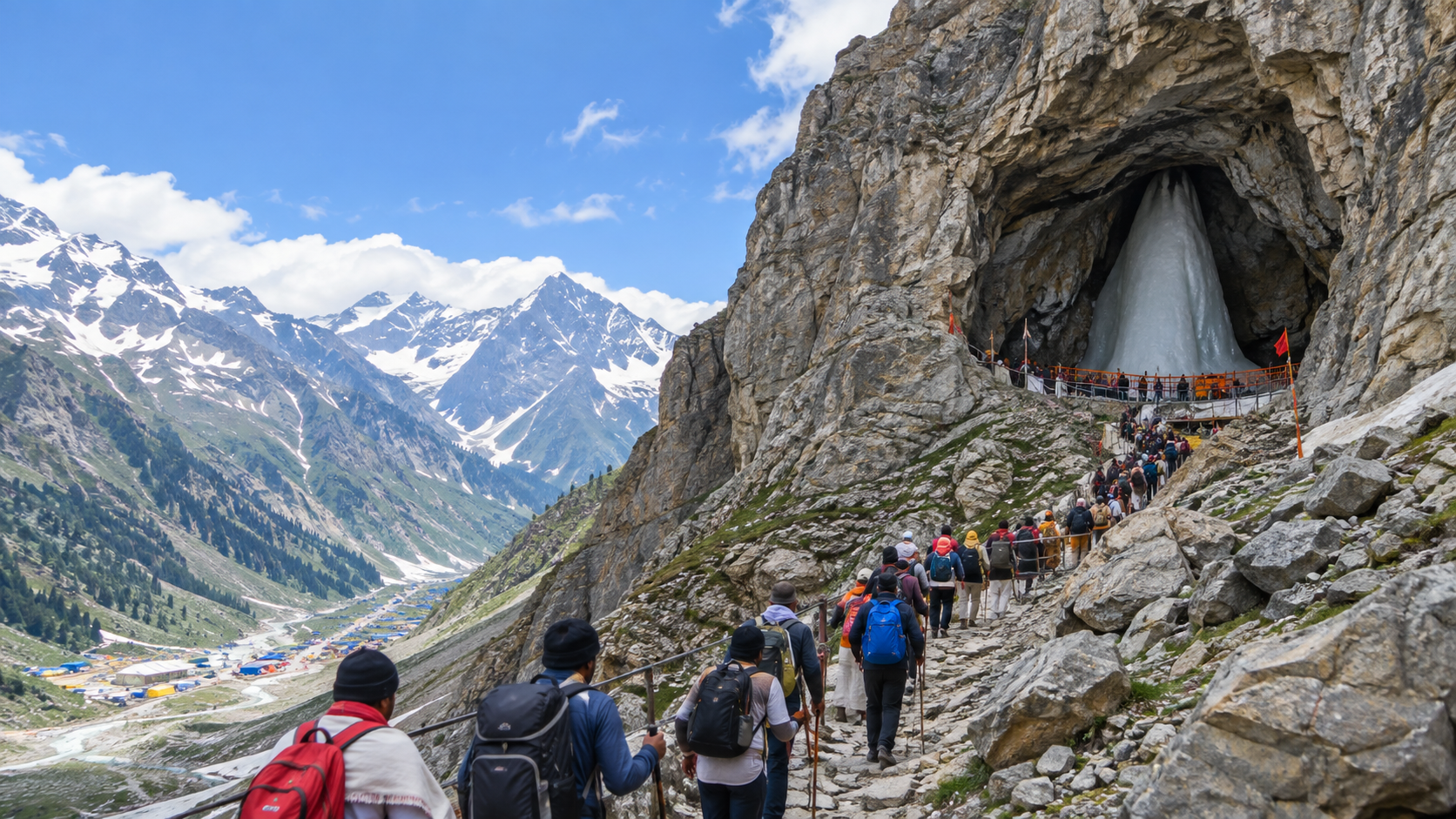
The Mount Kailash parikrama, also called Kailash Parikrama or kora, is the circumambulation of the mountain. It is one of the central pilgrimage activities for visitors who undertake the full Kailash pilgrimage.
Darchen is the principal staging town for the parikrama. From there, pilgrims proceed towards the starting area near Yamadwar and continue through the high-altitude trail towards the main overnight area traditionally associated with Diraphuk. The route then crosses the Dolma Pass before descending and returning towards Darchen. Older official MEA route material records sections from Darchen to Deraphuk, through the Dolma Pass and back to Darchen. Exact arrangements can differ by current itinerary and local conditions.
The parikrama is physically demanding. The official KMY advisory warns that the pilgrimage can involve altitudes reaching about 19,500 feet and rugged terrain, extreme weather and low oxygen levels.
Pilgrims should therefore treat the parikrama as a serious high-altitude journey rather than a conventional sightseeing walk.
Mount Kailash Darshan and Pilgrimage Etiquette
There is no conventional temple-style darshan system at Mount Kailash with fixed queues and opening hours. Darshan generally means viewing the sacred mountain during the pilgrimage and spending time in prayer or quiet reflection at appropriate points.
A respectful approach is important:
- Follow the instructions of the pilgrimage authorities, guides and local officials.
- Do not attempt to climb Mount Kailash.
- Stay on designated routes during the parikrama.
- Avoid loud or disruptive behaviour at sacred sites.
- Do not leave plastic, food packaging or other waste behind.
- Ask before photographing people, monasteries or religious activities.
- Follow local restrictions concerning photography, movement and access.
- Do not assume that every ritual practised by another pilgrim is appropriate for you.
The wider Kailash-Manasarovar landscape has religious importance to several traditions, so respectful behaviour matters throughout the journey, not only at the mountain itself.
Mount Kailash Timings and Access
Mount Kailash does not have ordinary tourist visiting hours like a monument or temple. Access depends on the approved pilgrimage itinerary, border permissions, weather, local authorities and the operating arrangements for the particular route.
For the official Indian Yatra, pilgrims are selected into batches and undergo preparation and medical checks before departure. The official 2026 application information required a valid Indian passport, and selected pilgrims were subject to the prescribed medical and administrative procedures.
The itinerary published by the Ministry of External Affairs is also described as tentative, with visits subject to local conditions.
For this reason, travellers should confirm the latest dates, permits, border status and route arrangements before booking transport or accommodation around the pilgrimage.
Best Time for Mount Kailash Yatra
The most practical period for the Mount Kailash pilgrimage is the summer pilgrimage season when official routes are operational. The Government of India's KMY portal states that the Yatra is organised during June to August/September, while the 2026 programme was scheduled during the summer months.
High-altitude weather remains unpredictable even during the preferred season. Snow, strong winds, rain, road conditions and changes in local access can affect the itinerary.
For Indian pilgrims, the best time is therefore not simply the month with the most favourable weather. It is the period in which the chosen official or authorised route is actually operating and the required permits and support arrangements are available.
How to Reach Mount Kailash
For an Indian pilgrim using the official Kailash Yatra from India, the practical journey begins well before reaching Tibet.
A typical planning sequence is:
- Apply through the official Kailash Manasarovar Yatra process when registration opens.
- Complete the selection and confirmation procedures.
- Reach Delhi for the required preparatory formalities and medical examinations.
- Travel onward through the allocated Lipulekh or Nathu La route.
- Complete the border, permit and transport procedures required for entry into Tibet.
- Continue towards the Manasarovar and Darchen area.
- Undertake the Mount Kailash darshan and parikrama according to the approved itinerary.
- Return through the designated route.
The 2026 official programme required selected yatris to spend several days in Delhi for preparation and medical procedures before the journey.
Local Transport Around Mount Kailash
Transport around the Kailash region is organised differently from normal tourist destinations. Pilgrims should not expect a regular public-transport network connecting every pilgrimage point.
Darchen functions as the principal base for the Kailash parikrama. Transport arrangements for the wider Yatra are generally coordinated as part of the pilgrimage itinerary, while walking becomes unavoidable on sections of the parikrama.
Older MEA guidance also records limited facilities along the parikrama route and the presence of Tibetan guides with organised pilgrim groups.
If a private itinerary includes vehicles, porters, pack animals or other support, confirm exactly what is included before departure rather than assuming that services will be available locally.
Stay Near Mount Kailash
Accommodation around Mount Kailash is basic compared with mainstream Indian pilgrimage destinations.
Darchen is the principal town used for the Kailash parikrama, while accommodation and camps along the pilgrimage route can be considerably more basic. Official MEA guidance has previously described camps along the parikrama route as having limited facilities.
Travellers should plan for:
- Basic rooms or shared accommodation.
- Limited hot-water availability.
- Simple meals.
- Restricted electricity or charging facilities in some locations.
- Limited mobile connectivity.
- Cold nights, particularly at higher elevations.
- Possible changes to accommodation because of weather or operational conditions.
Carry essential personal medicines, warm layers, a headlamp, suitable footwear, water bottles and other personal necessities. Pack light enough to manage your own belongings while keeping critical items accessible.
Accessibility and Physical Preparation
Mount Kailash is not an easy-access destination. The official KMY advisory specifically warns about high-altitude exposure, low oxygen, severe weather and rugged terrain. Medical screening is an important part of the Government of India's pilgrimage process.
The official selection process includes medical examinations in Delhi and additional altitude-related checks during the journey. On the Lipulekh route, an additional assessment is conducted at Gunji, while the Nathu La route has an assessment at Sherathang.
Good preparation should include:
- Regular walking and endurance training before departure.
- Practice with the footwear and daypack you intend to use.
- Gradual acclimatisation whenever the itinerary allows.
- Following the medical and altitude-safety instructions provided by the authorities.
- Carrying prescribed medicines and personal medical information.
- Taking symptoms of altitude sickness seriously and informing the accompanying medical team promptly.
Passing a medical examination does not guarantee that a traveller will avoid altitude-related illness. The official KMY guidance makes this distinction clearly.
Nearby Places to Visit
Lake Manasarovar
Lake Manasarovar is one of the principal sacred sites associated with Mount Kailash. The lake and mountain together form the centre of a wider sacred landscape shared by several religious traditions.
For pilgrims, visiting the lake is generally an integral part of the Kailash Mansarovar pilgrimage rather than an optional sightseeing detour.
Rakshas Tal
Rakshas Tal lies close to Lake Manasarovar and is another striking feature of the landscape. Older MEA guidance records views of Mount Kailash from the Rakshas Tal area and describes the lake's distinct religious associations.
Darchen
Darchen is the practical base for the Mount Kailash parikrama. Pilgrims commonly spend time here preparing for the high-altitude walking section before beginning the circuit.
Yamadwar
Yamadwar is associated with the beginning of the traditional Kailash parikrama route. It is a significant pilgrimage point and is generally approached as part of the organised route rather than as an independently accessible sightseeing stop.
Practical Planning Checklist
Before travelling for a Mount Kailash pilgrimage, confirm:
- Passport validity and eligibility requirements.
- Current registration dates for the official Indian Yatra, if applicable.
- Allocated route and batch.
- Medical examination requirements.
- Tibet entry and pilgrimage permissions.
- Current border and road conditions.
- Exact itinerary and accommodation arrangements.
- What transport, porter or other support is included.
- Insurance and emergency arrangements.
- Weather conditions immediately before departure.
- Current rules on photography and movement.
- Personal medicines and high-altitude clothing.
Do not rely on an old itinerary, price list or social-media post for current arrangements. Government routes, costs, dates, permits and border procedures can change between pilgrimage seasons.
Plan Your Mount Kailash Pilgrimage Carefully
A Mount Kailash pilgrimage demands more preparation than a typical holiday. The combination of sacred traditions, international border procedures, high altitude, variable weather and limited facilities means that practical planning is just as important as the spiritual purpose of the journey.
For travellers from India, the first step is to establish which route is currently available and whether you qualify for the applicable pilgrimage arrangement. The official Kailash Manasarovar Yatra portal should be checked for the latest government schedule, application conditions and route information before making firm plans.
If you are considering a Mount Kailash journey and need help understanding the route, season, preparation, stay arrangements or the practical steps involved, Trip to Yatra can help you plan the journey around the latest available information and your travel requirements.