
Jwala Ji Temple
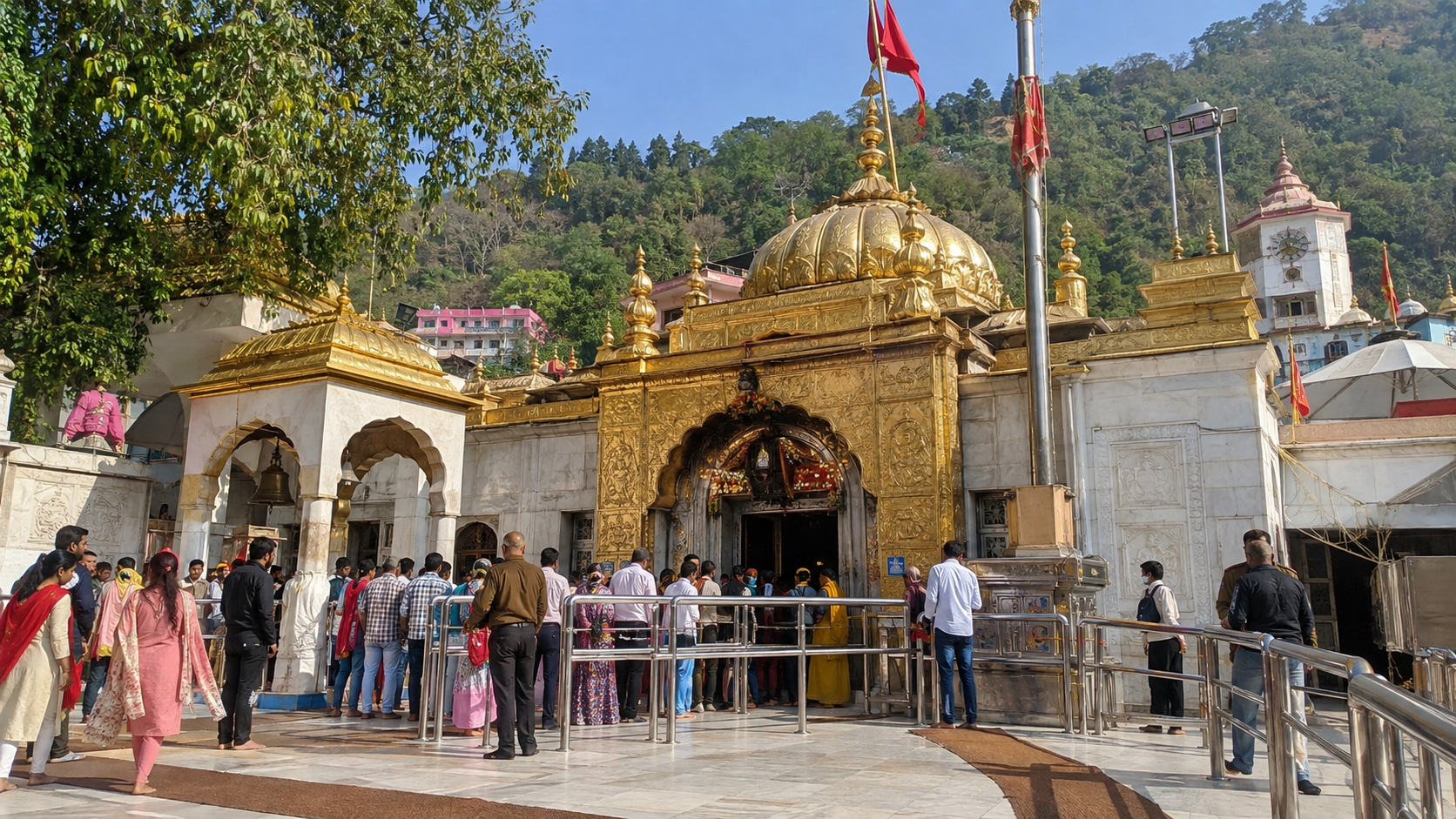
Jwala Ji Temple, also known as Jwalamukhi Temple, is a major Shakti Peetha in Kangra, Himachal Pradesh. The shrine is revered for its naturally occurring sacred flames, worshipped as the manifestation of Goddess Jwala. This practical guide covers darshan timings, how to reach, the best time to visit, accommodation, local transport and nearby places.
Jwala Ji Temple: A Practical Pilgrimage Guide
Jwala Ji Temple, also known as Jwalamukhi Temple or Jwala Devi Temple, is in the town of Jawalamukhi in Kangra district, Himachal Pradesh. The shrine stands in the Kalidhar valley of the Shivalik range at an elevation of about 600 metres. It is one of the important Shakti Peetha pilgrimage sites and is distinctive because devotees worship sacred flames emerging from fissures in the rock rather than a conventional idol.
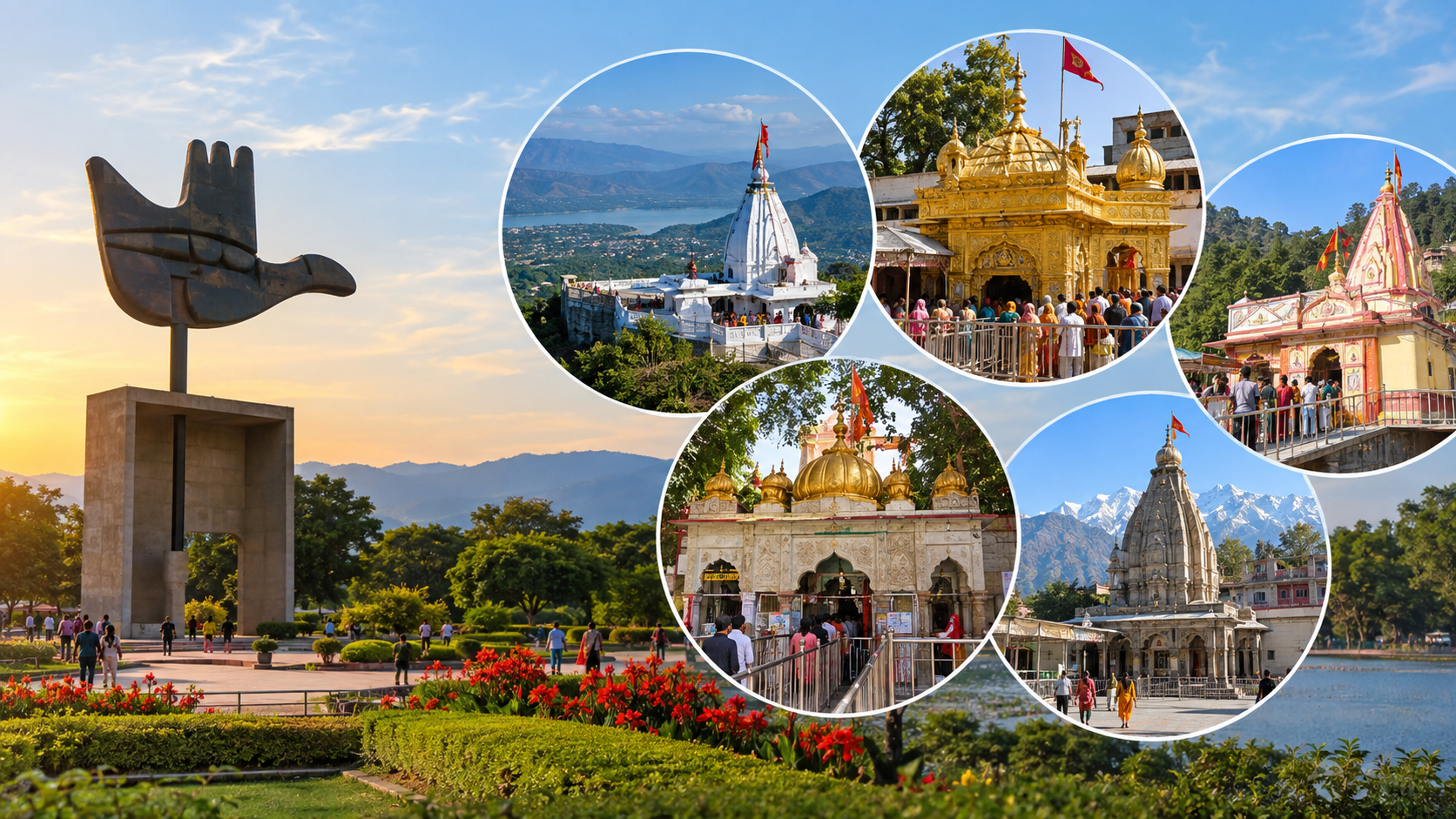
For pilgrims travelling through the Kangra region, Jwala Ji is particularly convenient to combine with other important temples and heritage sites. Himachal Tourism places Jwalamukhi about 35 km from Kangra and about 53 km from Dharamshala, although actual road distance and travel time can vary according to the route used.
The temple attracts devotees throughout the year, with particularly busy periods around Chaitra Navratri and Sharad Navratri. If your priority is a quieter darshan, it is sensible to avoid major festival dates or to allow additional time for the visit.
Why Jwala Ji Temple Is Important
The central feature of the shrine is the natural flame or group of flames within the sanctum. The official Kangra Temples administration describes the deity as appearing in the form of Navjyotis, with nine sacred flames associated with different forms of the Goddess.
Jwala Ji is traditionally regarded as a Shakti Peetha. According to the temple tradition, the tongue of Goddess Sati is believed to have fallen here, and the Goddess is worshipped through the sacred flame. This is a religious tradition and should be understood as part of the temple's sacred belief system rather than as a claim that can be established through historical evidence.
The absence of a conventional central idol gives Jwala Ji a character quite different from many other North Indian temples. The flame itself is the focus of worship, making the experience especially meaningful for pilgrims familiar with Shakti traditions.
Jwala Ji Temple History and Legends
The history of Jwalamukhi combines documented references, temple traditions and popular legends, so these should not be treated as identical forms of evidence.
One traditional account associates the discovery of the sacred flames with Raja Bhumi Chand. According to the temple's official account, a cow was found not giving milk at night, and investigation eventually led to the discovery of flames at the sacred location. Bhumi Chand is said to have subsequently established a temple there and entrusted worship to Brahmins of the Bhojak tradition.
Another well-known story concerns Dhyanu Bhagat and Mughal Emperor Akbar. Temple tradition says that Akbar attempted to test or extinguish the flames after hearing about their reputation, but the attempt was unsuccessful. The story is an important part of local religious tradition, although accounts of the episode vary and should be read as legend rather than straightforwardly documented history.
The temple also has associations with Maharaja Ranjit Singh. The official Kangra Temples site records traditions concerning his contribution to the temple's dome and the silver doors associated with his family. It also records the 1809 agreement between Ranjit Singh and Raja Sansar Chand at Jwalamukhi.
The present temple complex therefore reflects more than one period of religious and regional history. For visitors interested in heritage as well as pilgrimage, this makes Jwala Ji worth spending some time exploring beyond the central shrine.
Jwala Ji Temple Timings and Darshan
Temple timings can change with season, festivals, religious ceremonies and local arrangements. The official Kangra Temples administration currently publishes separate summer and winter schedules.
The published schedule lists the following broad visiting hours:
| Season | Morning | Midday break | Afternoon/evening |
|---|---|---|---|
| Winter | 5:00 AM–11:30 AM | 11:30 AM–12:30 PM | 12:30 PM–9:00 PM |
| Summer | 4:30 AM–11:30 AM | 11:30 AM–12:30 PM | 12:30 PM–10:00 PM |
The temple administration lists the midday period as being used for bhog. It also publishes separate aarti timings, including morning, evening and shayan aarti.
There is a discrepancy between different official pages regarding some opening and aarti timings. For that reason, pilgrims planning around a specific aarti should verify the schedule with the temple administration immediately before travelling rather than relying solely on an older web listing.
During aarti and other rituals, ordinary darshan arrangements may be temporarily suspended. The temple's official e-puja information specifically notes that darshan can remain suspended during aarti.
Tips for Jwala Ji Darshan
• Reach before your preferred darshan window rather than arriving at the last minute.
• Keep some flexibility around aarti and bhog periods.
• Follow instructions from temple staff and security personnel.
• Dress modestly and comfortably for a religious setting.
• Avoid carrying unnecessary luggage into the temple area.
• Do not attempt to touch the sacred flames or restricted areas.
• During Navratri, allow substantially more time because pilgrim numbers can rise.
The temple administration also lists water, toilets, security, cleanliness facilities, medical assistance and a Yatri Niwas among the facilities available to pilgrims.
Best Time to Visit Jwala Ji Temple
Jwala Ji can be visited throughout the year, but the most suitable period depends on whether you prefer festival atmosphere or relatively manageable crowds.
March to April is significant because of Chaitra Navratri, while September to October brings Sharad Navratri celebrations. Himachal Tourism specifically identifies these periods for colourful fairs and festival activity at Jwalamukhi.
For a quieter pilgrimage, consider travelling outside the major Navratri periods. Spring and autumn can also be comfortable seasons for combining the temple with other Kangra Valley destinations.
Summer can be warm during the middle of the day, while winter mornings and evenings can be cold. If you are travelling during winter, carry suitable warm clothing, particularly if your itinerary includes early-morning darshan.
Festival dates follow the Hindu lunar calendar, so confirm the dates for the year of travel before making hotel and transport arrangements.
How to Reach Jwala Ji Temple
Jwala Ji is well connected by road with Kangra, Dharamshala and other parts of Himachal Pradesh. For most travellers, road travel is the simplest way to reach the temple.
From Kangra
Himachal Tourism lists Jwalamukhi at about 35 km from Kangra. The journey can be incorporated into a wider Kangra pilgrimage circuit that includes Bajreshwari Devi Temple and Kangra Fort.
Local taxis and buses are practical options from Kangra, while travellers using a private vehicle have greater flexibility for combining several temples in one day.
From Dharamshala
Jwala Ji is roughly 50–55 km from Dharamshala according to government tourism sources. The road journey is generally the most practical option.
A taxi is useful if you are travelling with family, carrying luggage or planning to visit additional attractions along the route.
By Rail
The temple's official information identifies Jwalamukhi Road at Ranital as the nearest narrow-gauge railhead, approximately 20 km from the shrine. Pathankot is the nearest major broad-gauge rail connection, with the distance published by the temple administration at around 120 km.
Himachal Tourism also identifies Pathankot as a major broad-gauge railway gateway for Himachal Pradesh, with narrow-gauge rail services continuing into the Kangra Valley.
Rail travellers should check the current train timetable before finalising the last-mile connection, as local rail services can be less frequent than mainline trains.
By Air
Gaggal Airport, also known as Kangra Airport, is the closest airport commonly used for the region. The temple administration places it at roughly 50 km from Jwala Ji.
From the airport, continue by taxi or other road transport. Flight schedules can be seasonal, so check the current operating schedule before booking a connecting journey.
Local Transport Around Jwala Ji
Jwalamukhi town is a pilgrimage centre rather than a large transport hub. Local taxis, buses and private vehicles are the main practical options for reaching the temple from surrounding towns.
If your itinerary includes Kangra, Dharamshala, Chamunda, Baijnath or other temples, arranging point-to-point transport can be more convenient than depending entirely on infrequent local connections.
For festival travel, book accommodation and long-distance transport early. Local traffic and queues can take longer than expected during major religious gatherings.
Stay and Accommodation Near Jwala Ji Temple
Pilgrims have several options for staying in and around Jwalamukhi. The official temple information lists a Yatri Niwas, while Himachal Tourism also lists Hotel Jwalaji in Jwalamukhi. Availability, room categories and booking arrangements can change, so confirm directly before relying on a particular property.
For a simple temple-focused pilgrimage, staying close to Jwala Ji can reduce local travel, particularly if you want an early-morning darshan.
Kangra and Dharamshala provide a wider range of accommodation and can be better suited to travellers combining the temple with a broader Himachal itinerary.
When selecting Jwala Ji Temple accommodation, consider:
• Distance from the temple
• Parking availability if travelling by car
• Early-morning access
• Cancellation terms
• Festival-season availability
• Whether meals are available
The temple trust also operates free langar facilities. The official temple information currently lists lunch from 12:30 PM to 2:30 PM and dinner from 6:30 PM to 8:30 PM, with additional arrangements during major festivals. These timings should be reconfirmed locally because service schedules can change.
Nearby Places to Visit
A visit to Jwala Ji can easily form part of a wider Kangra pilgrimage and heritage circuit.
Kangra Fort
Kangra Fort is one of the region's major historical attractions. Himachal Tourism places it about 3 km from Kangra town and Jwalamukhi about 35 km from Kangra, making the fort a practical addition when travelling from the Kangra side.
Shri Bajreshwari Devi Temple
Located in Kangra town, Bajreshwari Devi Temple is another important Shakti-oriented pilgrimage stop. It is only about 1 km from Kangra according to Himachal Tourism.
Chamunda Devi Temple
Chamunda Devi Temple is another well-known religious destination in the Kangra region. Himachal Tourism lists it at about 24 km from Kangra, making it suitable for travellers building a multi-temple itinerary.
Masroor Rock Cut Temple
For travellers interested in heritage, the rock-cut temple complex at Masroor offers a different experience from the active pilgrimage shrines. Himachal Tourism lists it approximately 38 km from Kangra.
Rather than trying to cover every attraction in one day, allow enough time for darshan and road travel. A slower itinerary is generally more comfortable for families and older pilgrims.
Accessibility and Practical Considerations
The temple is located in an established pilgrimage town, but visitors should still plan according to their individual mobility needs.
Older travellers and anyone with limited mobility should ask locally about the current walking distance, steps, queues and any available assistance before entering the main temple area. Conditions can become more demanding during crowded festival periods.
If travelling with young children, carry water and allow extra time for queues. Early morning or later evening visits may be more comfortable than travelling during the busiest part of the day, subject to the current temple schedule.
Weather can change quickly in the hills. Comfortable walking footwear, a light rain layer and seasonal clothing are useful additions to a pilgrimage day bag.
Jwala Ji Temple Navratri Travel
Navratri is among the busiest periods at Jwala Ji. The temple administration identifies both Chaitra Navratri and Sharad Navratri among its major festivals, while Himachal Tourism highlights the associated celebrations in March-April and September-October.
The festival atmosphere can be an important part of the pilgrimage experience, but travellers should expect heavier crowds and potentially longer waiting times.
If travelling during Navratri:
- Reserve accommodation well in advance.
- Reach the town with additional time in hand.
- Confirm temple timings shortly before the journey.
- Keep your daily itinerary flexible.
- Follow crowd-management and security instructions.
- Avoid scheduling a tight onward connection immediately after darshan.
Practical Planning Tips
A few simple preparations can make a Jwala Ji pilgrimage considerably easier:
• Check the latest temple timings before departure, particularly if your visit is planned around aarti.
• Carry identification and booking details for your accommodation.
• Keep cash available for small local expenses, while also carrying a digital payment option.
• Wear comfortable footwear suitable for walking and standing in queues.
• Keep clothing modest and appropriate for a temple visit.
• Avoid making unverified assumptions about special darshan, VIP access or ritual availability; ask the temple administration about current arrangements.
• During peak festival periods, expect changes in traffic, parking and queue management.
• If you are travelling onward by train or flight, keep a reasonable buffer rather than relying on an exact road-travel time.
Plan Your Jwala Ji Pilgrimage
Jwala Ji Temple is best approached as both a place of worship and an important part of the cultural landscape of Kangra. Its distinctive sacred flames, Shakti Peetha tradition and long association with the history of the region make it a meaningful stop for pilgrims travelling through Himachal Pradesh.
For a smoother journey, plan the temple visit around the current darshan schedule, allow extra time during Navratri and combine Jwala Ji with nearby pilgrimage and heritage sites according to your available days.
If you are planning a visit to Jwala Ji Temple and would like help working out the route, stay, local sightseeing or a practical pilgrimage itinerary, Trip to Yatra can help you plan the journey around your travel dates and preferences.